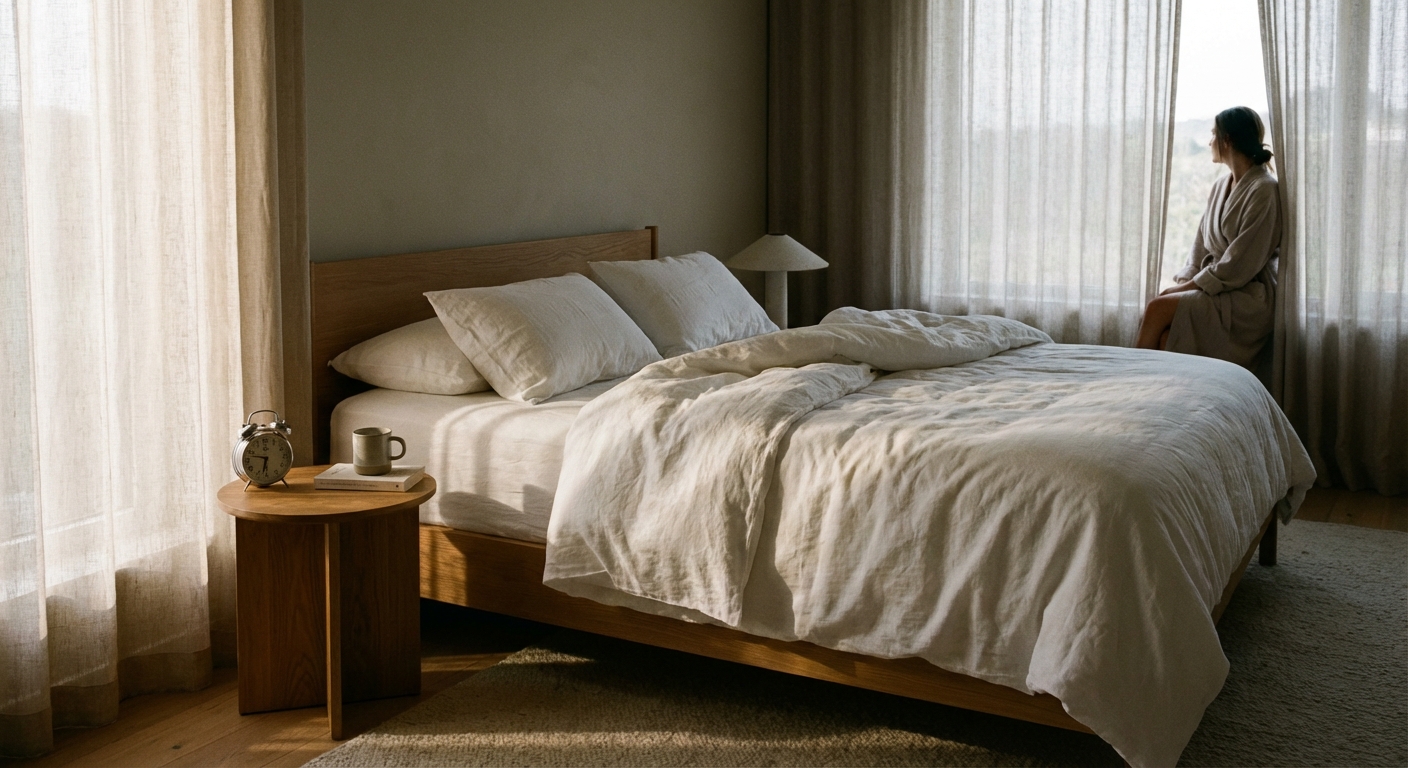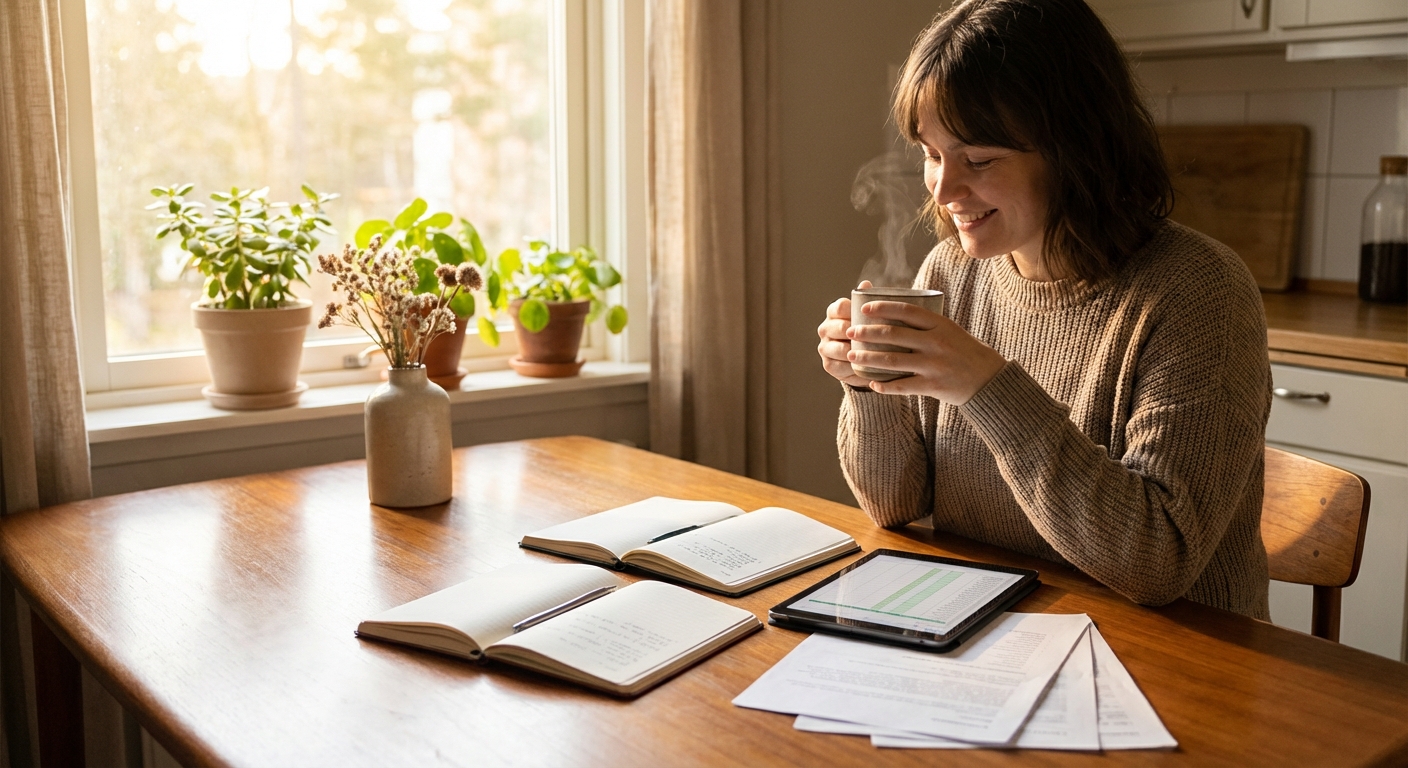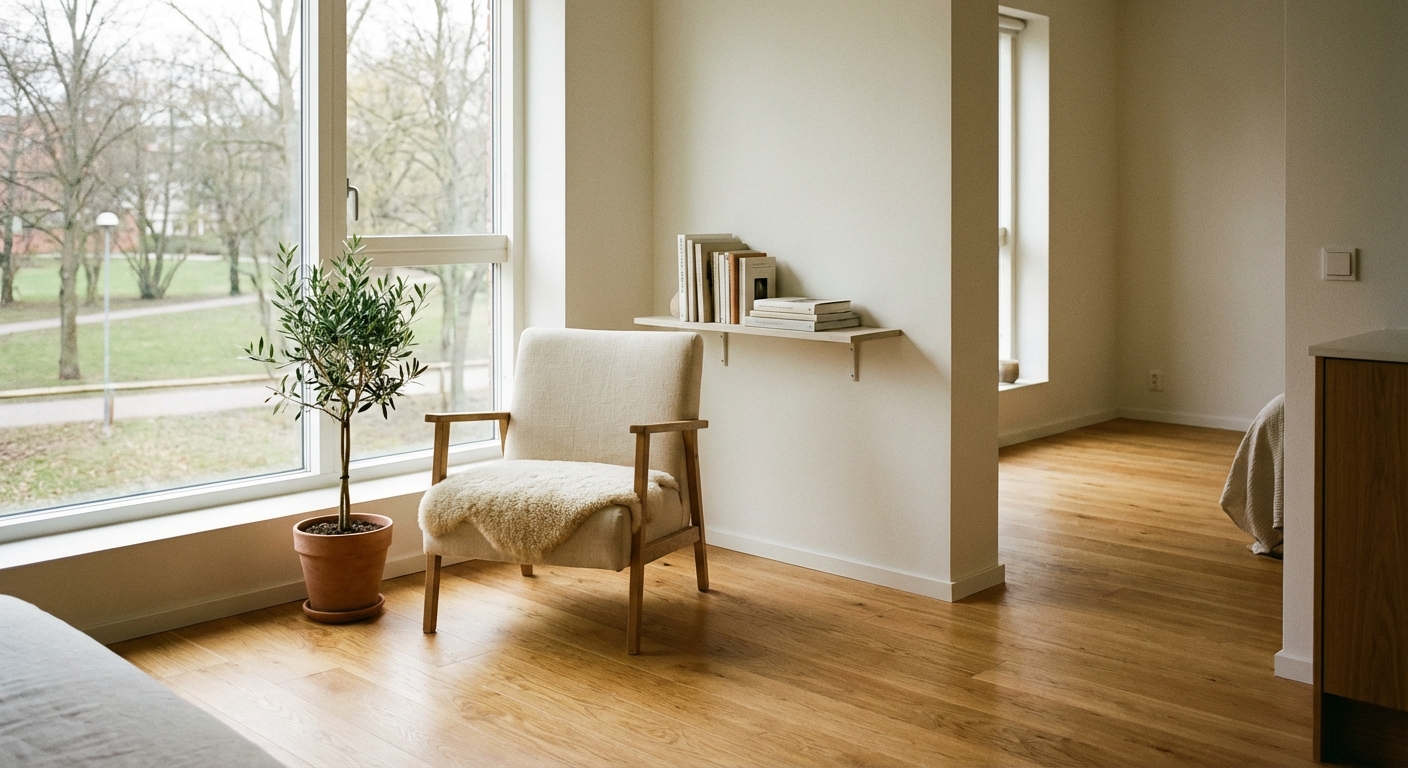
Sarah’s apartment could fit in most people’s living rooms. Four hundred square feet. One closet. A bed, a desk, six dishes, three pans.
She makes six figures as a software engineer.
“People ask if I’m poor,” she laughs. “I’m not poor. I’m free.”
Free from a $2,500 rent. Free from cleaning products for rooms she doesn’t have. Free from the weekend lost to organizing things she doesn’t need. Free from the job she’d have to keep just to pay for more space to store more stuff. Sarah represents a growing movement of people discovering that the freedom they’ve been chasing doesn’t require acquiring more. It requires letting go.
The minimalist revolution isn’t about deprivation. It’s about liberation.
The Freedom You Didn’t Know You Were Missing
We’ve been sold a story our entire lives: more is better. Bigger houses, fuller closets, upgraded everything. Success looks like accumulation. Comfort means abundance. Safety requires stockpiling.
But somewhere between the third streaming service and the storage unit filled with things you forgot you owned, that story stopped making sense. You look around at your full closet and somehow still feel like you have nothing to wear. You scroll through endless entertainment options and still feel bored. You buy the thing you thought would make you happy, and the happiness lasts about as long as it takes to throw away the packaging.
Minimalism asks a radical question: What if you already have enough?
Not “what if you settled for less.” Not “what if you learned to tolerate deprivation.” What if you discovered that the life you want doesn’t actually require the things you thought it did? What if the clutter, both physical and mental, has been blocking your view of a life that was available to you all along?

Why This Matters Right Now
The rise of minimalism isn’t random. It’s a response to converging pressures that have made “having it all” feel increasingly impossible, and increasingly hollow even when achieved.
Economic reality has shifted dramatically for younger generations. Student debt, housing costs that have outpaced wages for decades, and the disappearance of traditional career stability have made the old aspirational model unattainable for most. Minimalism reframes this not as failure but as choice, not as “I can’t afford the big house” but as “I don’t want to spend my life paying for one.”
Environmental awareness plays a significant role as well. Climate anxiety is real, and consuming less feels like doing something that matters when the problems seem too big for individual action. Research published in the Journal of Consumer Psychology found that people who practice intentional consumption report higher levels of meaning and lower levels of guilt, regardless of their actual environmental impact.
Mental health research adds another dimension. Dr. Catherine Roster’s work at the University of New Mexico has linked household clutter to elevated cortisol levels and chronic stress. Her studies found that people who described their homes as cluttered or full of unfinished projects were more likely to be depressed and fatigued than those who described their homes as restful or restorative. Clear space, clear mind isn’t just a saying. It’s measurable. If you’re interested in the broader movement toward intentional simplicity, our piece on slow living explores the philosophy behind it.
The digital awakening contributes too. We’ve experienced how “more” works online: endless scroll, unlimited content, infinite options, never satisfied. We’ve felt the exhaustion of too much choice and the paradox of feeling empty in the face of abundance. We’re starting to question whether the same dynamic applies offline.
What Minimalism Actually Means
Let’s clear something up: minimalism isn’t an aesthetic.
It’s not white walls and empty rooms. It’s not owning exactly 100 things or fitting your life into a single backpack. It’s not deprivation or aesthetic austerity or competitive simplicity. Those are versions of minimalism, but they’re not the point.
Minimalism is intentionality. It’s asking “does this add value to my life?” and being honest about the answer. It’s recognizing that every possession costs something beyond money: physical space, mental attention, time, energy, decision-making bandwidth. It’s choosing to spend those resources only on things that truly serve you.
Joshua Becker, founder of Becoming Minimalist and author of “The More of Less,” describes it this way: “Minimalism is the intentional promotion of the things we most value and the removal of everything that distracts us from them.” Notice what’s centered: your values, not a specific number of possessions or a particular aesthetic. Your minimalism might look completely different from someone else’s, and that’s exactly the point.
Some minimalists own what fits in a backpack because geographic freedom matters most to them. Some families practice minimalism with three kids, focusing on experiences over toys and finding that their children are more present, not deprived. Some professionals maintain impeccable but small work wardrobes, thirty items total, choosing quality over quantity. The common thread isn’t a number. It’s intentionality over accumulation.
The Real Stories Behind the Movement
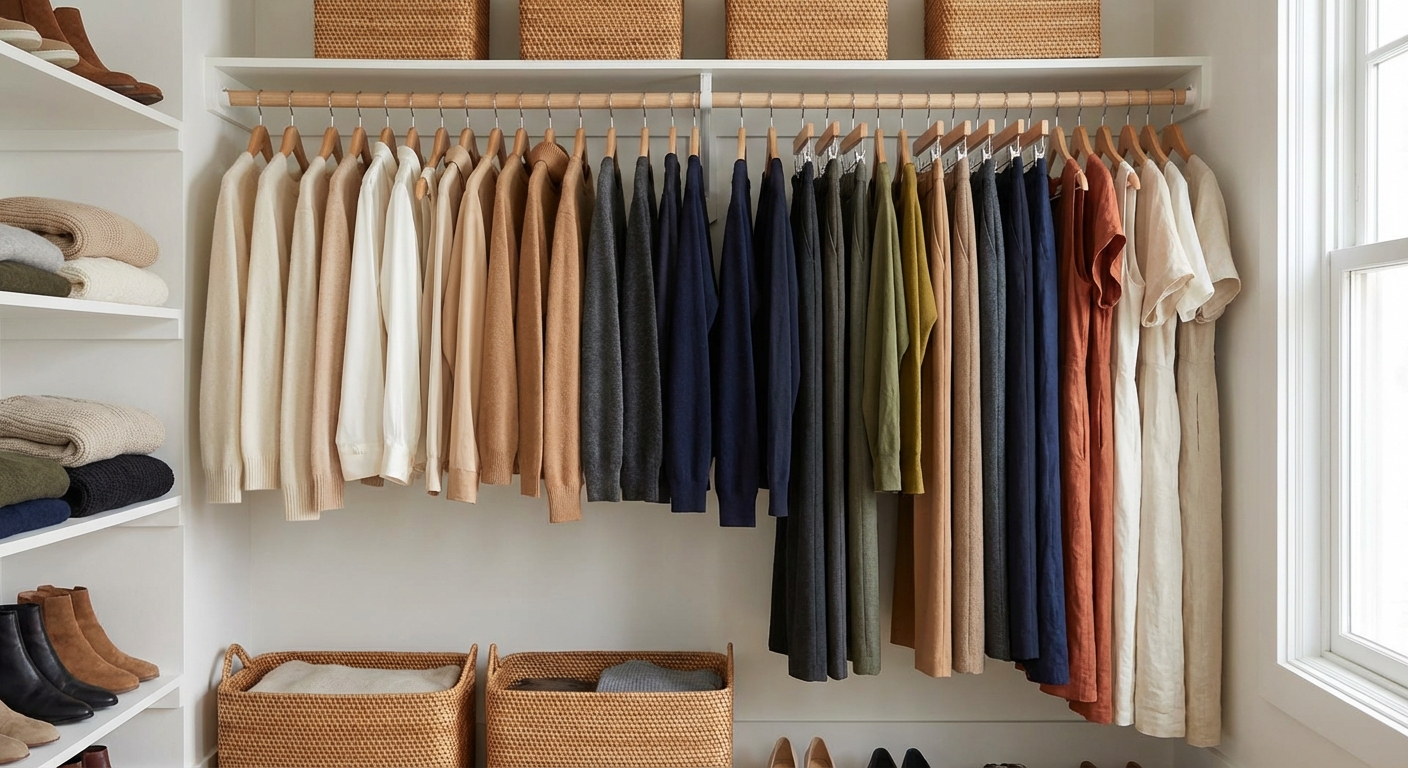
Maya spent her twenties building the closet she thought she wanted. Walk-in. Packed. Every trend, every sale, every “this would be perfect for…” moment accumulated until she had hundreds of items, and somehow nothing to wear.
“I wore maybe 15% of it,” she told us. “The rest just existed. Made me feel guilty every time I opened the door. Guilty for buying it. Guilty for not wearing it. Guilty for not being the person I imagined I’d be when I bought it.”
She donated 200 items in one weekend. The guilt went with them. What replaced it surprised her: not regret, but relief. “I wasn’t choosing from 100 options anymore. I was choosing from things I actually love. Getting dressed went from 30 minutes of stress to 5 minutes of pleasure.”
James’s path to minimalism started differently, with a divorce and a temporary move to a small apartment. He kept thinking he’d get more furniture, more stuff, fill up the space. But something unexpected happened. He started enjoying the emptiness. The peace of it.
“I realized the big house hadn’t made me happy. It made me busy. Maintaining it, filling it, worrying about it. This small space gave me my weekends back.” He never moved to a bigger place. The temporary became permanent, and intentional.
The Chen family proves minimalism works with children too. With three kids, people assumed it was impossible. Instead, they’ve built a lifestyle around experiences over things: hiking instead of toy rooms, adventure days instead of birthday parties with mountains of gifts. Their kids aren’t deprived. They’re present. And they’re learning something valuable about what actually creates happiness.
The Hidden Costs of Everything You Own
Here’s what minimalism reveals that consumer culture tries to hide: stuff has a cost far beyond its price tag.
Every possession you own demands physical space, which means rent or mortgage payments for square footage devoted to storage. It demands mental space, the background processing your brain does tracking, organizing, maintaining, and worrying about your belongings. It demands time for cleaning, repairing, organizing, and shopping for more. It demands energy through the constant low-grade decisions about what to keep, what to move, what to do with things you don’t really want but feel bad throwing away.
Psychologist Barry Schwartz documented this in “The Paradox of Choice,” showing that more options don’t create more freedom. They create more decision fatigue, more opportunity for regret, more paralysis. In his famous jam study (though the original researcher was Sheena Iyengar), shoppers faced with 24 jam varieties were far less likely to buy than those presented with 6 options. The abundance didn’t empower. It overwhelmed.
Your closet with 100 items feels harder to navigate than 30 items you love. Your kitchen with 47 gadgets feels more chaotic than 10 essential tools. The freedom you think you’re getting from options is actually constraint. When you eliminate things that don’t truly serve you, you reclaim all of it: the space, the mental energy, the time, the decision-making bandwidth. That’s the real payoff of minimalism, not aesthetic purity but psychological freedom. If you’re exhausted by constant optimization, our piece on stopping the self-improvement cycle offers a complementary perspective.
Beginning Your Own Practice
Don’t try to minimize your entire life this weekend. That’s how you end up exhausted and surrounded by bins labeled “maybe,” too depleted to make good decisions about any of it.
Start small. Start honest. Pick one category, just one, and spend a week with it. Maybe it’s books. Keep the ones that changed you, the ones you’ll genuinely reread, the ones that mean something. Release the aspirational purchases and the “should reads” and the books you’re keeping to signal something about yourself to visitors who probably don’t notice anyway.
The week after, try your kitchen. That bread maker from 2019. The duplicate spatulas. The gadgets that seemed revolutionary in the infomercial. If you haven’t used it in six months, be honest about whether you ever will. The week after that, your closet. The outfit test is simple: would you put this on right now if you needed to look good? No? Then why are you keeping it?
One category per week. Notice how you feel at the end of each one. That feeling is information.
Before you buy anything new, before you decide to keep something questionable, ask yourself these questions: Does this align with who I’m becoming? Not who I was, not who I wish I were, but who I actually am. Would I buy this today, knowing what I know now? Sunk cost is real. The money is already spent. Keeping something you don’t love won’t bring it back. Does this deserve the space it’s taking, both physical and mental? And finally: will I genuinely use this, or is “someday” really “never”?
If you’re struggling with the boundaries that minimalism requires, or feeling overwhelmed by the decisions involved, you’re not alone. The practice of letting go is exactly that: a practice. It gets easier.
Your Invitation to Freedom
You don’t need to own exactly 100 things or live in a tiny house. You don’t need to embrace someone else’s version of simplicity or measure yourself against some arbitrary standard. This isn’t about competition or perfection.
You just need to ask yourself one question: What if less stuff meant more life?
Start with one drawer. One shelf. One decision to keep only what serves you. See how it feels to let go of what you don’t need, to make space, both physical and mental, for what you do. Notice the relief. Notice the clarity. Notice what becomes possible when you’re not spending your energy maintaining things you don’t even want.
The freedom you’re looking for might not come from getting more. It might come from needing less. And that freedom is available to you right now, one intentional choice at a time.
What will you release to make room for what matters?
This article draws on research from Joshua Becker (Becoming Minimalist), Marie Kondo’s work on intentional living, Barry Schwartz’s paradox of choice research, and Dr. Catherine Roster’s studies on clutter and stress.
Sources: Joshua Becker’s “Becoming Minimalist,” Barry Schwartz’s “The Paradox of Choice,” Dr. Catherine Roster’s clutter research, Journal of Consumer Psychology.