You survived the holidays. The gatherings are over, the decorations are down (or still sitting in boxes you’ll get to eventually), and normal life is supposed to resume. Except nothing feels normal. You’re exhausted in a way that extra sleep doesn’t fix. Your inbox exploded while you were away. The routines that used to carry you through the day seem to have evaporated. And somewhere beneath the fatigue, there’s an ambient anxiety that won’t quite settle.
This isn’t weakness or poor planning. It’s the predictable aftermath of one of the most demanding periods of the year. The holiday season, despite its cheerful marketing, is a stress marathon disguised as celebration. Travel, family dynamics, financial pressure, disrupted sleep, altered eating, social obligations, and emotional labor pile up over weeks. Your nervous system doesn’t reset just because the calendar changed.
The good news is that recovering your equilibrium is entirely possible. It doesn’t require another burst of willpower or a punishing “new year, new you” program. What it requires is understanding what your body and mind actually need after an extended stress period, and giving yourself permission to provide it. Let’s explore what helps.
Understanding Post-Holiday Stress
The stress you’re feeling has real physiological roots. The holiday season activates your sympathetic nervous system, the “fight or flight” response, repeatedly. Even pleasant activities like hosting dinner or traveling to see loved ones trigger stress responses. Your body doesn’t distinguish between “good stress” and “bad stress.” It just knows it’s been running on elevated cortisol and adrenaline for weeks.
Dr. Elissa Epel, a health psychologist at UC San Francisco who studies stress and its effects on cellular aging, explains that our bodies need recovery periods after sustained stress. Without adequate recovery, the effects accumulate. Chronic stress without recovery leads to what researchers call “allostatic load,” the wear and tear on the body from repeated stress activation without sufficient restoration.
The symptoms of post-holiday stress are varied but recognizable. Physical signs include persistent fatigue, disrupted sleep, headaches, and digestive issues. Emotional signs include irritability, difficulty concentrating, feeling overwhelmed by normal tasks, and a general sense of being “off.” Some people experience a kind of emotional flatness, a protective response from an overtaxed nervous system.
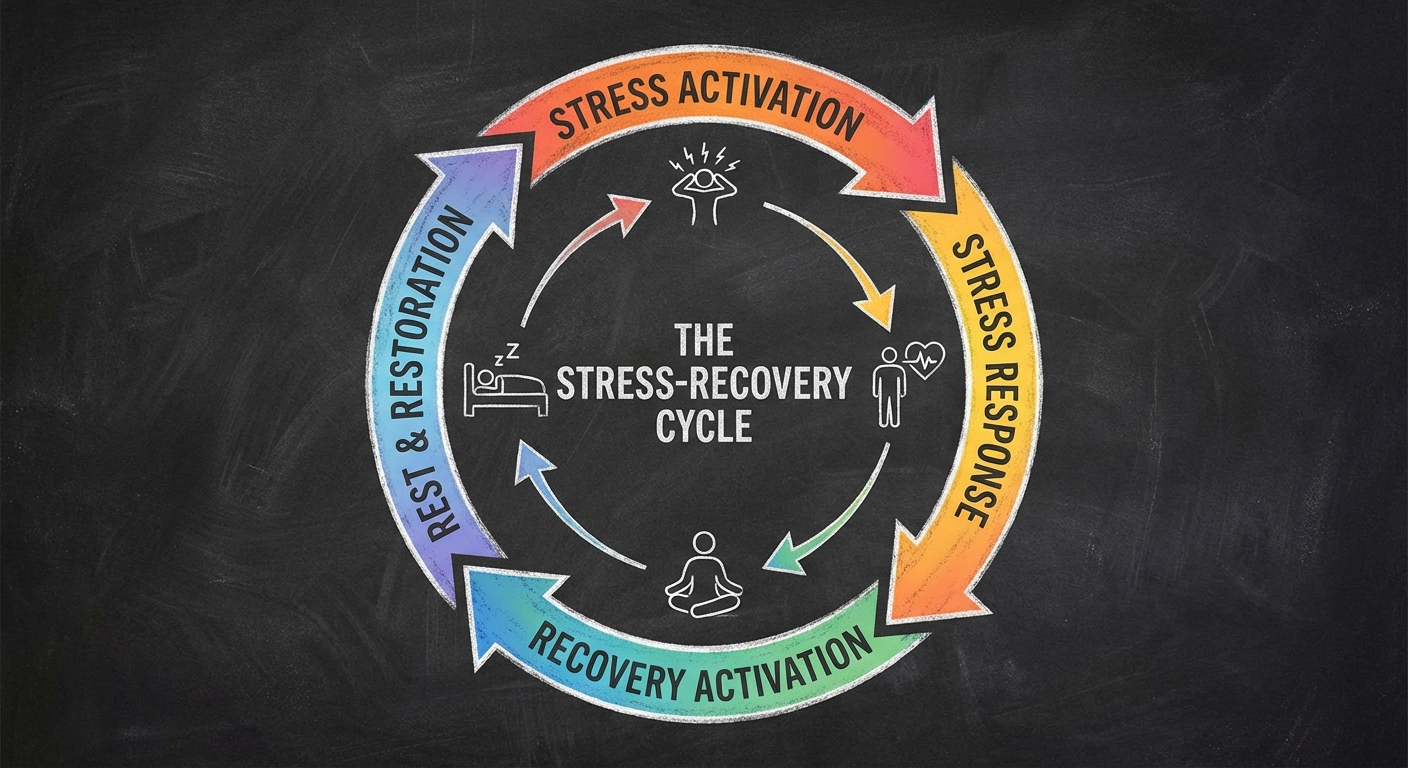
Understanding this helps because it normalizes your experience and points toward the solution. You’re not failing at January. You’re recovering from December. And recovery requires different approaches than peak performance.
Gentle Re-Entry to Routines
The temptation after the holidays is to swing hard in the opposite direction. You were off schedule, so now you’ll implement a rigid routine. You indulged, so now you’ll restrict. You rested, so now you’ll push. This approach backfires almost universally because it adds stress to an already stressed system.
A gentler approach recognizes that re-establishing routines is a process, not a single decision. Your circadian rhythm, eating patterns, and energy levels were disrupted for weeks. They won’t snap back in a day because you decided they should. Working with your body’s natural readjustment process is faster and more sustainable than fighting against it.
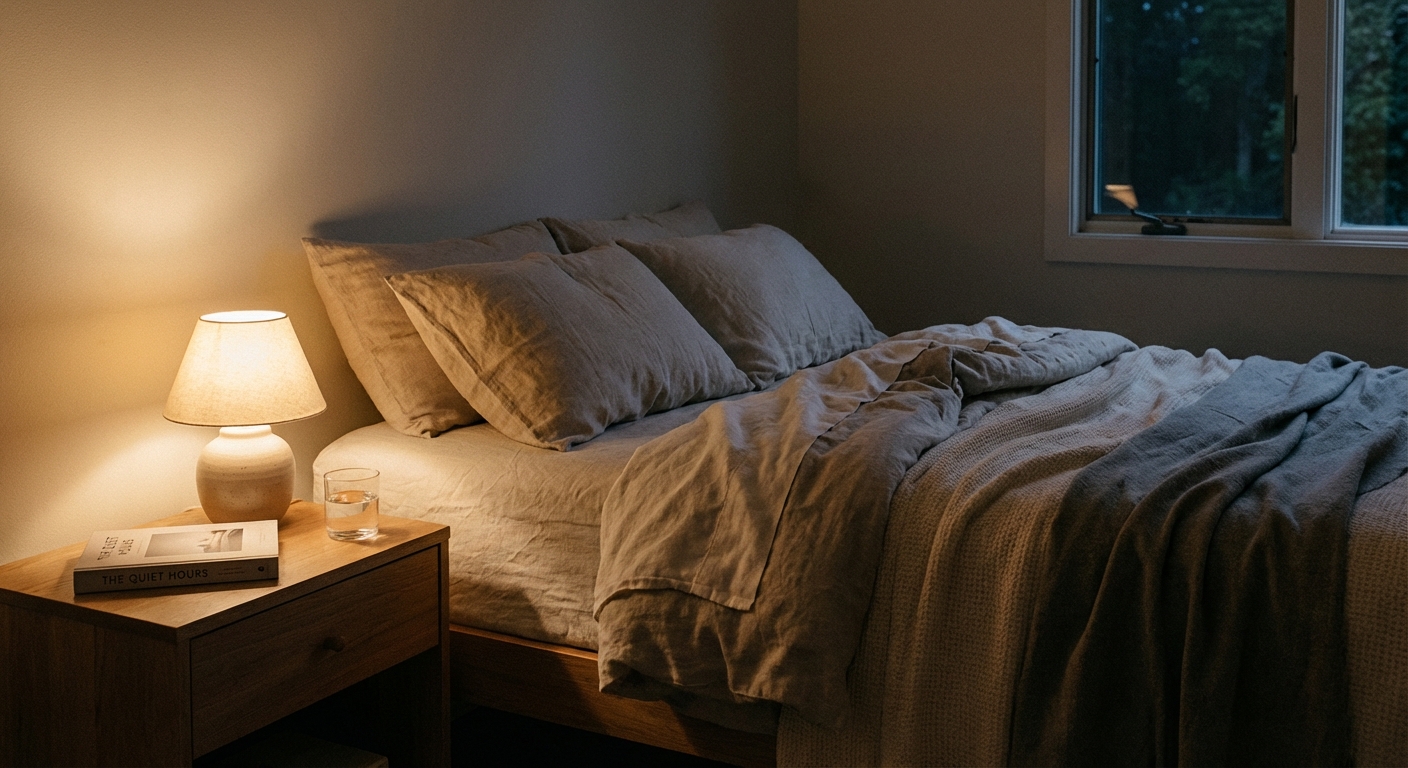
Start with sleep, which forms the foundation of everything else. If your sleep schedule shifted during the holidays, adjust it gradually. Moving your wake time back by 15-20 minutes every few days is more effective than forcing an early alarm after late nights. Protect the hour before bed from screens and stimulation. Keep your bedroom cool and dark. These basics matter more during recovery than at any other time.
With eating, avoid the restriction trap. Post-holiday diets that dramatically cut calories or eliminate food groups create additional stress hormones and often lead to rebound overeating. Instead, focus on adding: more vegetables, more water, more whole foods alongside whatever else you’re eating. The addition approach feels supportive rather than punitive and naturally crowds out less nourishing choices over time.
Movement matters, but intensity should match your recovery state. A stressed, depleted body benefits more from walking, gentle yoga, or swimming than from high-intensity workouts that demand cortisol elevation. Dr. Kelly McGonigal, a health psychologist and lecturer at Stanford, notes that moderate movement actually helps complete the stress cycle and return the body to baseline, while overly intense exercise can extend recovery time.
Practical Calm Techniques
When stress feels acute, having specific techniques to deploy makes a real difference. These aren’t replacements for addressing the underlying causes of stress, but they provide immediate relief that creates space for longer-term recovery.
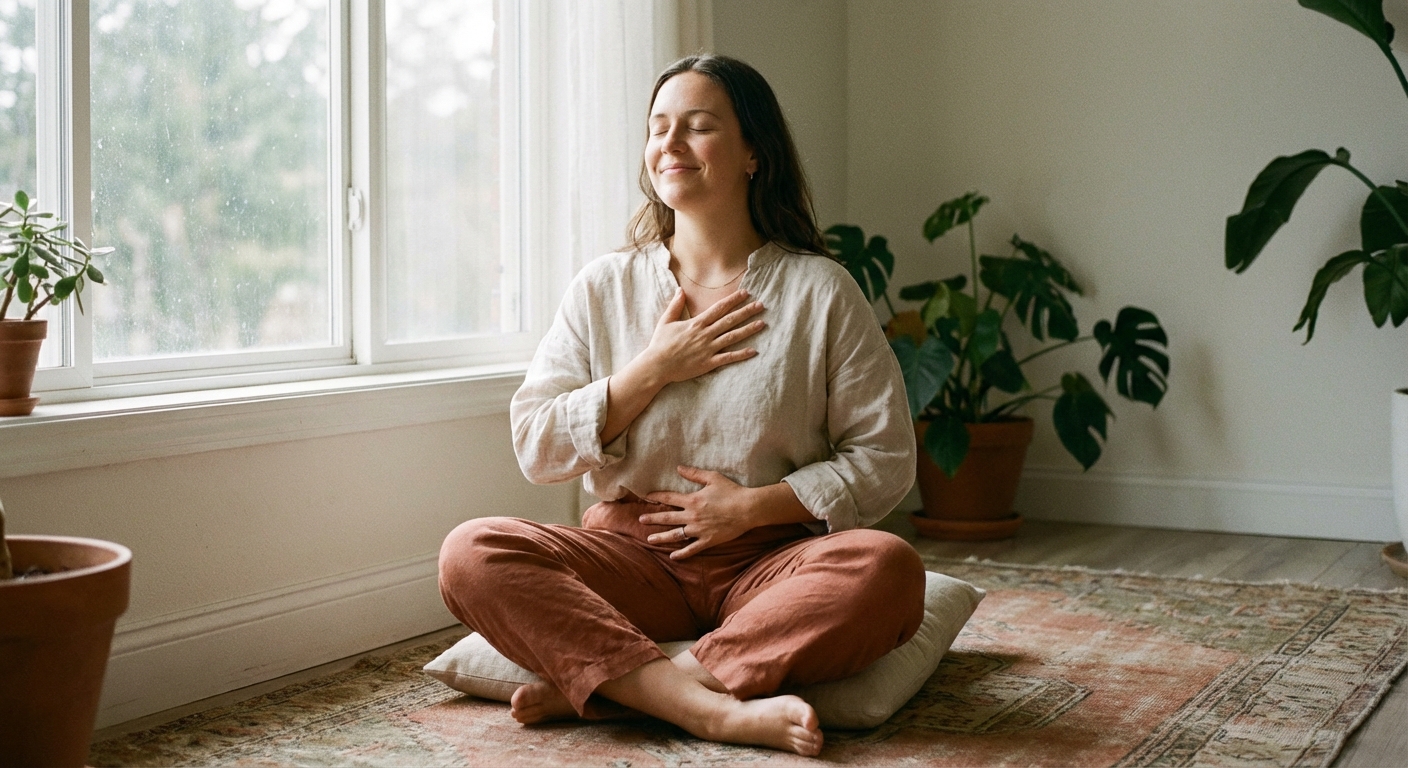
The physiological sigh is one of the most effective rapid calming techniques, backed by research from Dr. Andrew Huberman’s lab at Stanford. The technique involves two inhales through the nose (a big one followed by a second short one to fully expand the lungs) and then a long, slow exhale through the mouth. This pattern directly activates the parasympathetic nervous system and can reduce stress within one to three breath cycles. You can use it anywhere: before a difficult meeting, when you feel overwhelm rising, or simply when you notice tension in your body.
Temperature interventions also work quickly. Splashing cold water on your face or holding something cold against your temples activates the “dive response,” a physiological mechanism that slows heart rate and calms the nervous system. This isn’t mystical wellness advice. It’s basic neurobiology. The cold triggers vagal activation, which counteracts stress responses.
The “5-4-3-2-1” grounding technique helps when anxiety spirals into racing thoughts. Name five things you can see, four you can hear, three you can touch, two you can smell, and one you can taste. This exercise works by engaging your sensory cortex and pulling attention away from the rumination loops that amplify anxiety. It takes about sixty seconds and can interrupt a stress escalation before it peaks.
Journaling, even briefly, provides another outlet. Writing about what’s stressing you engages different neural pathways than thinking about it. Research by James Pennebaker at the University of Texas at Austin found that expressive writing about stressful experiences improved both psychological and physical health markers. You don’t need to write for long. Ten minutes of freewriting about whatever’s weighing on you can provide genuine relief.
Setting Compassionate Boundaries
Part of post-holiday stress comes from obligations that never ended. The family group chat still demands responses. Work expects full capacity on January 2nd. Social invitations that couldn’t fit before Christmas are now rescheduled for January. Without intentional boundaries, the new year becomes an extension of the holiday overwhelm rather than a recovery from it.
Setting boundaries during recovery isn’t selfish. It’s necessary maintenance for a depleted system. This might mean declining invitations for the first few weeks of January, even from people you like. It might mean setting an email auto-responder that promises responses within 48 hours rather than immediate. It might mean having an honest conversation with family members about needing some quiet time before the next gathering.
The language you use matters. “I’m recovering from a busy holiday season and protecting my energy for a few weeks” is true, clear, and leaves little room for argument. You don’t need elaborate justifications for taking care of yourself. Healthy relationships accommodate reasonable boundaries. Relationships that can’t tolerate any boundary-setting are themselves sources of stress worth examining.
At work, be strategic about what you take on in early January. If possible, schedule lighter weeks at the start of the year. Push non-essential meetings to mid-January. Resist the pressure to start major new projects the moment you return. A slow start leads to sustainable momentum. A frantic start leads to burnout before February.
Creating Space for What Matters
As the initial recovery happens, a different question emerges: what do you actually want your days to feel like? The holiday season disrupts routines, which is exhausting, but it also provides an opportunity. You don’t have to rebuild exactly what you had before. You can be intentional about what you bring back and what you leave behind.
Many people discover during the holidays that some of their “normal” routines weren’t serving them. The commute they don’t miss. The obligations they felt relieved to skip. The busyness that felt important but revealed itself as merely motion. Returning to routines provides a chance to edit, to keep what works and release what doesn’t.
This is where mindfulness becomes not just a stress management technique but a way of living. Paying attention to how activities actually make you feel, rather than how you think they should make you feel, provides invaluable data for designing a life that works for you. Not the Instagram version of life. Your actual life, with your actual constraints and values.
The post-holiday period, despite its challenges, offers a fresh perspective. You’ve been knocked out of your patterns. Before the patterns re-solidify, you get to choose which ones you want. That’s not a burden. It’s an invitation.
Your Invitation
Recovery from the holiday season isn’t a quick fix. It’s a process that unfolds over weeks, not days. Be patient with yourself during this transition. The exhaustion is real. The anxiety is understandable. The difficulty re-entering normal life doesn’t mean something is wrong with you.
Start with the basics. Prioritize sleep. Move your body gently. Eat foods that nourish. Use calming techniques when stress spikes. Set boundaries that protect your energy. And underneath all of that, practice compassion toward yourself. You just navigated a demanding season. You’re allowed to need recovery time.
The calm you’re seeking isn’t somewhere else. It’s available right now, in this breath, in this moment. The practices we’ve discussed aren’t about becoming a different person. They’re about returning to equilibrium, to the version of you that exists when you’re rested and regulated. That version is still there, just temporarily obscured by the aftereffects of a stressful season.
Take it slow. Be gentle. The year has 358 days left. You don’t have to conquer January. You just have to get through it, kindly and sustainably. Your calm is worth protecting. Start today.