
The career advice you received five years ago might actively hurt you today. The skills that guaranteed stability a decade ago are being automated or outsourced. Meanwhile, capabilities that seemed niche or “soft” have become the most valuable assets in the modern workplace. If you’re planning your professional development for 2026, you need a clear picture of what actually matters now, not what mattered when your career began.
This isn’t about panic or doom-scrolling through headlines about AI taking jobs. It’s about being strategic. The professionals who thrive through workplace transitions aren’t the ones who resist change or pretend it isn’t happening. They’re the ones who understand the shift and position themselves accordingly. That requires honest assessment of where value is moving and what skills create genuine career insurance.
The good news is that the most important skills for 2026 are learnable. They don’t require going back to school or abandoning your current expertise. Often, they involve building on what you already know while adding complementary capabilities that multiply your value. Let’s look at what’s actually happening and what it means for your growth.
The AI Literacy Imperative
If there’s one skill that separates professionals who thrive in 2026 from those who struggle, it’s the ability to work effectively with artificial intelligence. This doesn’t mean becoming a machine learning engineer. It means developing what researchers call “AI literacy,” the capacity to understand what AI tools can and can’t do, and to use them effectively in your work.
The shift happened faster than most predicted. Tools like ChatGPT, Claude, and specialized AI applications have moved from curiosities to daily utilities in many workplaces. Professionals who learned to use these tools strategically have seen significant productivity gains. Those who avoided them or used them poorly have fallen behind. The gap will only widen as AI capabilities expand.
AI literacy involves several components. First is prompt engineering, the skill of communicating effectively with AI systems to get useful outputs. This sounds simple but requires practice. The difference between a vague prompt and a well-structured one can be the difference between useless garbage and genuinely helpful content. Second is output evaluation, knowing how to assess AI-generated content for accuracy, bias, and appropriateness. AI systems confidently produce wrong information, and the ability to catch these errors is crucial.
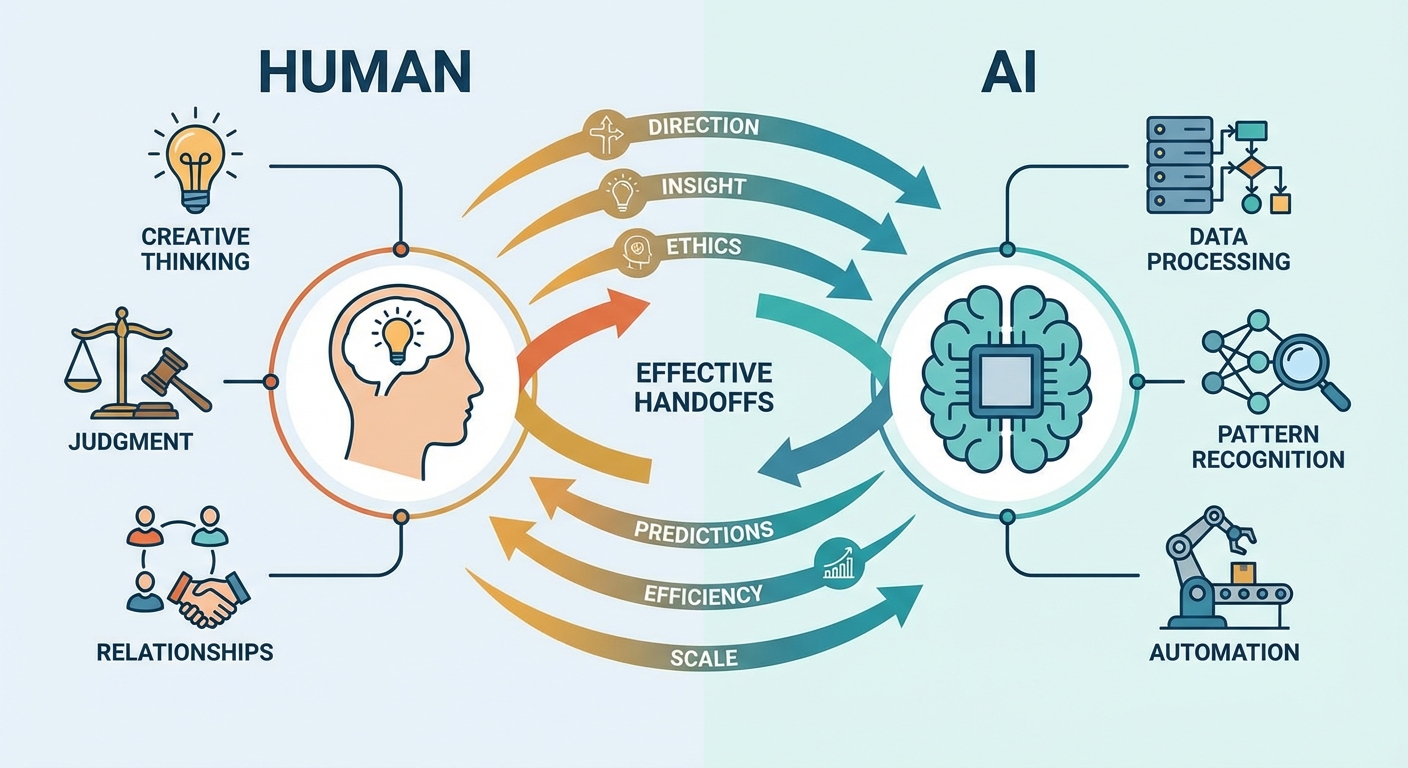
The third component is ethical awareness. Using AI responsibly means understanding issues around data privacy, intellectual property, and appropriate use cases. Companies are increasingly scrutinizing how employees use AI tools, and professionals who understand the ethical dimensions will be trusted with more responsibility.
The most valuable professionals in 2026 aren’t being replaced by AI. They’re the ones who combine domain expertise with AI literacy to accomplish things neither humans nor machines could do alone. A marketing professional who uses AI to analyze customer data and generate initial drafts, then applies human judgment to refine messaging and build authentic connections, is more valuable than either a pure marketer or an AI system alone.
Human Skills at a Premium
Here’s the paradox of the AI age: as machines get better at technical tasks, distinctly human capabilities become more valuable. The skills that seemed “soft” or secondary have become primary competitive advantages. Emotional intelligence, creative problem-solving, complex communication, and relationship building now command premium salaries precisely because they can’t be automated.
The research supports this shift. A study from McKinsey Global Institute projected that demand for social and emotional skills would grow by 26% in the United States and 22% in Europe through 2030. Meanwhile, demand for basic cognitive skills and physical labor continues declining. The message is clear: technical skills get you in the door, but human skills determine how far you go.
Emotional intelligence, the ability to perceive, understand, and manage emotions in yourself and others, has become a critical leadership differentiator. In distributed and hybrid work environments, leaders who can read team dynamics through a screen, build trust without physical presence, and navigate conflict with nuance are extraordinarily valuable. This isn’t touchy-feely fluff. It’s the foundation of effective management in complex environments.

Communication skills have evolved beyond basic writing and presenting. The most valued communicators in 2026 can translate complex technical concepts for non-technical audiences, facilitate difficult conversations across cultural and generational divides, and create clarity in ambiguous situations. They know when to communicate asynchronously and when a real-time conversation is essential. They can build rapport through video calls and maintain team culture without relying on physical office presence.
Creative problem-solving, what some researchers call “novel solution generation,” has become a core competency across industries. As AI handles routine analysis and execution, humans are expected to tackle the problems that don’t have obvious answers. This requires the ability to synthesize information from diverse sources, challenge assumptions, and propose approaches that haven’t been tried before.
Strategic Career Pivots
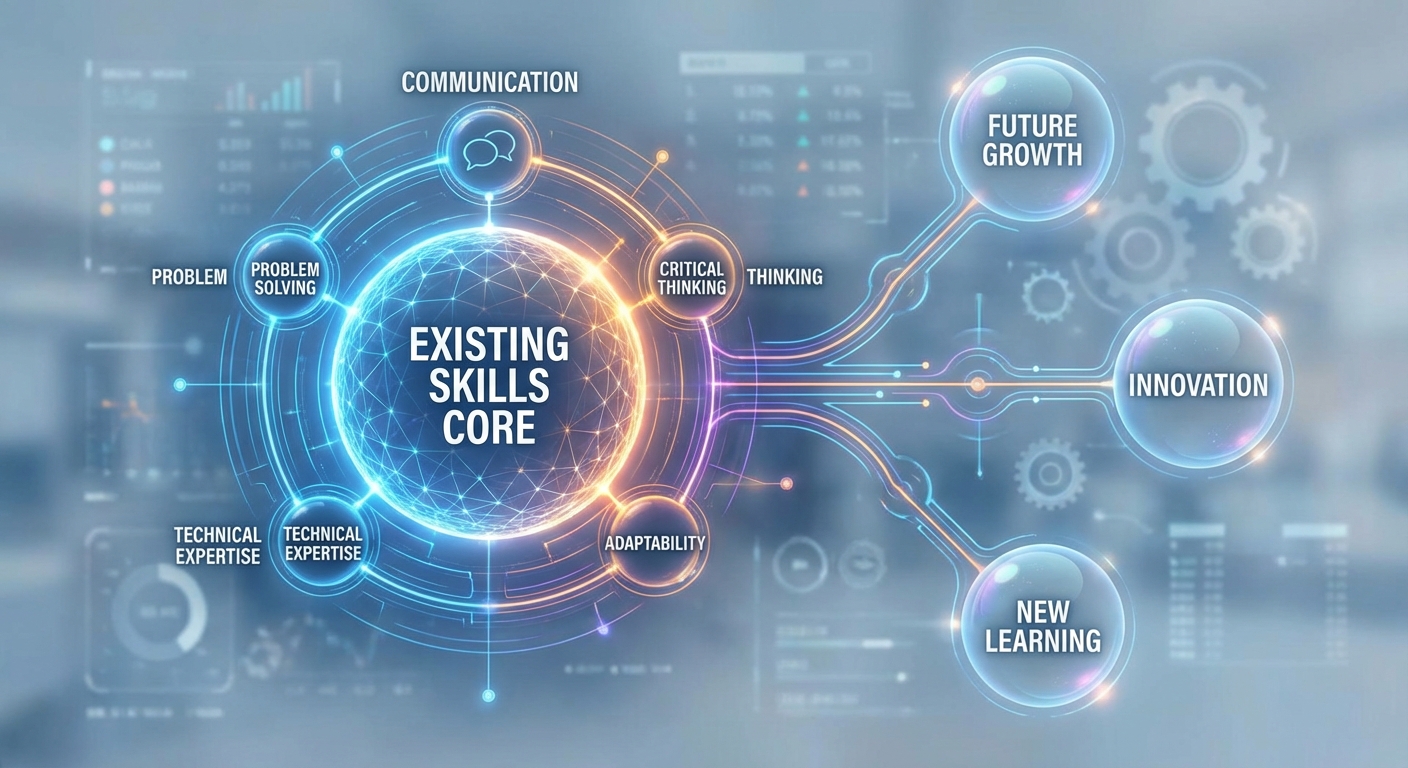
The linear career path, where you pick an industry, climb the ladder, and retire with a gold watch, has been obsolete for years. But what’s replacing it? For many professionals, the answer is the strategic pivot: deliberate moves that leverage existing expertise while expanding into higher-value areas.
Successful pivots in 2026 share common characteristics. They build on transferable skills rather than starting from scratch. They move toward areas of growing demand. And they’re executed thoughtfully, with skill-building happening alongside current work rather than requiring a dramatic leap into the unknown.
Consider the financial analyst who developed expertise in sustainability reporting as ESG (Environmental, Social, Governance) investing exploded. Or the marketing manager who learned enough about data analytics to bridge the gap between creative teams and data science departments. These professionals didn’t abandon their foundations. They extended them in directions where value was accumulating.
The most promising pivot directions in 2026 involve positioning yourself at intersections. The specialist who only knows one domain deeply is less valuable than the professional who can connect multiple domains. If you’re in operations, learning enough about technology to guide digital transformation makes you invaluable. If you’re in technology, developing business acumen and communication skills opens leadership pathways that pure technologists can’t access.
Building Your Development Plan
Understanding trends is useful, but translating them into action is what matters. A strategic professional development plan for 2026 should balance three types of investment: deepening existing expertise, building complementary skills, and developing meta-skills that remain valuable regardless of how specific technologies or industries evolve.
Start by auditing your current position. What do you do exceptionally well? What aspects of your work create the most value for your organization? What skills do colleagues come to you for? This foundation matters because effective development builds on strength rather than trying to fix every weakness. The goal isn’t becoming adequate at everything. It’s becoming exceptional where it counts.
Next, identify the gaps between your current capabilities and where value is heading in your field. Talk to people who are five to ten years ahead of you in their careers. What do they wish they had learned earlier? What skills do they see becoming more important? Industry conferences, professional associations, and even LinkedIn posts from thought leaders in your field can provide signals about emerging requirements.
Then build a realistic learning plan. The key word is realistic. Grandiose development plans that require hours of daily study tend to fail like New Year’s resolutions. Sustainable skill-building happens through consistent small investments. Thirty minutes daily beats marathon weekend sessions. One course completed beats three courses abandoned. The best approach combines structured learning with immediate application in your actual work.
Consider finding a mentor or sponsor who has navigated the transitions you’re facing. Research from Harvard Business School shows that professionals with active mentoring relationships advance faster and report higher career satisfaction. A good mentor doesn’t just teach skills. They help you see blind spots, advocate for opportunities, and provide perspective during difficult decisions.
Your Invitation
The workplace will keep evolving. AI will become more capable. New technologies will emerge. Industries will consolidate and expand. You can’t control these forces, but you can position yourself to thrive regardless of how they unfold.
The professionals who succeed in 2026 and beyond share a common trait: they invest in themselves continuously and strategically. They don’t wait for their employer to provide development opportunities. They seek them out. They don’t assume today’s skills will remain relevant indefinitely. They stay curious about where value is moving and adjust accordingly.
Start with one area. Maybe it’s developing AI literacy by spending thirty minutes daily learning to use AI tools more effectively. Maybe it’s strengthening a human skill like emotional intelligence or communication. Maybe it’s exploring a strategic pivot by taking a course in an adjacent field.
Whatever you choose, begin this week. The best career insurance isn’t a backup plan or a savings account, though those matter too. It’s becoming someone who can create value in multiple contexts, adapt to changing circumstances, and contribute in ways that machines and less-invested professionals cannot match.
Your career belongs to you. Invest in it accordingly.