
You know which conversation I mean. The one you’ve mentally rehearsed a dozen times in the shower. The one you keep finding reasons to postpone: after this project wraps, after the holidays, after things settle down. The one where you finally tell your boss you want to lead, or admit you’re burning out, or ask about that promotion they mentioned six months ago and never brought up again.
The conversation sits there, taking up mental real estate, while you wait for the “right time” that somehow never arrives. And every week that passes without having it, you feel a little more stuck, a little more resentful, a little more disconnected from what you actually want your career to be.
Here’s what nobody tells you about career conversations: the cost of not having them compounds faster than the discomfort of having them. Research from organizational psychologist Adam Grant suggests that employees who advocate for themselves, even imperfectly, consistently outpace those who wait to be noticed. The perfect moment isn’t coming. But you can create a good enough one.
Name What You’re Actually Avoiding
Before you script the conversation, get honest about why you’re avoiding it. The stated reason (“I’m too busy,” “It’s not the right time”) is rarely the real reason. The real reason usually lives deeper: fear of rejection, fear of seeming ungrateful, fear of being seen as difficult, fear of asking for something and being told no.
Career coach Jenny Blake, author of Pivot, points out that we often avoid these conversations because they require us to be clear about what we want, and clarity itself feels vulnerable. Saying “I want to lead a team” means admitting you care about advancement. Saying “I’m burning out” means admitting you’re not invincible. Saying “I need more flexibility” means admitting work isn’t the only thing that matters to you. These admissions feel risky in workplaces that reward relentless competence. The same vulnerability that makes hard conversations difficult applies here.
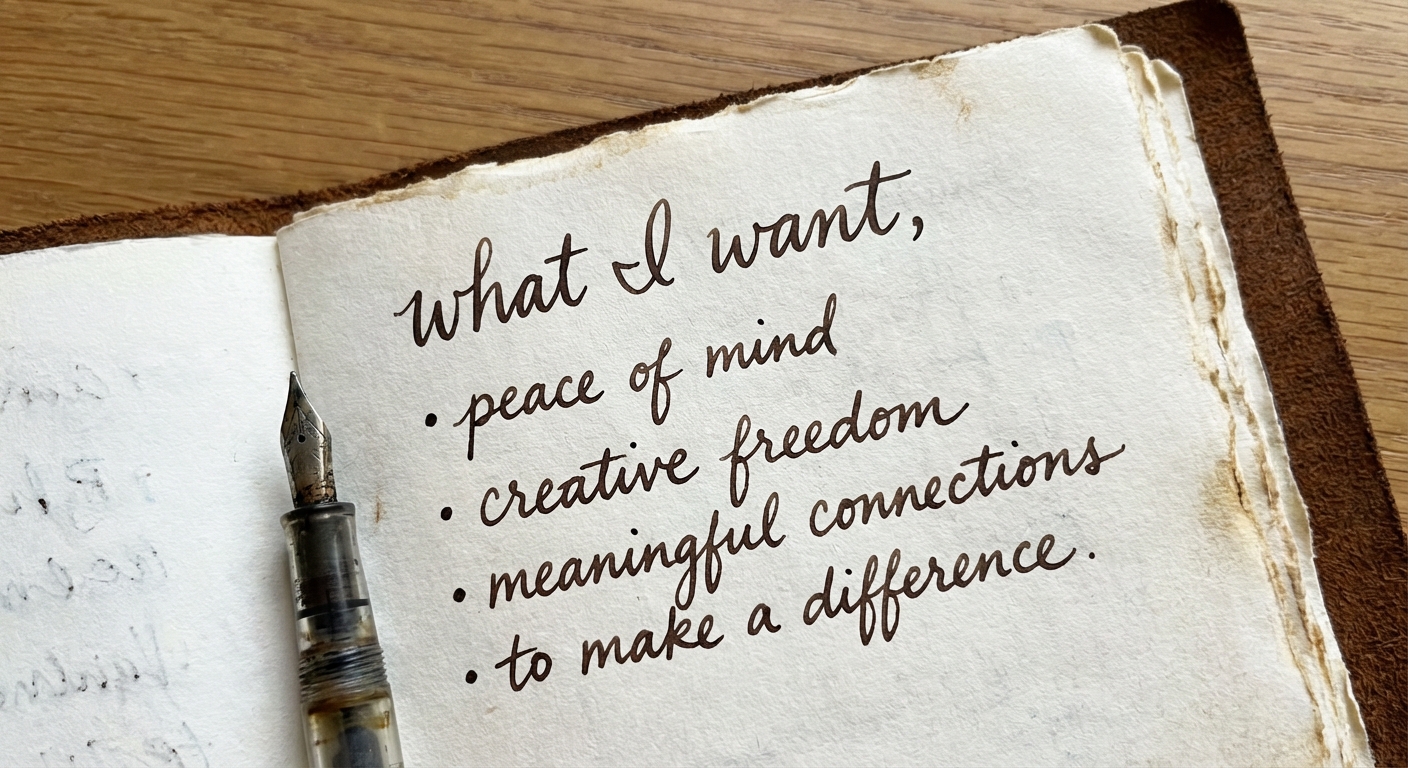
But here’s the reframe: avoiding the conversation doesn’t eliminate the risk. It just converts active risk (you might hear no) into passive risk (you definitely won’t get what you don’t ask for). The conversation you’re avoiding isn’t protecting you from disappointment. It’s guaranteeing you stay exactly where you are.
Prepare Without Over-Preparing
There’s a sweet spot between winging it and scripting every word. You want to be clear on your core message without being so rehearsed that you can’t respond to what actually happens in the room.
Start with the one thing: if this conversation achieves only one outcome, what would make it worthwhile? Maybe it’s getting clarity on whether a promotion is realistic this year. Maybe it’s simply being heard about your workload. Maybe it’s opening a door you can walk through later. Having one clear anchor prevents you from losing the thread when nerves kick in.
Then prepare your opening line. The first sentence is the hardest, and having it ready reduces the activation energy to begin. Career communication expert Alison Green suggests something simple: “I’d like to talk about my role and where I’m headed here. Do you have 20 minutes this week?” That’s it. You don’t need to preview the entire conversation in the ask. You just need to get it on the calendar.
Anticipate pushback without catastrophizing. Your boss might say the timing is bad, the budget isn’t there, or they need to think about it. These aren’t rejections. They’re data points. Prepare one follow-up question for each likely response: “What would need to change for this to be possible?” or “When would be a better time to revisit this?” The goal isn’t to script a debate. It’s to stay curious instead of defensive when things don’t go exactly as planned.
Have the Conversation (Imperfectly)
The conversation itself will never go exactly how you imagined. That’s not failure. That’s how conversations work.

A few principles for the room: Lead with respect, not apology. There’s a difference between “I’m sorry to bother you with this” (which undermines you) and “I appreciate you making time for this” (which honors both of you). State your case directly. “I’d like to be considered for the senior role when it opens” is clearer and more effective than “I was maybe thinking that possibly, if it makes sense, I might be interested in maybe taking on more.” Directness isn’t aggression. It’s clarity.
Listen more than you planned to. Your boss might have context you don’t: budget constraints, organizational changes coming, concerns about your readiness that are addressable. The conversation isn’t a monologue where you deliver your pitch and walk out. It’s an exchange where you might learn something that changes your strategy.
End with a next step, even if it’s small. “Can we revisit this in January?” or “Would it help if I put together a proposal?” or simply “Thank you for hearing me out. I’d appreciate knowing where things stand once you’ve had time to think.” A conversation without a next step is just a venting session. A next step keeps the door open.
What Happens After
Some career conversations end with a yes. More end with a maybe, a not yet, or a let me think about it. A few end with a clear no. All of these are better than the alternative, which is never knowing at all.
If you get a yes: clarify timelines and next steps before you leave the room. Enthusiasm fades and priorities shift. Get specifics while the commitment is fresh.
If you get a maybe: propose a follow-up date. “Would it be helpful if I checked back in three weeks?” keeps the conversation alive without being pushy. Put it on your calendar. Your manager has a hundred priorities. You have one.
If you get a no: ask what would need to change. “Is this a no for now, or a no period?” and “What would make this possible in the future?” give you information you can act on. A no with data is more useful than a maybe that goes nowhere.
And if the conversation reveals that what you want isn’t available here, that’s information too. Sometimes the career conversation you’re avoiding is really a conversation with yourself about whether you’re in the right place. Knowing when to quit is as important as knowing when to persist.
Your Move
The conversation you’ve been postponing isn’t going anywhere. It will be there in January, in March, in next December, getting heavier each time you don’t have it. The question isn’t whether you’re ready. The question is whether you’re willing to be imperfect.
You don’t need a perfect script. You don’t need to eliminate all risk. You need to decide that staying stuck costs more than speaking up, and then open your mouth anyway. The conversation might not go the way you hope. But having it changes something that not having it never will: your relationship to your own agency.
What career conversation have you been avoiding? And what would it take to have it this week?
Sources: Adam Grant’s organizational psychology research, Jenny Blake (“Pivot”), Alison Green’s career communication expertise.