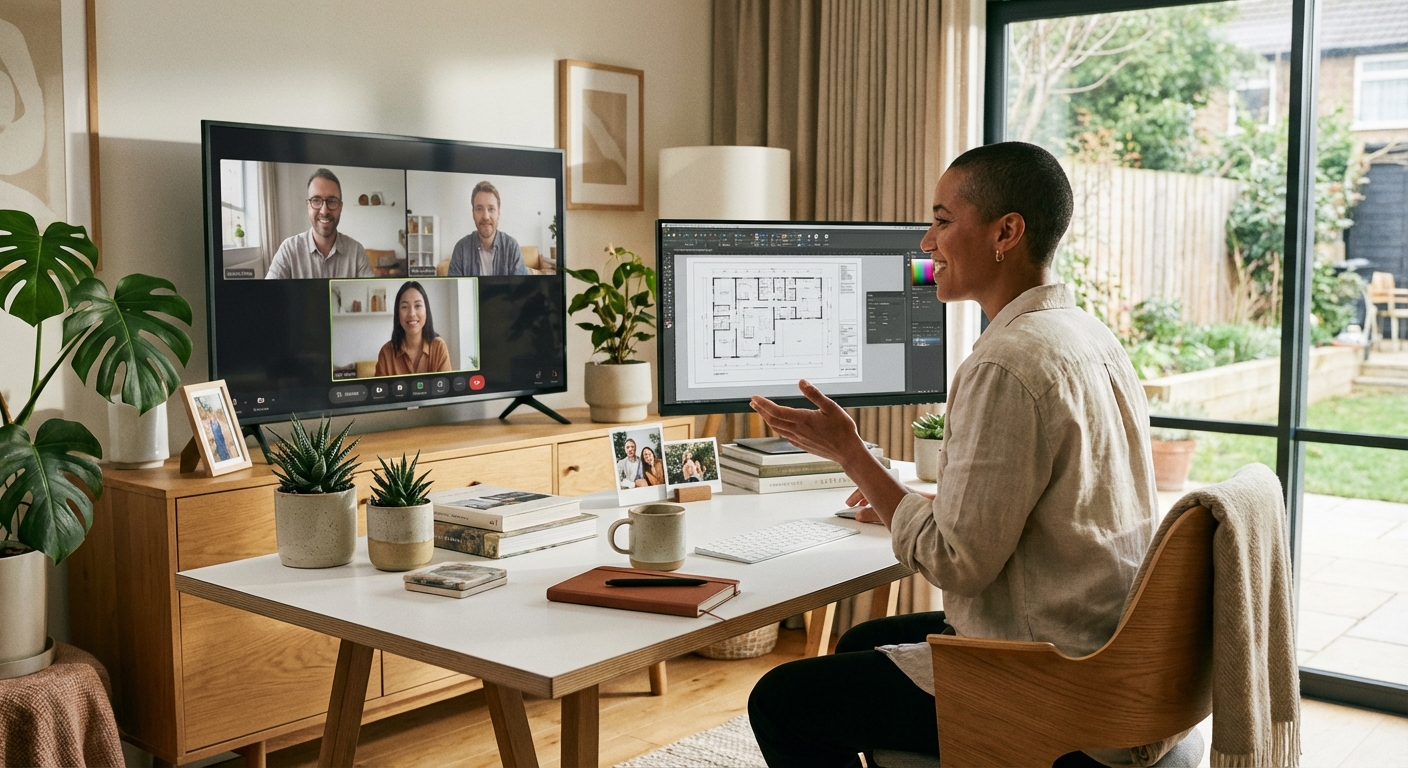
In March 2020, millions of workers got what many had been requesting for years: permission to work from home. The commute disappeared. The dress code relaxed. The flexibility everyone wanted finally arrived. Three years later, something unexpected emerged. Many of those same workers were more exhausted than ever, struggling with isolation they hadn’t anticipated, and discovering that the boundary between work and life had dissolved in ways that felt more like a trap than freedom.
Remote work delivered on some of its promises. No more hour-long commutes. No more fluorescent-lit open offices. No more pretending to look busy during slow afternoons. But organizational psychologist Adam Grant, who has studied remote work extensively at Wharton, notes that the shift also eliminated things we didn’t realize we’d miss: the spontaneous conversations, the ambient social energy, the physical transition between work mode and home mode. The commute, it turns out, wasn’t just wasted time. It was a psychological boundary that separated two different versions of ourselves.
What No One Warned You About
The loneliness hits differently than you might expect. You thought you’d appreciate the solitude. Introverts especially anticipated relief from the constant social energy drain of office small talk and open floor plans. But research from organizational behavior expert Constance Noonan Hadley at Boston University reveals that even introverts need what she calls “ambient belonging,” the low-level social contact that comes from sharing space with others, from being seen and acknowledged throughout the day.
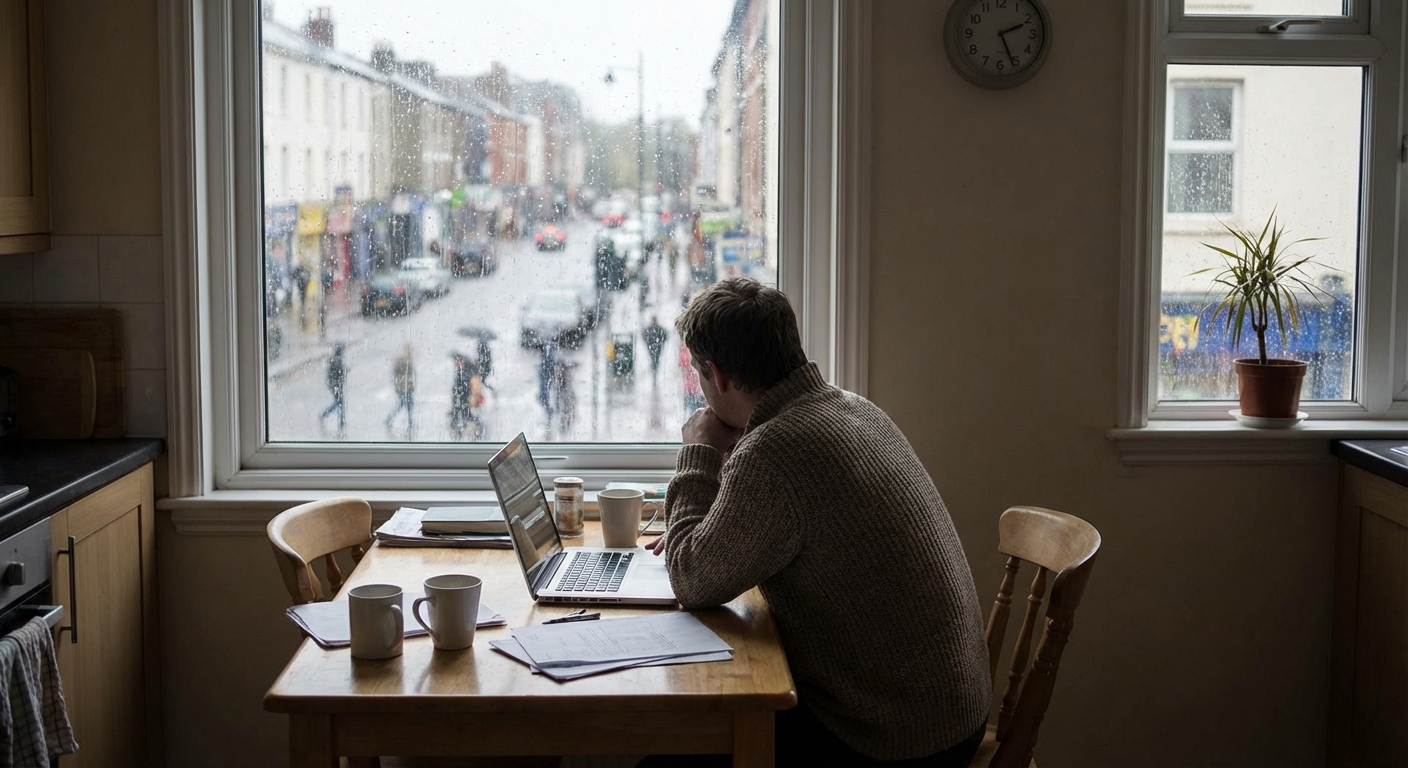
Now you can go days speaking only to your partner, if you have one, or no one at all. Your social muscles atrophy in ways you don’t notice until you’re at a party struggling to remember how conversation works. Zoom meetings, it turns out, don’t create the same neural connection as being in a room together. Neuroscientist Matthew Lieberman’s research on social connection shows that video calls lack the subtle synchronization, the microexpressions, the full-body presence, that our brains evolved to need. We’re social animals trying to socialize through a twelve-inch screen. If this resonates, our guide on making friends as an adult offers practical strategies for building connection outside the office.
The overwork paradox catches almost everyone off guard. Working from home often means working more, not less. Your commute time becomes work time. Your lunch break becomes checking emails while eating. Your evenings, since you’re already sitting at your computer, become “just finishing this one thing” that stretches into hours. Dr. Gloria Mark, author of “Attention Span” and a researcher at UC Irvine who studies digital distraction, has documented how remote workers check email earlier in the morning, respond to messages later at night, and work through breaks they would have taken in an office. The office had natural boundaries: leaving the building meant work was done. Home has no such architecture. You just close the laptop, or don’t.
Building Structure Without an Office
The office provided external structure you never had to think about. The commute told your brain “work is starting.” The lights going off at 6 PM signaled it was time to leave. The presence of colleagues created social accountability for taking breaks, eating lunch, going home at reasonable hours. Working from home requires building all of that structure yourself, deliberately and consistently. B.J. Fogg’s behavior design research at Stanford suggests that the most sustainable habits are anchored to existing routines and physical environments. When you work where you sleep and eat and relax, those anchors disappear. You have to create new ones.
Start with temporal boundaries that you protect as though your wellbeing depends on them, because it does. Choose actual work hours, not “whenever” or “it depends,” but real start and end times that you communicate clearly and maintain consistently. Research on boundary management by Ellen Ernst Kossek at Purdue University shows that workers who set and maintain explicit work hours report significantly lower burnout than those who blend work and life without clear demarcation.

Create rituals that mark transitions. In the morning, shower and get dressed, even if no one will see you. Make coffee with intention. Take a short walk around the block. Something that tells your nervous system “work is beginning.” At the end of the day, close the laptop physically. Change clothes. Walk outside, even if just around the building. James Clear’s research on habit formation emphasizes that physical actions create psychological boundaries more effectively than intentions alone. Your brain needs the ritual to understand that the context has changed.
Physical boundaries matter as much as temporal ones. If possible, dedicate a space that’s only for work, somewhere you don’t eat, don’t relax, don’t scroll social media. When you close the door or leave that corner, work stays there. Environmental psychologist Sally Augustin’s research confirms that our brains associate spaces with activities: if you work on the couch, your brain will expect work when you sit there to relax. Protect your rest spaces by keeping work out of them.
The Connection Challenge
You can’t fully replace in-person connection with video calls and Slack messages. But you can create remote connection that’s significantly better than isolation. It requires intentionality, because the ambient connection of shared physical space doesn’t exist to fall back on. You have to build it deliberately, one interaction at a time.
Camera-on meetings are exhausting, but they’re also how you actually see your colleagues. The Stanford researcher Jeremy Bailenson, who studies “Zoom fatigue,” found that excessive video calls drain us because our brains work harder to process social cues through a screen. The solution isn’t to turn cameras off for everything, but to be strategic: cameras on for relationship-building conversations, cameras off for straightforward information sharing. Virtual coffee chats, fifteen minutes with no agenda, create the kind of casual connection that used to happen by the water cooler. Schedule them deliberately, because they won’t happen otherwise.
Reach out individually when you can. A voice call instead of a Slack message. An actual conversation instead of asynchronous text. The extra friction is worth it for the connection quality. And when you communicate in writing, add the warmth that would come through naturally in person. More explicit appreciation. More acknowledgment of the human on the other side. The transactional efficiency of text-based communication removes the emotional bandwidth of in-person interaction. You have to add it back deliberately. For more on building meaningful connections in a remote context, see our piece on micro-connections.
Managing the Home Distraction
Home distractions are different from office distractions, but they’re no less challenging. The laundry calling from the other room. The dishes in the sink that you can see from your desk. The television right there, the bed tempting you for a midday nap, the refrigerator suddenly fascinating every twenty minutes. The office had social pressure to look productive. Home has no such surveillance, and the freedom cuts both ways.
The strategies that work are surprisingly simple but require discipline to maintain. Position your workspace so you can’t see household tasks that need doing. If the dishes are in your line of sight, you’ll think about them constantly. Face a wall, or position your screen so domestic chaos stays peripheral. Use app blockers during focus time, because willpower is a finite resource and decision fatigue is real. Gloria Mark’s research shows that after an interruption, it takes an average of 23 minutes to fully return to the original task. Every time you check social media “just for a second,” you’re not losing a second; you’re losing the deep focus state you’d built.
Time-blocking for deep work creates protected space where interruptions aren’t allowed. Cal Newport, whose book “Deep Work” has become the bible of focus in the distracted age, argues that knowledge workers need four-hour blocks of uninterrupted concentration to do their best thinking. That’s hard to protect at home, but it’s essential. Communicate your focus time clearly to anyone who shares your space, and resist the urge to check Slack “just in case.” Strategic breaks matter too: rather than constant low-level distraction, take real breaks every 90 minutes or so. Walk, stretch, make coffee, look out a window. Then return refreshed rather than depleted. For a deeper exploration of protecting focused time, see our piece on deep work in a shallow world.
Making It Sustainable
Remote work can be wonderful when it’s designed deliberately rather than defaulted into. The fundamentals are clear: work hours that you protect and communicate, a dedicated workspace that separates work from life, daily rituals that mark transitions between modes, intentional connection with colleagues rather than isolation by default, and protection of non-work time as fiercely as you protect work deadlines.
Assess regularly whether your setup is actually working. Are you more productive or less than you were in the office? Be honest, because the answer affects your quality of life. Are you maintaining human connection, or have you slowly isolated without noticing? Do you know when work ends, or has it colonized your evenings and weekends? Is your mental health better or worse than it was with a commute and colleagues? The flexibility might be wonderful. The isolation might be quietly damaging you. Only honest assessment reveals which is winning.
If you try all of this and remote work still isn’t working for you, that’s important information. You’re allowed to prefer office work. You’re allowed to need the structure and social energy that shared physical space provides. That’s not failing at remote work; that’s knowing yourself well enough to choose an environment that serves your actual needs. The goal isn’t to make remote work succeed because it’s supposed to be better. The goal is to build a work setup that actually serves your life, whatever that looks like for you.
Sources: Adam Grant’s organizational psychology research, Constance Noonan Hadley’s research on ambient belonging, Matthew Lieberman’s social neuroscience, Dr. Gloria Mark’s “Attention Span,” B.J. Fogg’s behavior design research, Ellen Ernst Kossek’s boundary management research, James Clear’s habit research, Sally Augustin’s environmental psychology, Jeremy Bailenson’s research on Zoom fatigue, Cal Newport’s “Deep Work.”.