You set the alarm for 5:30 AM because that’s what productive people do. You dragged yourself to the gym, brewed coffee in the dark, and sat down to work before the sun came up. By 10 AM, you felt accomplished. By 2 PM, you were useless. By 9 PM, just as your brain finally started firing on all cylinders, you forced yourself to bed because the alarm was coming again.
This isn’t a discipline problem. It’s a design problem. You’ve been building your life around someone else’s biology.
Chronotype research, the science of your body’s innate timing preferences, suggests that roughly half the population is forcing themselves into schedules that work against their neurochemistry. And the cost isn’t just grogginess. It’s measurable losses in productivity, mental health, and physical wellbeing that compound over years.
The good news? Your chronotype isn’t a mystery. And once you understand it, you can stop white-knuckling your way through the day and start working with your body instead of against it.
Your Body Already Knows the Schedule
Your chronotype is your biological predisposition for when you naturally sleep, wake, and experience peak cognitive performance. Unlike habits (which can be trained) or preferences (which can shift), your chronotype is largely genetic, rooted in the PER3 gene and your body’s master clock in the suprachiasmatic nucleus.
Dr. Michael Breus, a clinical psychologist and sleep specialist, developed one of the most practical chronotype frameworks, categorizing people into four types:
Lions (about 15-20% of the population) are the true early risers. They wake naturally before dawn, peak in productivity by late morning, and start winding down by early evening. They’re the people who genuinely enjoy 6 AM and aren’t faking it.
Bears (roughly 55% of the population) follow the solar cycle. They do well with conventional schedules, peaking in productivity mid-morning through early afternoon. Most workplace structures were designed for bears, which is why the 9-to-5 feels natural for some people and punishing for others.
Wolves (about 15% of the population) are the night owls. Their energy builds through the day, peaking in the late afternoon and evening. They’re often the most creative thinkers, but they suffer disproportionately in a world built around morning productivity. Research links the wolf chronotype to higher openness and creativity, but also to greater struggles with conventional schedules.
Dolphins (about 10% of the population) are light, irregular sleepers. Often anxious or highly sensitive, dolphins have fragmented sleep patterns and may not fit neatly into any peak-performance window. Their superpower is vigilance and attention to detail, but they need the most intentional sleep support.
The critical insight here isn’t which animal you are. It’s that these differences are biological, not moral. Being a wolf doesn’t mean you lack discipline. Being a lion doesn’t mean you’re more virtuous. Your body simply operates on a different timeline.
The Hidden Cost of Circadian Mismatch
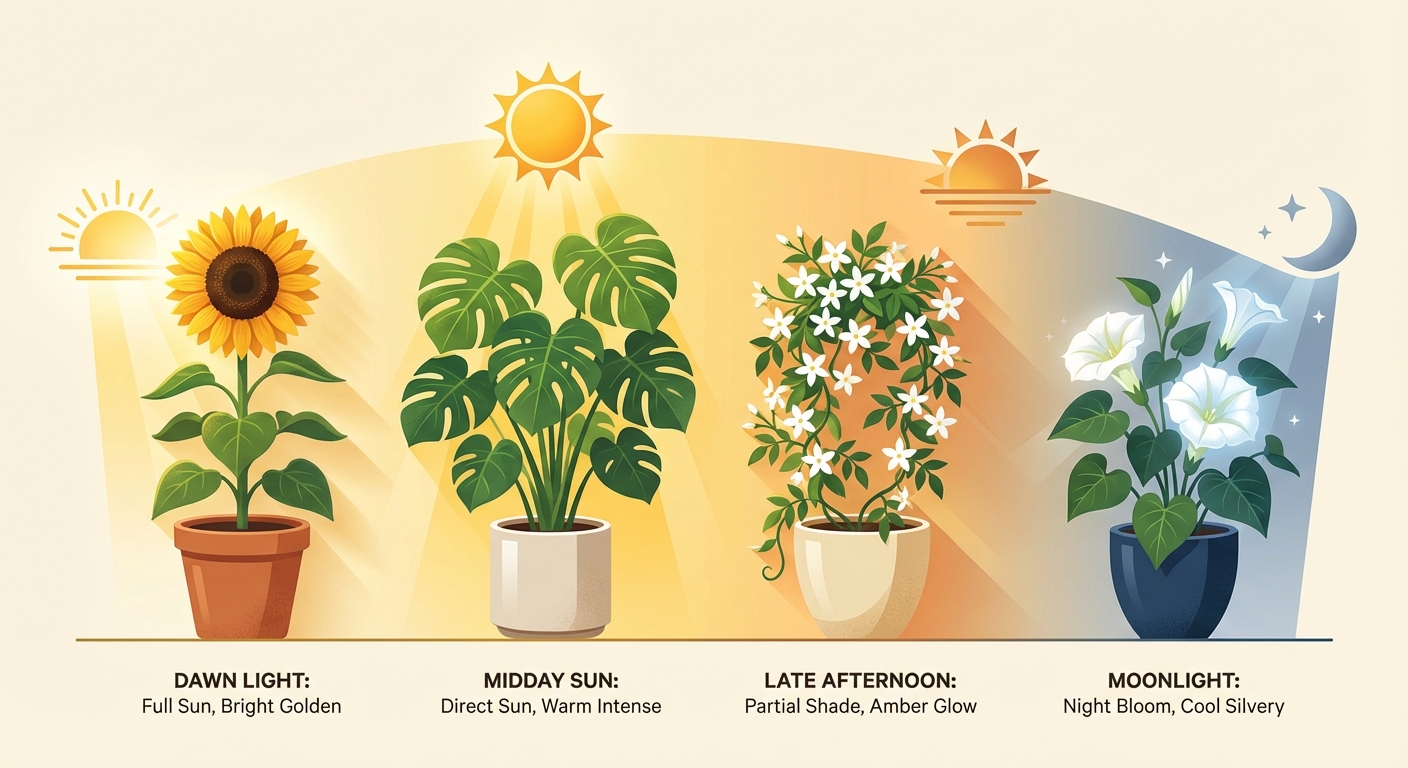
When your schedule consistently conflicts with your chronotype, researchers call this “social jetlag,” a term coined by German chronobiologist Till Roenneberg. It’s the chronic misalignment between your biological clock and your social obligations, and it acts on your body much like actual jet lag, except you never recover because you never land in the right time zone.
The health consequences are not trivial. A population-based panel study published in Preventive Medicine Reports found that evening chronotypes experienced significantly greater health-related productivity loss and reduced work ability compared to morning types, not because they were less capable, but because their schedules forced them to perform during their biological low points.
Research published in Frontiers in Neuroscience examining circadian rhythm disruption across more than 90,000 participants found connections between circadian dysfunction and increased risk for major depressive disorder, bipolar disorder, reduced happiness, greater loneliness, and lower life satisfaction. The mechanism isn’t complicated: when you consistently sleep and wake at times your body resists, you disrupt hormone regulation, immune function, and cognitive processing.
And this isn’t just about sleep quality, though that matters enormously (as we explored in why sleep consistency matters more than duration). Circadian mismatch affects when you can think clearly, when you’re emotionally resilient, and when your body is primed for physical activity. A wolf forced into a lion’s schedule isn’t just tired. They’re cognitively impaired during the hours they’re expected to perform best.
Design Your Day Around Your Biology
Understanding your chronotype is only useful if you act on it. The goal isn’t to restructure your entire life overnight (that’s the optimization trap again). It’s to make strategic adjustments that align your most important activities with your biological peak.
Map your energy, not your time. For one week, rate your mental clarity and energy on a 1-10 scale every two hours. Don’t try to change anything. Just observe. You’ll likely see a pattern that reveals your natural peak (high focus, creative flow), your maintenance window (good for routine tasks), and your recovery period (best for rest, low-stakes activities). This data is more useful than any productivity system.
Protect your peak for deep work. Once you know when your brain is sharpest, guard that window fiercely. For lions, this might be 8-11 AM. For wolves, it could be 4-7 PM. Schedule meetings, email, and administrative tasks outside this window whenever possible. As the deep work research suggests, focused thinking requires protected time, and your chronotype tells you exactly when that time should be.
Negotiate your mornings (or evenings). If your workplace offers any flexibility, use your chronotype as the basis for your schedule. More organizations are recognizing that flexible hours aren’t a perk but a productivity strategy. If you can’t change your start time, focus on what you can control: which tasks you tackle first, when you schedule creative versus administrative work, and how you manage energy through the day.
Align your sleep anchor. Rather than forcing a fixed bedtime, find your natural sleep onset time (when you genuinely feel drowsy, not when you think you should sleep) and protect it. Consistency matters more than specific timing. A wolf who sleeps consistently from midnight to 8 AM will outperform a wolf who forces a 10 PM bedtime and lies awake for 90 minutes every night.

When Life Won’t Flex
Let’s be honest: most of us can’t fully redesign our schedules. You have a job with fixed hours, kids who wake at dawn regardless of your chronotype, or responsibilities that don’t care about your PER3 gene. That’s real, and any advice that ignores it isn’t useful.
But chronotype awareness still helps, even within rigid structures. Knowing you’re a wolf who has to function at 8 AM changes your strategy. Instead of berating yourself for morning sluggishness, you plan for it. You front-load routine tasks. You save creative problem-solving for after lunch when your brain starts to wake up. You stop accepting meeting invitations at 7 AM, knowing you’ll contribute nothing but presence.
You also stop comparing yourself to the lions in your life. That colleague who bounds into the office at 7 AM radiating energy isn’t more disciplined than you. They’re operating in their biological prime. Your prime comes later, and it’s every bit as powerful. The comparison only hurts when you assume everyone’s biology runs on the same clock.
For parents of young children, chronotype alignment might mean adjusting the margins rather than the core. Perhaps it’s 20 minutes of protected focus during your peak instead of an hour. Perhaps it’s shifting your bedtime by 30 minutes in the direction your body wants. Small alignments compound. They won’t eliminate social jetlag, but they can reduce it enough to feel the difference.
Put It Into Practice
Your chronotype isn’t a life sentence, and it’s not a rigid box. It’s a starting point for designing a life that works with your body rather than against it. The cultural script that says “early to bed, early to rise” is one way to live. It’s not the only way, and for roughly half the population, it’s not the best way.
This week, try one thing: move your most important work to the time of day when your brain feels clearest. Don’t reorganize your entire schedule. Just relocate one task, one meeting, one creative session to a time that matches your energy instead of your calendar. Notice what changes.
Your body has been trying to tell you something for years. It’s been signaling through afternoon crashes, morning fog, late-night bursts of clarity, and the quiet relief you feel on weekends when you sleep on your own schedule. That signal isn’t weakness. It’s information. And the most productive thing you can do with it is listen.

Sources
- Schwartz, B. & Breus, M. J. (2016). The Power of When: Discover Your Chronotype. Sleep Doctor
- Sleep Foundation. (2025). “Chronotypes: Definition, Types, & Effect on Sleep.” Sleep Foundation
- Türkoğlu, S., et al. (2025). “Work ability and health-related productivity loss by chronotype.” Preventive Medicine Reports. PubMed
- Huang, J., et al. (2022). “Chronotype, circadian rhythm, and psychiatric disorders: Recent evidence and potential mechanisms.” Frontiers in Neuroscience. Frontiers