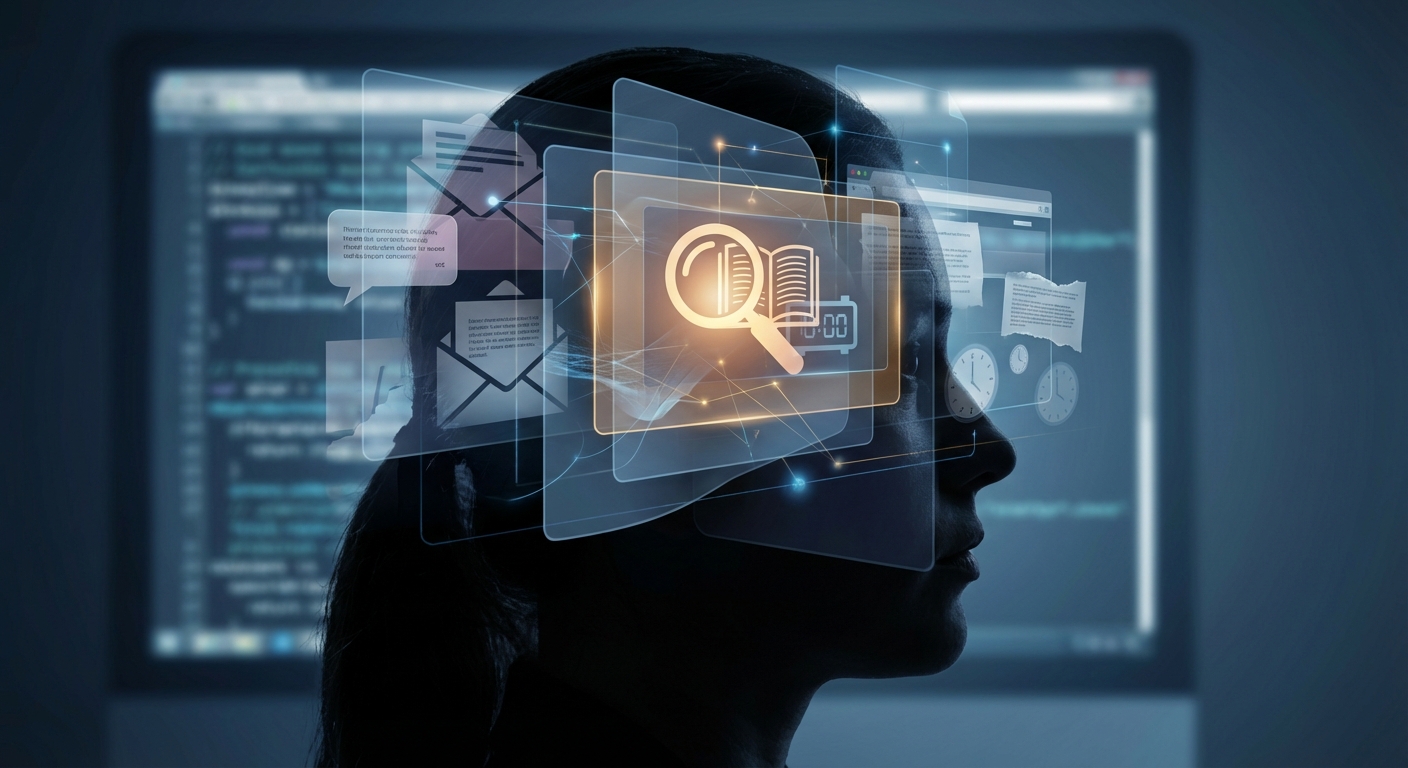
You’ve just spent the last hour with seventeen browser tabs open, switching between a half-written report, a Slack thread about next week’s meeting, a ChatGPT prompt that’s generating an outline you’ll probably not use, and a newsletter about how AI is going to change everything. At the end of that hour, you’ve completed approximately nothing. But you’ve felt busy the entire time.
Now imagine a different hour. One task. No notifications. No tabs. No AI assistant generating content in the background. Just you and a problem that requires sustained thinking. For many people, this second scenario has become almost unimaginable, not because they lack discipline, but because the infrastructure of modern work has been redesigned around interruption and delegation.
As artificial intelligence handles more of the routine cognitive work that used to fill our days, a paradox is emerging. The tasks that AI can do, drafting emails, summarizing documents, generating first passes of creative work, are the tasks that used to structure our sense of productivity. What remains is the work that requires exactly what AI cannot provide: deep, sustained, original human thought. And that capacity, the one that matters most, is the one we’ve been systematically eroding.
The Attention Crisis That AI Didn’t Create (But Made Visible)
Cal Newport, the Georgetown University computer science professor who coined the term “deep work,” defines it as professional activity performed in a state of distraction-free concentration that pushes your cognitive capabilities to their limit. His research, along with a growing body of attention science, has established that deep work produces results that shallow work cannot: original insights, creative breakthroughs, mastery of difficult material, and the quality of output that distinguishes exceptional work from merely adequate work.
The problem isn’t new. Gloria Mark, a researcher at the University of California, Irvine, has been studying workplace attention for over two decades. Her research shows that the average knowledge worker switches tasks every three minutes. After an interruption, it takes roughly 23 minutes to return to the same depth of focus. In a typical workday filled with emails, messages, and meetings, truly uninterrupted deep work periods are vanishingly rare.

What AI has done is strip away the excuse. When routine tasks required human attention, we could tell ourselves that the constant switching was necessary, that answering emails and formatting documents and attending status meetings was “real work.” Now that AI can handle much of this, the gap between busy and productive has become impossible to ignore. If a machine can do the shallow work in seconds, the only justification for your role is the deep work that machines cannot do. And many people are discovering that they’ve lost the ability to do it.
This isn’t a moral failing. It’s an environmental adaptation. Your brain has adapted to the world you’ve given it: a world of constant novelty, immediate rewards, and fragmented attention. Reversing that adaptation requires deliberate effort, the same way recovering physical fitness after years of sedentary living requires intentional training.
What Deep Work Actually Produces
The value of deep work isn’t abstract. It’s measurable and increasingly rare, which makes it increasingly valuable.
Newport’s research identifies several categories of output that depend on deep work. Original analysis requires holding complex, sometimes contradictory information in mind simultaneously and finding patterns or solutions that weren’t obvious. Creative work depends on what psychologists call “incubation,” the process by which your subconscious mind works on problems during periods of sustained focus. Skill acquisition, learning something genuinely new and difficult, requires the kind of concentrated practice that psychologist Anders Ericsson called “deliberate practice.”
None of these processes can be meaningfully outsourced to AI. An AI can generate text, but it can’t have the insight that makes a piece of writing genuinely original. It can synthesize existing information, but it can’t make the creative leap that connects two previously unrelated ideas. It can simulate expertise, but it can’t develop the hard-won understanding that comes from wrestling with material until it yields.
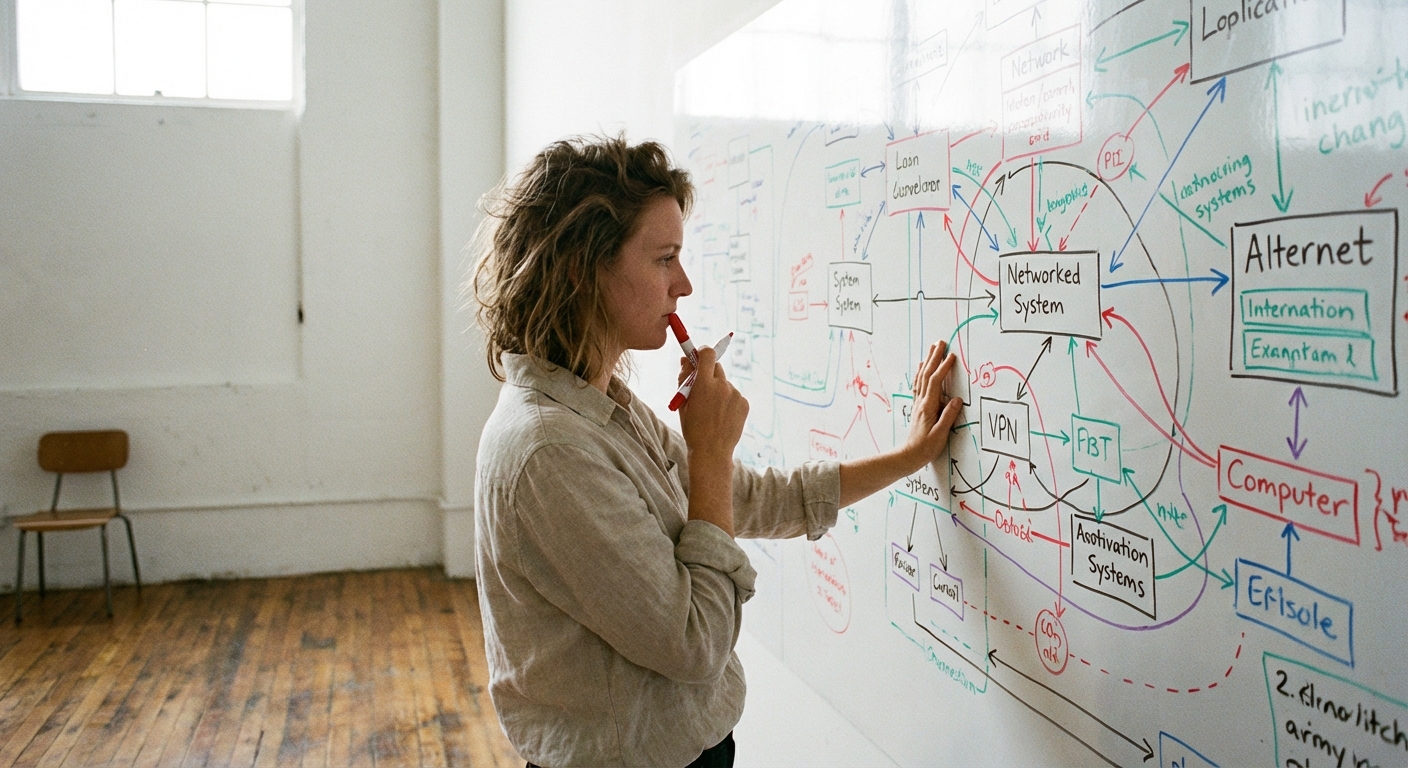
This is where the economic argument for deep work becomes compelling. As AI commoditizes routine cognitive output, the premium on work that requires genuine human depth increases. The person who can spend four hours in concentrated analysis will produce insights that no amount of AI-assisted shallow work can match. In an economy flooded with AI-generated content and AI-assisted output, the ability to think deeply becomes a rare and valuable differentiator.
The parallel to what we explored in slow productivity is striking: doing less, but with greater depth and intention, produces better results than doing more at a surface level. AI amplifies this principle. The shallow work it can handle becomes less valuable. The deep work it cannot becomes more.
Building a Deep Work Practice
If your attention has been fragmented for years, rebuilding deep work capacity is more like physical rehabilitation than flipping a switch. You start small, increase gradually, and create environmental conditions that support the behavior you’re trying to develop.
Start with your minimum effective dose. If you haven’t done sustained focused work in months, committing to four-hour deep work blocks is unrealistic. Start with 30 minutes. Set a timer. Close everything except what you need for the single task you’re working on. When the timer goes off, take a genuine break. Increase by ten minutes each week. Newport reports that even experienced deep workers rarely sustain more than four hours of genuine deep work per day. Thirty minutes is not trivial. It’s a foundation.
Eliminate the option, not just the temptation. Willpower-based approaches to focus don’t work well because they require you to continuously resist stimuli designed to capture attention. Instead, remove the stimuli entirely. Put your phone in another room. Use website blockers. Close your email application. If you work in an open office, wear noise-canceling headphones as a social signal. The goal is to make distraction physically difficult, not just psychologically resisted.
Protect your deep work time structurally. Block time on your calendar for focused work and treat it with the same seriousness you’d treat a meeting with your boss. When someone tries to schedule over it, decline. When an “urgent” request comes in during your deep work block, let it wait. Most urgencies, when examined honestly, can wait 90 minutes.
Use AI for what it’s good at, then do what it can’t. This isn’t about rejecting AI. It’s about using it strategically. Let AI handle research compilation, first drafts, data organization, and administrative tasks. Then invest your freed-up cognitive energy in the work that requires your unique human capacities: synthesis, judgment, creative connection, and original thought. AI is a tool that should expand your deep work capacity, not replace it.
The Cognitive Fitness Analogy
There’s a useful parallel between physical fitness and cognitive fitness that helps frame what’s happening. For most of human history, physical labor was unavoidable, and people stayed physically active as a byproduct of daily life. When machines took over physical work, we didn’t suddenly become healthier. We became sedentary. And we had to deliberately invent exercise, structured physical activity whose sole purpose is maintaining the fitness that daily life no longer provides.
The same pattern is playing out with cognitive work. For decades, routine mental tasks kept our cognitive muscles engaged throughout the workday. As AI takes over those tasks, we risk cognitive sedentariness: brains that are constantly stimulated but rarely challenged, always active but never deeply focused.
Deep work, in this framing, is cognitive exercise. It’s the deliberate practice of sustaining attention and pushing cognitive limits, not because it’s the most efficient way to produce output, but because it’s how you maintain the mental capacities that matter. Without it, attention residue accumulates, focus degrades, and the quality of thought that makes human contribution valuable gradually erodes.

Put It Into Practice
The age of AI doesn’t make human thinking obsolete. It makes shallow human thinking obsolete. The routine work that used to justify our salaries is being automated, and what remains is the work that requires what only humans can provide: sustained attention, original insight, creative synthesis, and the kind of understanding that comes from genuinely wrestling with difficult problems.
This is both a challenge and an opportunity. The challenge is that most of us have spent years training our brains for exactly the wrong kind of work: rapid switching, constant availability, reactive responsiveness. The opportunity is that anyone willing to retrain their attention has access to a competitive advantage that AI cannot replicate.
You don’t need to become a monk. You need 30 minutes tomorrow morning with your phone in another room and one problem that deserves your full attention. You need to discover, or rediscover, what it feels like to think without interruption. To hold a complex idea in mind long enough to see its shape. To produce something that couldn’t have been generated by a prompt.
The most important skill in the age of AI isn’t learning to use AI better. It’s learning to do what AI cannot. And that starts with protecting your capacity for the kind of work that only a focused human mind can do.
Sources
- Cal Newport, Georgetown University, “Deep Work” and research on focused professional activity
- Gloria Mark, University of California Irvine, research on workplace attention and task-switching
- Anders Ericsson, research on deliberate practice and expert performance
- Adam Gazzaley and Larry Rosen, “The Distracted Mind: Ancient Brains in a High-Tech World”
- Newport’s “Slow Productivity” framework on depth over volume