You’re at a coffee shop, and someone next to you is reading a book you love. You want to say something, to connect over this shared interest. But the voice in your head stops you: “That would be weird. Adults don’t just make friends with strangers.”
So you say nothing. You finish your coffee, leave, and wonder why making friends felt so easy in college but feels impossible now.
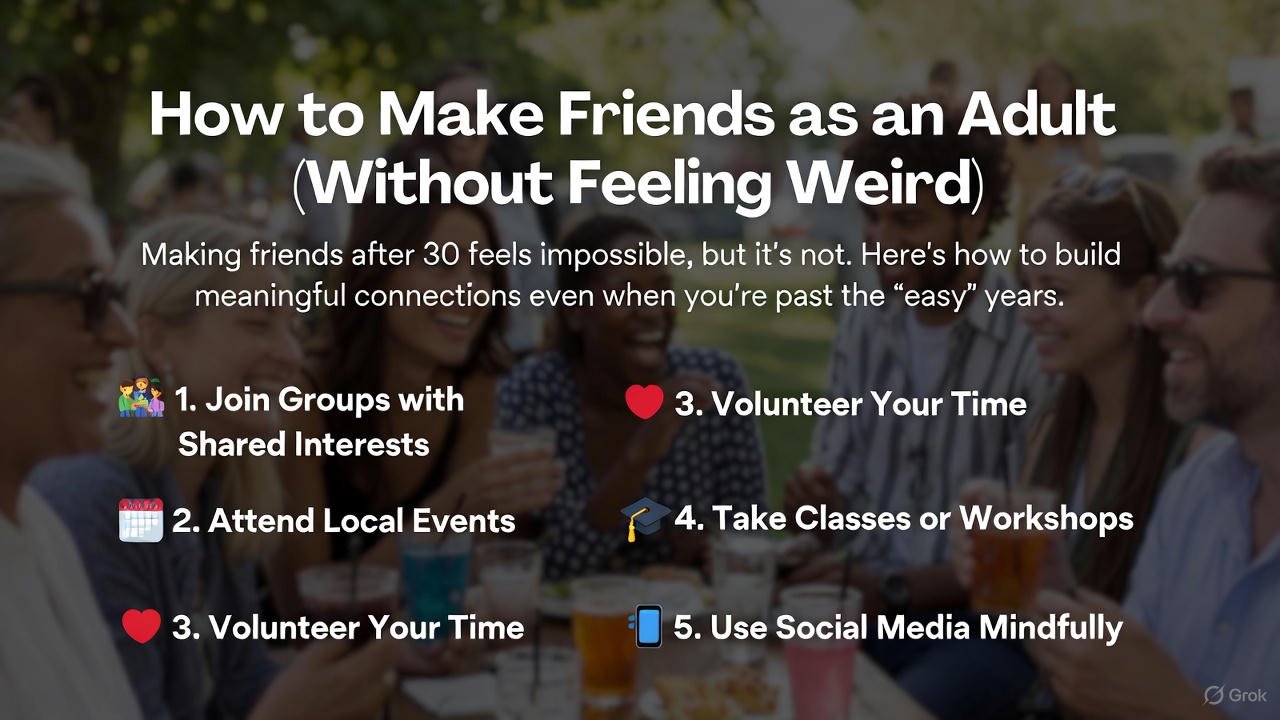
If this sounds familiar, you’re part of an unspoken majority. Research from the University of Kansas shows that difficulty making friends peaks in your 30s and 40s, exactly when you need friendship most. You’re navigating career stress, maybe raising kids, possibly dealing with aging parents, and the friends you had are scattered across time zones and life stages. The spontaneous hangouts of youth feel like a distant memory, and reaching out to someone new feels risky in ways it never did before.
But here’s what the research also shows: making friends as an adult is harder, but it’s absolutely possible. You just need a different approach than the one that worked when you were 19 and everyone around you was also actively seeking connection. The strategies that build adult friendship are learnable, and the awkwardness you’re dreading is temporary.
Why This Feels So Hard
Understanding why adult friendship is challenging removes some of the shame around struggling with it. This isn’t a personal failing; it’s a structural reality that nearly everyone faces.
When you’re young, you have two things in abundance that adult life systematically strips away: time and proximity. College surrounded you with potential friends for hours every day, with nothing else competing for attention. As an adult, time becomes brutally finite. Work, family responsibilities, health maintenance, just surviving takes most of your energy. And unless you’re deliberate about it, you might go weeks without sustained exposure to the same group of people outside your household or workplace.

The vulnerability factor increases too. Making friends requires putting yourself out there, admitting you want connection, risking rejection. That vulnerability feels riskier with more life behind you. You have more identity built up, more fear of judgment, more experience with rejection stinging. When you’re 20 and someone doesn’t want to be friends, whatever, there are hundreds more people around. When you’re 35 and you’ve tried to connect with someone and it doesn’t work out, the stakes feel higher because the opportunities feel scarcer.
Then there’s the logistics problem. Your potential friends have different schedules, live in different neighborhoods, have different family situations. Coordinating even a simple coffee requires navigating calendars like you’re scheduling a business merger. The spontaneity of just showing up at someone’s dorm room or deciding to go somewhere on a whim doesn’t work when everyone has jobs, kids, and 17 other commitments.
And finally, you’re pickier, which is actually healthy. You know yourself better now. You know what kind of people energize you and which ones drain you. You’re less willing to settle for surface-level friendships just to have people around. This means the pool of potential friends shrinks, but it also means the friendships you do build have more potential for depth.
The Research on How Friendships Actually Form
Sociologist Jeffrey Hall’s research on friendship formation reveals a pattern that most adults don’t understand, which is partly why we struggle. Friendships don’t emerge from single impressive interactions; they require repeated exposure plus varied contexts.
Hall’s studies found that it takes approximately 50 hours of time together to move from acquaintance to casual friend, 90 hours to become real friends, and more than 200 hours to become close friends. That sounds like a lot, and it is. But the crucial insight isn’t the raw hours; it’s that the hours need to be accumulated through consistent, repeated interactions over time. You can’t manufacture a friendship through one marathon hangout.
The other component is context variety. Seeing the same person weekly at yoga might create friendly acquaintance, but if that’s the only context, the friendship often stays surface-level. Adding coffee after class, or meeting up outside of the yoga studio entirely, shifts the relationship because you’re learning who this person is in different settings. You see different facets of them and they see different facets of you. This is what transforms “person I chat with” into “actual friend.”
This explains why adult friendship feels so difficult: we rarely have structures that provide both repeated interaction and context variety. We have to create those structures deliberately, which feels unnatural because friendship in childhood and young adulthood emerged organically from the built-in structures of school and shared housing.
Where Adults Actually Make Friends
Generic advice to “put yourself out there” fails because it’s too vague. You need specific environments that work for adult friendship formation, ones that provide both repeated interaction and opportunities for context bridging.
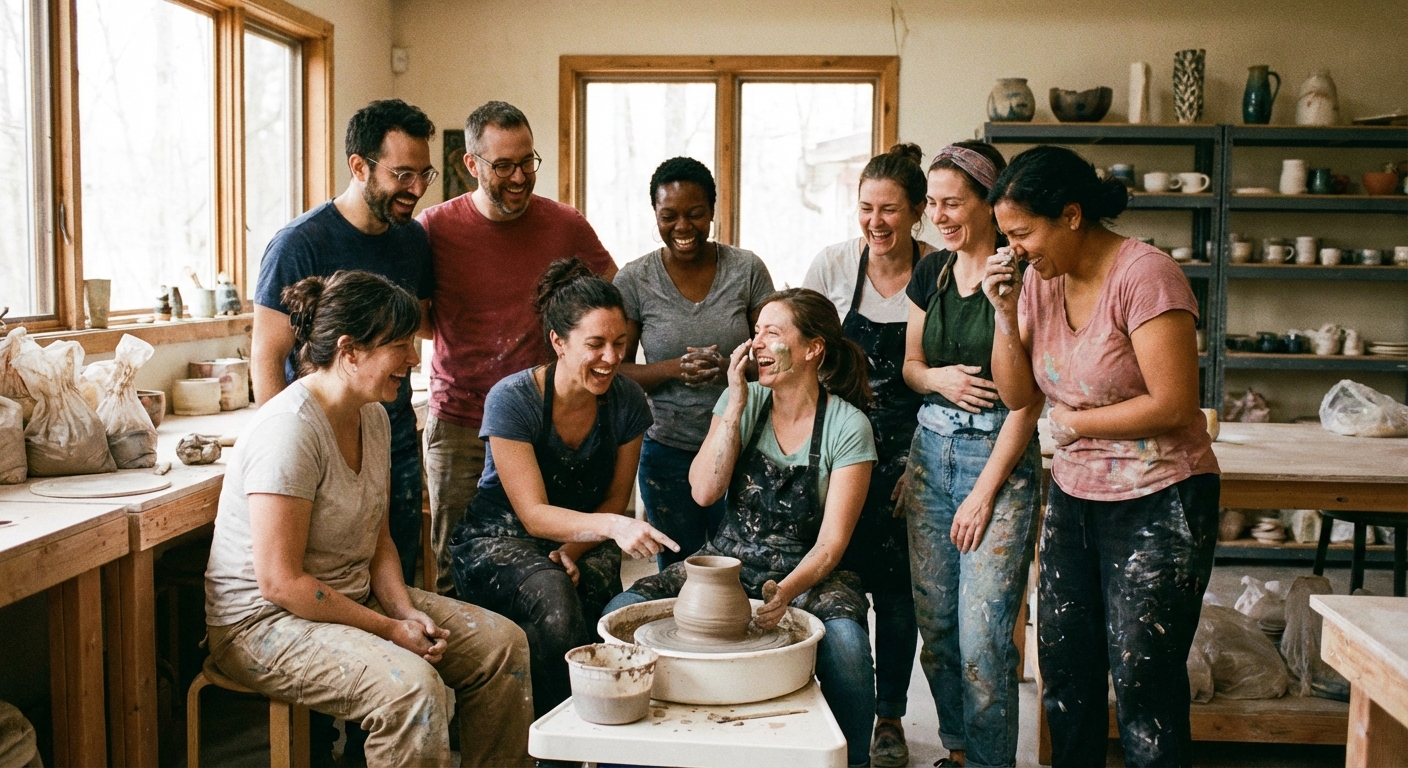
Classes and regular activities consistently rank highest in research on adult friendship formation because they solve the core problems automatically. Whether it’s fitness classes, pottery, language learning, or partner dancing, you see the same people repeatedly, you have a built-in activity to discuss, and natural friendships form over shared experience. The key is consistent attendance, the same class at the same time each week, so you develop familiarity with the same group. Dropping into random classes at random times defeats the purpose.
Volunteer work is powerful because it attracts people with shared values and gives you something meaningful to do together. Whether you’re working at an animal shelter, food bank, environmental organization, or local community project, you’re united by shared purpose with people who care about similar things. That shared mission creates bonding faster than many other contexts because you’re not just making small talk; you’re working toward something that matters. The conversations naturally go deeper because the context invites depth.
If you work remotely, co-working spaces provide the adult equivalent of shared study halls. Same people, regularly, working on different things but sharing space. Coffee breaks and lunch become natural friendship opportunities without the weirdness of approaching strangers. Even if you work in an office, joining a co-working space for occasional work-away days expands your social circle beyond your company in a way that feels natural rather than forced.
Friend-finding apps like Bumble BFF and organized Meetup groups feel awkward at first, but they solve the fundamental vulnerability problem: everyone there is explicitly looking for friends, so the risk of seeming “desperate” evaporates. Topic-specific Meetups, whether hiking groups, book clubs, board game nights, or dinner clubs, bring together people with shared interests who are openly seeking new connections. The awkwardness passes quickly when you realize everyone else feels it too, and that shared awkwardness actually becomes a bonding experience.
For those with children, parent communities are built-in friendship opportunities that many people underutilize. School pickup, kids’ activities, and playdates create natural adult interaction alongside the kid chaos. The shared experience of parenting provides endless common ground, and logistically, you’re already spending time in the same places as other parents. The key is making the leap from “fellow parent I see” to “person I make plans with independent of our kids.”
Making the Leap From Acquaintance to Friend
Finding people you connect with is step one. Step two, where most potential adult friendships die, is making the transition from “person I recognize and chat with” to “actual friend I make plans with.”
Someone has to make the first move, and that someone might need to be you. The internal resistance to this is strong: it feels vulnerable, potentially desperate, possibly weird. But the only way forward is through that discomfort. The script is simpler than you think: “Hey, I really enjoy talking with you. Would you want to grab coffee sometime outside of [current context]?” Or more casual: “We should hang out outside of class sometime. You free next week?”
It feels risky. It might get declined. But consider the alternative: friendships that never develop because neither person took the initiative. Most adults are in the same position you are, wanting more connection but unsure how to make it happen. Your willingness to be the one who suggests something might be exactly what they need.
Start small when you do make plans. Coffee gives you 30-60 minutes with a natural ending if it’s awkward. A walk provides activity so you’re not just staring at each other. Lunch has a built-in time constraint. Attending an event together gives you a shared experience to discuss. Don’t suggest a weekend trip as the first hangout; that’s too much commitment too soon. Let the relationship build gradually through low-stakes interactions.
The momentum after a first successful hangout matters more than people realize. If you had a good time, don’t wait three months to follow up. Suggest something within one to two weeks, then again a week or two after that. You’re establishing that you’re people who do things together, not just people who had coffee once. This is where many potential friendships die: one interaction, good vibes, then nothing because neither person follows up. If you want the friendship to develop, you have to nurture it actively in the early stages.
When Friendship Requires Vulnerability
Surface friendships are fine for some purposes, but deep connection requires something more. At some point, you have to transition from pleasant small talk to real conversation, from presenting a polished version of yourself to letting someone see you more fully.
This doesn’t mean trauma-dumping on the second hangout. It means gradually sharing more of yourself: your actual thoughts, your struggles, your unedited reactions. Instead of “Work is fine,” you might try “Work has been tough lately. I’m questioning whether this is the right role for me.” Instead of “Yeah, everything’s good,” you might try “Honestly, I’ve been feeling kind of lonely. It’s hard making friends as an adult, you know?”
When you share something real, you give the other person permission to do the same. This is how surface friendships deepen into real ones. The vulnerability is reciprocal, each person gradually increasing their openness as trust develops. The risk is that they don’t reciprocate, staying surface-level while you feel exposed. That happens sometimes, and it’s useful information about whether this particular connection has the potential to become a real friendship.
Dr. Brene Brown’s research on vulnerability suggests that we often have the causation backwards. We think we need to trust someone before we can be vulnerable with them. But vulnerability is often what creates trust in the first place. Small moments of honest self-disclosure, when met with understanding rather than judgment, build the foundation for deeper connection.
Sustaining Friendships When Everyone’s Busy
Making friends is one challenge. Keeping them when everyone has overflowing schedules is another entirely. The friendships that survive adulthood share certain patterns worth learning.
Low-effort consistency beats high-effort inconsistency every time. A monthly coffee date you both actually keep is worth more than grandiose plans that never happen. Put recurring time on your calendar if you have to. The friends who stay in your life often aren’t the ones you have the most impressive plans with; they’re the ones you see regularly even when “regularly” means just once a month.
Asynchronous communication fills the gaps between in-person time. Voice memos, texts, funny photos, articles that made you think of them, these small touches maintain connection even when you can’t meet in person. They communicate “I’m thinking of you” without requiring coordinated schedules.
Annual traditions provide structure that survives life’s chaos. Even if everything else gets hectic, having one annual thing you do together, whether it’s a hike, a birthday celebration, or a weekend trip, keeps the friendship alive through seasons when regular contact isn’t possible.
Perhaps most importantly, you need to extend grace for life seasons and expect the same in return. Sometimes friends have newborns or work crises or sick parents and they disappear for months. That’s not a sign of a failing friendship; it’s a sign of a full adult life. Real friendship survives the fallow periods and picks back up when circumstances allow.
When to Let Friendships Go
Maybe your real challenge isn’t making new friends but evaluating the ones you already have. Not all friendships are meant to last forever, and continuing relationships out of obligation rather than genuine connection serves no one.
Taking honest inventory of your friendships can be uncomfortable but clarifying. Consider which friendships actually energize you versus drain you. Notice which relationships feel reciprocal and which ones feel one-sided. Pay attention to which connections you’re maintaining out of history or obligation rather than present-day alignment. If guilt is the primary thing keeping a friendship alive, that’s worth examining.
Learning to set boundaries with relationships that drain you isn’t selfish; it’s necessary. You have limited time and energy for friendship. Investing it in connections that genuinely nourish you makes space for the relationships that actually fit who you are now. And sometimes letting a friendship fade creates room for new connections that align better with your current life.
This doesn’t require dramatic confrontation. Many friendships naturally phase out when you stop doing all the work of maintaining them. If a relationship only survives because you’re constantly reaching out, and the other person never initiates, reducing your effort reveals the true state of things. Some friendships are seasonal, and honoring that reality is more honest than pretending otherwise.
Your Invitation
Making friends as an adult isn’t about recreating the massive friend groups of your youth. It’s about building a small circle of people who genuinely get you, who you can be real with, who show up when it matters. Two or three close friends is enough. Five is abundance. You don’t need dozens; you need depth.
Those connections are out there. The people who will become your close friends are also looking, also feeling like it’s hard, also wondering if genuine adult friendship is even possible. Your willingness to try, to be vulnerable, to make the first move, could be exactly what they need too.
This week, try one thing: say yes to an invitation you’d normally decline, initiate conversation with someone you see regularly but don’t really know, join a class where you’ll see the same people weekly, or invite an acquaintance to coffee with no agenda except getting to know them. One action, one small bet that connection is possible.
You might feel awkward. The other person might decline. It might not turn into friendship.
Or it might. And one new real friendship, built with intention and vulnerability and repeated showing up, can change everything about how your life feels.
You deserve that kind of connection. It exists. And maybe the someone who takes the first step is you.
Sources: Jeffrey Hall’s friendship formation research (University of Kansas), Dr. Brene Brown’s vulnerability studies, social psychology literature.