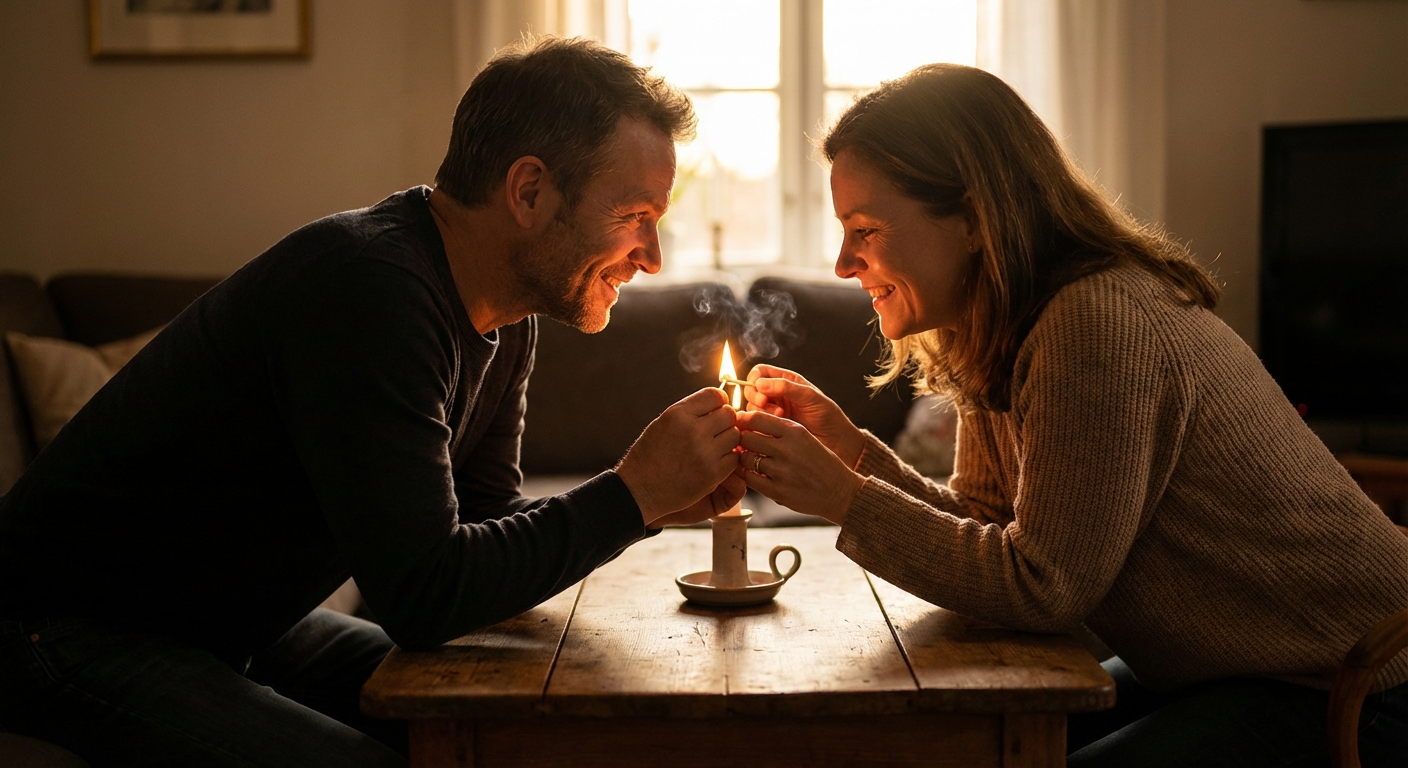
Every Friday evening, my grandmother would light two candles and wave her hands over the flames three times. As a child, I had no idea what this meant. I just knew that something changed in the room when she did it. The week was officially over. The meal about to be shared was different from every other meal. We were, somehow, more “us” in that moment than at any other time.
Decades later, I learned that scientists have a name for what I experienced: interaction ritual. And the feeling of heightened connection I sensed as a child? That wasn’t just sentiment. It was the predictable psychological outcome of a process that researchers have spent years mapping and measuring.
Rituals, it turns out, aren’t just cultural traditions passed down for their own sake. They’re sophisticated psychological tools that build trust, signal commitment, create belonging, and transform ordinary moments into experiences of genuine connection. The science behind them explains not only why ancient ceremonies persist across cultures, but also why the small, private rituals you create with the people you love might be more important than you realize.
What Makes a Ritual a Ritual
In everyday language, we use “ritual” loosely. Morning coffee becomes a ritual. Checking email becomes a ritual. But researchers studying the psychology of rituals define them more precisely. A ritual is a predefined sequence of actions characterized by rigidity, formality, and symbolic meaning. The sequence matters. The actions are performed in specific ways. And they connect to something beyond their practical function.
This definition helps explain why not everything we do regularly qualifies as a ritual. Brushing your teeth is a habit. But if you brush your teeth using your grandmother’s vintage brush while reciting a poem she taught you, that’s a ritual. The difference isn’t the action itself. It’s the structured, symbolic, meaning-laden quality of how it’s performed.

A comprehensive review published in Personality and Social Psychology Review, led by researchers Nicholas Hobson and Juliana Schroeder, synthesized findings from social psychology, cognitive science, anthropology, and neuroscience. They identified three primary functions of rituals: regulating emotions, enhancing performance, and fostering social connection. While all three matter, it’s the social function that explains why shared rituals are particularly powerful.
When you complete a ritual in the presence of others, you’re signaling something important: that you share in the collective meaning of this moment. That signal, visible and unambiguous, becomes information others can use to draw inferences about you. Are you trustworthy? Are you committed to this group? Do you share our values? Participation in ritual answers these questions without requiring a single word of explicit explanation.
How Rituals Build Trust and Belonging
The trust-building function of rituals operates through a mechanism researchers call “costly signaling.” Participating in a ritual requires investment, even if just time and attention. That investment signals commitment. And because the signal is public and observable, it’s difficult to fake.
Consider what happens at a wedding. The exchange of rings, the recitation of vows, the signing of documents, none of these actions practically accomplish anything that couldn’t be done with a simple legal form. But the ritual structure transforms a transaction into a covenant. Both parties demonstrate, through visible participation, that they take this commitment seriously. Guests witness this demonstration and update their beliefs accordingly. The ritual has communicated more about intention and commitment than any conversation could.

Research on children’s social development reveals that this signaling function emerges early. Studies found that children who are ostracized, compared to those who are socially included, are more likely to imitate the ritual-like actions of ingroup members. The children instinctively understood that participation in shared rituals could restore their social standing. Even without conscious awareness, they used ritual participation to signal: “I belong here. I’m one of you.”
For adults, the implications are equally significant. In romantic relationships, work teams, friendships, and family systems, shared rituals serve as ongoing demonstrations of commitment. The couple who always kisses before leaving the house, the team that starts meetings with a specific check-in format, the friends who call each other on the first day of each season, these patterns aren’t just pleasant habits. They’re trust-maintenance systems that continuously signal: “This relationship still matters to me.”
The Ritual as Relationship Infrastructure
Every relationship operates on infrastructure, the underlying systems that make ongoing connection possible. Communication patterns, shared expectations, mutual understanding of boundaries, these form the invisible architecture of how two people relate. Rituals are part of this infrastructure, and perhaps the most underestimated part.
Researchers studying family dynamics have found that rituals predict relationship satisfaction, sense of family identity, and resilience during stress. Families with strong ritual systems, regular dinners, holiday traditions, bedtime routines, report feeling more cohesive and navigate difficulties more effectively than families without them. The rituals provide structure that holds relationships together when other forces might pull them apart.
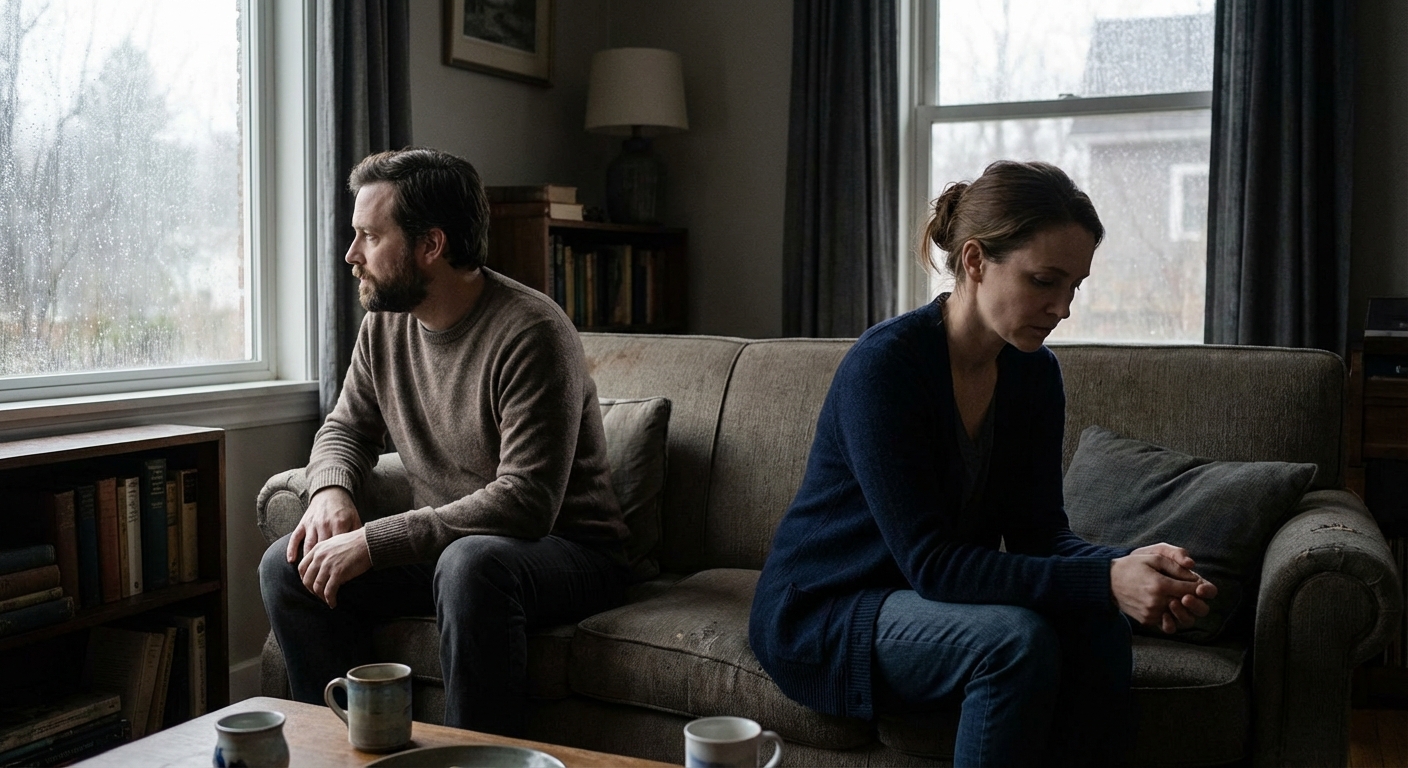
This infrastructure function helps explain why the loss of rituals often signals relationship trouble. When couples stop their evening check-ins, when families abandon their holiday traditions, when friends let their regular calls lapse, the relationship itself isn’t immediately over. But the infrastructure is weakening. The systems that maintained connection are offline. Without deliberate rebuilding, the relationship becomes more vulnerable to drift and eventual disconnection.

For long-distance relationships, rituals become especially critical. Research on social media and family maintenance found that rituals adapted for digital communication, regular video calls at specific times, shared movie-watching sessions, sending messages at predictable moments, helped families maintain bonds and shape their identity despite limited face-to-face interaction. The rituals compensated for physical absence by providing predictable, structured opportunities for staying close across distance.
Creating Rituals That Work
Understanding why rituals matter is valuable. But the practical question remains: how do you create rituals that actually strengthen connection? The research offers several principles that distinguish effective rituals from empty routines.
First, effective rituals require shared meaning. Both participants need to understand what the ritual represents and why it matters. A unilateral ritual, one that only one person considers meaningful, doesn’t provide the signaling and belonging benefits that make rituals powerful. This is why the best rituals often emerge organically from shared experience rather than being imposed by one party.
Second, rituals need structure and predictability. The sequence of actions should be relatively fixed. This doesn’t mean rituals can’t evolve, but it does mean that the core elements should remain recognizable. When you can predict what comes next, you can relax into the ritual rather than navigating uncertainty. That relaxation creates space for connection.
Third, rituals work best when they’re distinct from ordinary behavior. This might mean performing actions at specific times, using special objects, or occupying designated spaces. The distinctiveness signals that this moment is set apart, that it matters in a way that ordinary moments don’t. Without that distinctiveness, rituals blur into routine and lose their power.

Finally, rituals should provide emotional payoff. Research on “interaction ritual chains” found that successful rituals generate what sociologist Randall Collins calls “emotional energy,” feelings of confidence, enthusiasm, and solidarity that persist after the ritual ends. If a ritual consistently leaves participants feeling drained or disconnected, it’s not working. The emotional experience is the point.
Designing Your Ritual Practice
With these principles in mind, consider the relationships in your life that might benefit from deliberate ritual design. This isn’t about manufacturing meaning where none exists. It’s about recognizing moments of natural connection and building structure around them.
Start by identifying organic rituals that already exist. Perhaps you and a friend always text each other when you hear a certain song. Perhaps you and a partner always debrief the day during a specific window. Perhaps your family always gathers in the kitchen while one person cooks. These patterns are ritual seeds. With deliberate attention, they can become ritual systems.
Next, consider gaps where rituals could help. Are there relationships that feel neglected despite good intentions? Are there transitions, the end of the workday, the start of a trip, the passage of seasons, that pass without acknowledgment? These are opportunities. A simple ritual, even just a few minutes of structured, symbolic action, can transform an overlooked moment into a point of genuine connection.
For couples, research suggests that rituals of reunion (greeting each other after time apart), rituals of appreciation (expressing gratitude in structured ways), and rituals of transition (marking shifts between work and home) are particularly valuable. These are the moments when connection is most at risk and when ritual’s steadying influence can have the greatest impact.
Your Invitation
Rituals may seem old-fashioned, remnants of traditional societies that modern efficiency has made obsolete. But the research tells a different story. Rituals persist across every culture not because people are sentimental, but because they work. They solve real problems of trust, belonging, and connection that human relationships have always faced and always will.
The relationships that matter most to you are maintained or neglected in the small moments, the daily choices about how you enter and exit each other’s presence, how you mark shared time, how you signal that this connection still matters. These choices can be conscious or unconscious. They can be structured or chaotic. They can be rituals, or they can be nothing at all.
The science suggests that rituals, deliberately created and faithfully maintained, build something that casual interaction cannot. They create infrastructure for connection, systems that hold relationships together when life’s pressures push them apart.
This season, while gatherings and traditions naturally bring ritual to the foreground, consider what you’re building. The shared meals, the repeated greetings, the small ceremonies you perform with the people you love, these aren’t just holiday traditions. They’re the architecture of belonging.
The question isn’t whether rituals matter. The science has settled that. The question is which rituals you’ll choose to build, and with whom.
Sources: The Psychology of Rituals (Personality and Social Psychology Review), The Social Functions of Group Rituals (Current Directions in Psychological Science), Social media, rituals, and long-distance family (New Media & Society), Collins “Interaction Ritual Chains” (2004), Interaction rituals and wellbeing.