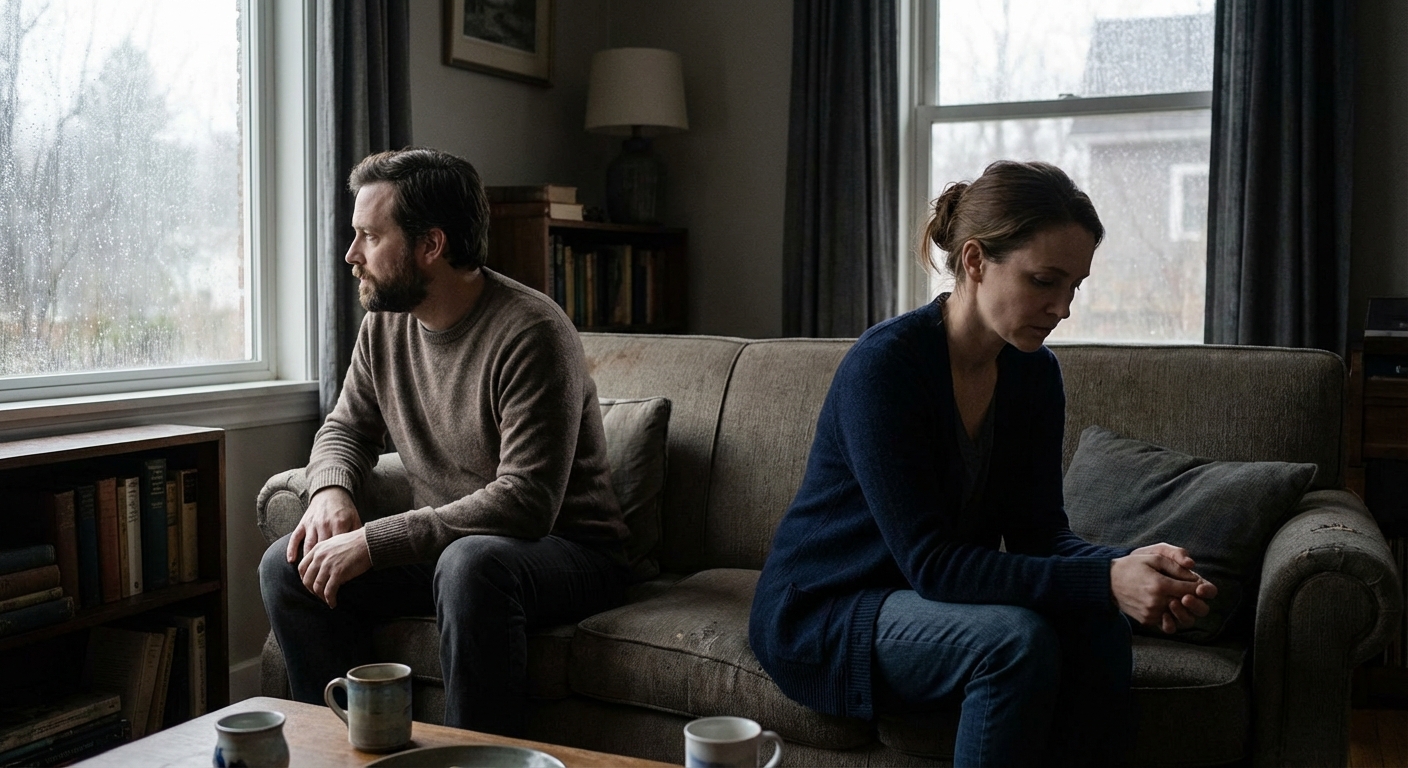
You’re sitting next to someone you love. Maybe you’re watching TV together, or eating dinner, or lying in bed at the end of a long day. They’re right there. But something feels off. There’s a distance you can’t quite name, a hollow feeling that doesn’t match the fact that you’re technically together. You’re not fighting. Nothing is explicitly wrong. But you feel alone in a way that seems impossible when another person is three feet away.
If this sounds familiar, you’re not experiencing a failure of your relationship. You’re experiencing one of the most common, and least discussed, challenges of long-term partnership. Research on loneliness shows that people who are lonely are less satisfied and committed to their romantic relationships. But here’s the twist: loneliness doesn’t require being alone. It arises when there’s a gap between the connection you want and the connection you have. That gap can exist in a crowd, at a party, or right next to someone who promised to love you forever.
AARP’s research on loneliness shows that 4 in 10 adults age 45 and older experience loneliness, a significant increase from previous decades. And the American Psychological Association highlights a broader “crisis of connection,” with half of Americans reporting feelings of emotional disconnection. These aren’t statistics about single people. Many of the lonely are partnered. The question isn’t whether this happens. It’s what to do about it.
How Loneliness Grows in Relationships
Relationships rarely become disconnected overnight. The drift happens gradually, through a thousand small moments where you could have turned toward each other but didn’t. Dr. John Gottman, whose research at the Gottman Institute has tracked couples for decades, calls these moments “bids for connection.” A bid might be as simple as saying “look at this” or sharing something about your day or reaching for your partner’s hand. What matters is what happens next.
According to Gottman’s research, couples who stay connected respond to their partner’s bids with engagement most of the time. They turn toward. They show interest. They acknowledge that their partner has reached out, even if the moment is small. Couples who drift apart do the opposite. They turn away, not with hostility, but with distraction, dismissal, or simple absence. Over time, the person making bids stops making them. The message received is: you’re not worth my attention.
This pattern is insidious because it doesn’t feel like a crisis. No one has an affair. No one throws dishes. You just gradually stop trying to connect, because trying hasn’t been rewarded. The relationship becomes functional but hollow, a logistical partnership that handles the business of life but doesn’t nourish either person. You’re roommates with a shared history. And one day you’re sitting on the couch, technically together, feeling utterly alone.

The Self-Reinforcing Cycle of Loneliness
Here’s what makes relationship loneliness particularly tricky: it creates a cycle that’s hard to break. Research published in behavioral sciences journals shows that individuals experiencing loneliness perceive their own contributions as less valuable and more likely to create tension in relationships. They underestimate what they bring to the table and overestimate the burden they create.
This distortion in self-perception affects behavior. When you feel lonely and disconnected, you’re less likely to reach out, less likely to share, less likely to be vulnerable. You protect yourself from rejection by preemptively withdrawing. But that withdrawal is exactly what deepens the disconnection. Your partner, meanwhile, experiences you as distant or closed off, and responds in kind. Now you’re both pulling back, each feeling justified, each feeling alone.
The loneliness also shapes how you interpret your partner’s behavior. A neutral comment sounds critical. A moment of distraction looks like rejection. The story you tell yourself is that they don’t care, that you don’t matter, that the connection is dying. And because you’re operating from that story, you act in ways that make it more likely to come true. This is the tragedy of loneliness in relationships: the very feelings that signal a need for connection often drive behaviors that prevent it.
What Actually Bridges the Gap
Reconnecting with a partner you’ve drifted from doesn’t require grand gestures or marathon therapy sessions, at least not initially. It requires something simpler but harder: consistent small actions that rebuild the habit of turning toward each other. The research on what works is remarkably practical.
Start with noticing. Before you can turn toward your partner’s bids, you have to see them. This means putting down your phone when they speak. It means looking up from whatever you’re doing when they walk into the room. It means treating their attempt to connect, however small, as something worth acknowledging. You don’t have to respond perfectly. You just have to respond at all.
Initiate without keeping score. When connection has been scarce, both partners often wait for the other to make the first move. This creates a standoff where both people feel unloved and neither takes risk. Someone has to break the pattern. If you’re reading this, it might as well be you. Reach out without demanding reciprocation. Share something without expecting a perfect response. The goal isn’t fairness in the short term. It’s rebuilding a pattern that benefits both of you.
Ask, don’t assume. Gottman’s research emphasizes that couples need consistent emotional connection through daily acts of turning toward each other. But your partner can’t turn toward you if you don’t tell them what you need. Saying “I’ve been feeling disconnected and I miss you” is vulnerable, but it gives your partner information they can use. Silently resenting their failure to read your mind gives them nothing.

When Loneliness Signals Something Deeper
Sometimes loneliness in a relationship isn’t about missed bids or busy schedules. Sometimes it’s a signal that something more fundamental needs attention. If you’ve been trying to connect and your partner consistently refuses, if vulnerability is met with dismissal or contempt, if the pattern has persisted for years despite effort, the loneliness may be telling you something important.
Research on relationships distinguishes between loneliness that comes from temporary disconnection and loneliness that signals chronic incompatibility or harm. The former can be addressed through the practices described above. The latter may require professional help, whether couples therapy to address entrenched patterns or individual therapy to clarify what you actually need.
It’s also worth examining your own contribution honestly. Are you reaching out in ways your partner can receive? Are you making bids for connection or demands for performance? Are you available when they reach out, or have you also been turning away? Loneliness is often co-created, even when it feels one-sided. Taking responsibility for your part doesn’t excuse your partner’s behavior. It just gives you something you can actually change.
If you’re experiencing persistent sadness, hopelessness, or feelings of isolation that extend beyond your relationship, please consider speaking with a mental health professional. Loneliness can be a symptom of depression or other conditions that benefit from support beyond what a partner can provide.
The Path Forward
Reconnection isn’t a destination you arrive at. It’s a practice you maintain. Even couples who feel deeply connected have to keep choosing each other, keep turning toward, keep noticing and responding to bids. The difference between couples who stay connected and those who drift isn’t that the former never face distance. It’s that they’ve developed the habits to bridge it when it appears.
Studies on wellbeing and connection show that being in natural environments can reduce both physical and psychological distress. When we’re stressed, we’re less receptive to healthy connection. This is one reason why taking walks together, spending time outside, or simply creating calm in your shared environment can support reconnection. The goal is to lower the ambient stress that makes turning toward harder.

Your Invitation
If you’ve been feeling lonely in your relationship, start with one practice this week: notice your partner’s bids for connection. Don’t evaluate them, don’t judge them, just see them. Notice when they mention something from their day. Notice when they reach for your hand. Notice when they try to make eye contact. These are invitations. Your response to them shapes what happens next.
You don’t have to fix everything at once. You don’t have to have a big talk or overhaul your entire dynamic. Just start turning toward. One bid at a time. One moment at a time. The loneliness grew gradually. The reconnection will too. But it can grow, if you’re both willing to tend it.
And if you’re not sure whether your partner is willing, or whether the relationship can hold what you need, that’s information too. Sometimes loneliness is a signal to repair. Sometimes it’s a signal to reconsider. Either way, it deserves your attention. You deserve to feel seen, even and especially by the person you’ve chosen to share your life with.
Sources: AARP loneliness research, American Psychological Association, The Gottman Institute, Behavioral Sciences journal research on loneliness and relationship wellbeing, Psychology Today connection research.