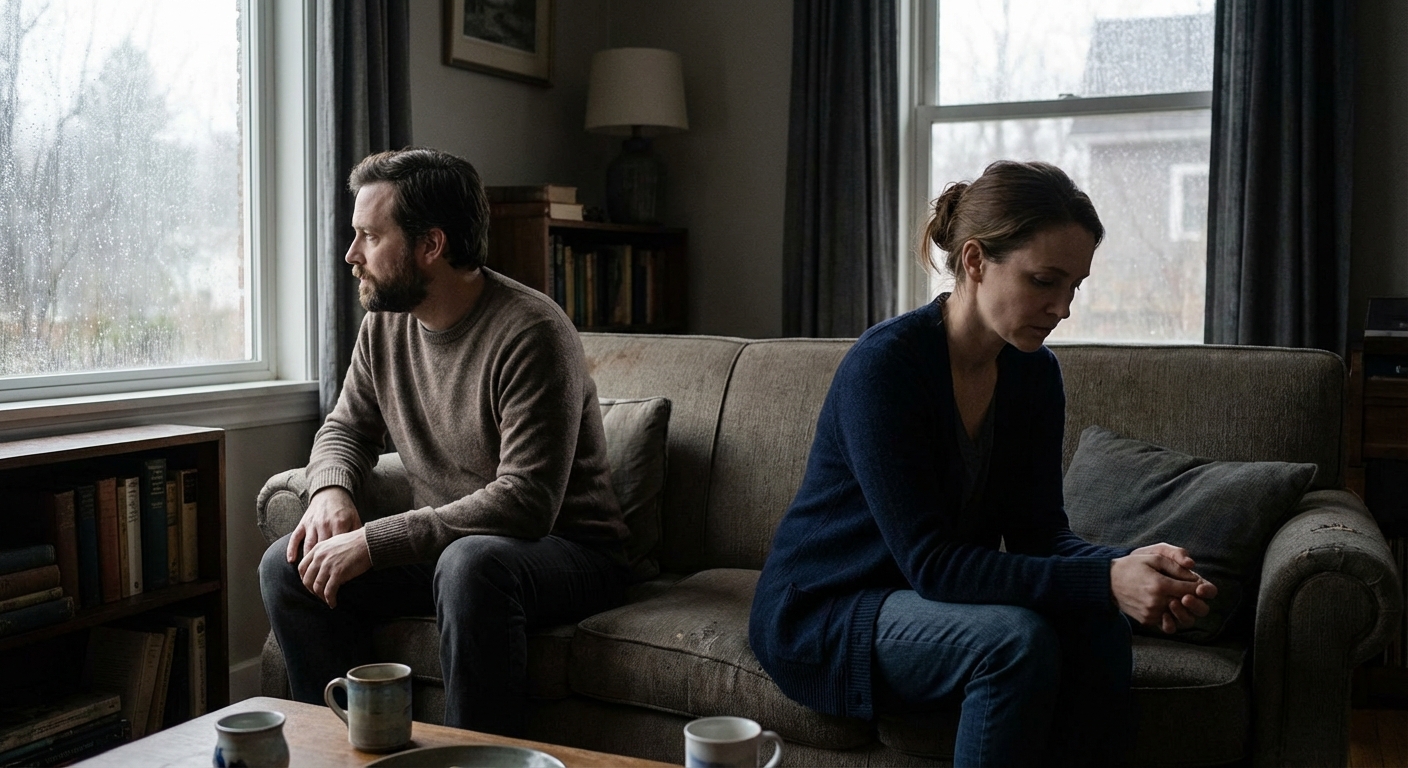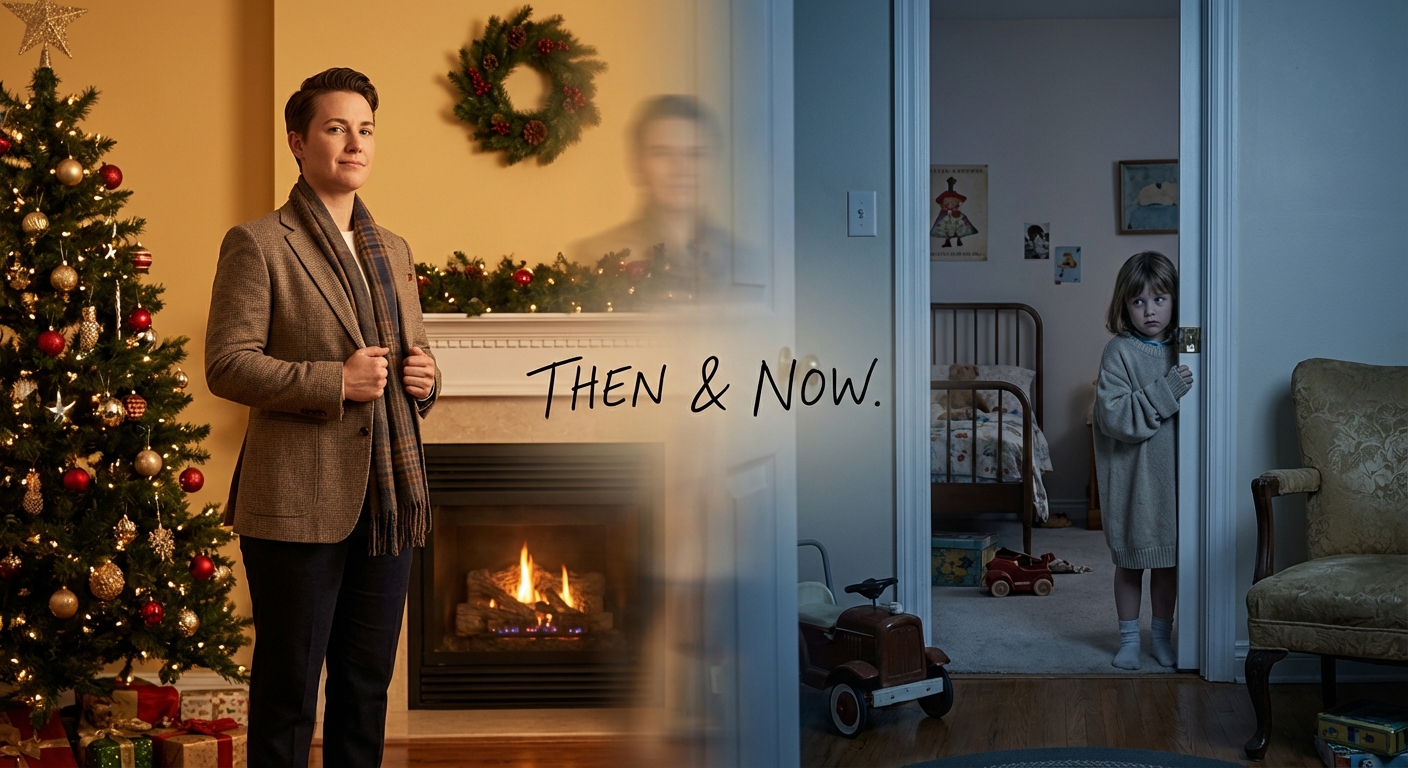
You walk through your parents’ front door as a fully functioning adult. You have a career, pay your own bills, maybe even manage other people at work. Yet somehow, by the second day of the holiday visit, you’re sulking in your childhood bedroom, inexplicably furious about how someone loaded the dishwasher.
Welcome to holiday regression, a psychological phenomenon so common that therapists consider it practically universal. It’s the experience of reverting to earlier patterns of behavior, thought, and emotion when you return to your family of origin. And if you’ve ever wondered why you suddenly feel fourteen again despite decades of personal growth, you’re far from alone.
The good news? Understanding why this happens is the first step toward staying grounded in who you’ve actually become.
The Science Behind the Shift
Regression, as a psychological concept, traces back to Sigmund Freud, who observed that people under stress often retreat to earlier developmental stages as a protective mechanism. While modern psychology has refined many of Freud’s ideas, this one has held up remarkably well. According to research from the Newport Institute, regression isn’t a diagnosis or a disorder. It’s a defense mechanism that kicks in when we feel threatened, overwhelmed, or emotionally unsafe.
Here’s what makes family visits particularly triggering: your brain doesn’t experience time the way your calendar does. When you step into your childhood home, surrounded by the same furniture, the same smells, the same voices, your nervous system can interpret this as a return to an earlier period of your life. The environment itself becomes a cue, activating neural pathways that were established decades ago.
Dr. Molly Merson, a psychotherapist specializing in family dynamics, explains that “families are systems that often preserve old roles to avoid greater conflict.” Even when everyone has changed individually, the family system may still expect you to be the responsible one, the funny one, the difficult one, or whatever role you occupied growing up. And your brain, seeking efficiency, often obliges.
Why Sensory Cues Matter More Than You Think
Trauma researchers have long understood that places, sounds, and scents can trigger emotional memories with startling intensity. But you don’t need to have experienced trauma for this mechanism to affect you. The smell of your mother’s cooking, the creak of a particular stair, the sound of your father’s voice calling from another room. These sensory experiences can transport you backward in ways that feel involuntary.
This is why you might feel perfectly composed during a video call with your parents but completely unraveled after two days in their home. The physical environment activates what some researchers call “state-dependent memory,” where emotional states become linked to specific contexts. Your adult self exists in your apartment, your office, your gym. Your teenage self, it turns out, might still be waiting in your childhood bedroom.
Research published on The Conversation highlights how attachment patterns established in childhood continue to shape adult behavior, particularly in family contexts. The way you learned to get attention, avoid conflict, or feel safe as a child becomes a kind of default programming that can override years of intentional growth.
The Role of Family Systems
Psychologist Murray Bowen developed family systems theory in the mid-twentieth century, and its insights remain remarkably relevant. Bowen observed that families function as emotional units, with each member playing interconnected roles. When one person changes, the system often pushes back, attempting to restore equilibrium.
This explains why your personal growth can feel invisible to your family. You may have spent years in therapy, built healthy relationships, established firm boundaries in every other area of your life. But your family’s system has its own memory, its own expectations, its own gravitational pull. According to NBC News, the holidays don’t create family stress so much as they reveal it, putting pressure on dynamics that exist year-round.
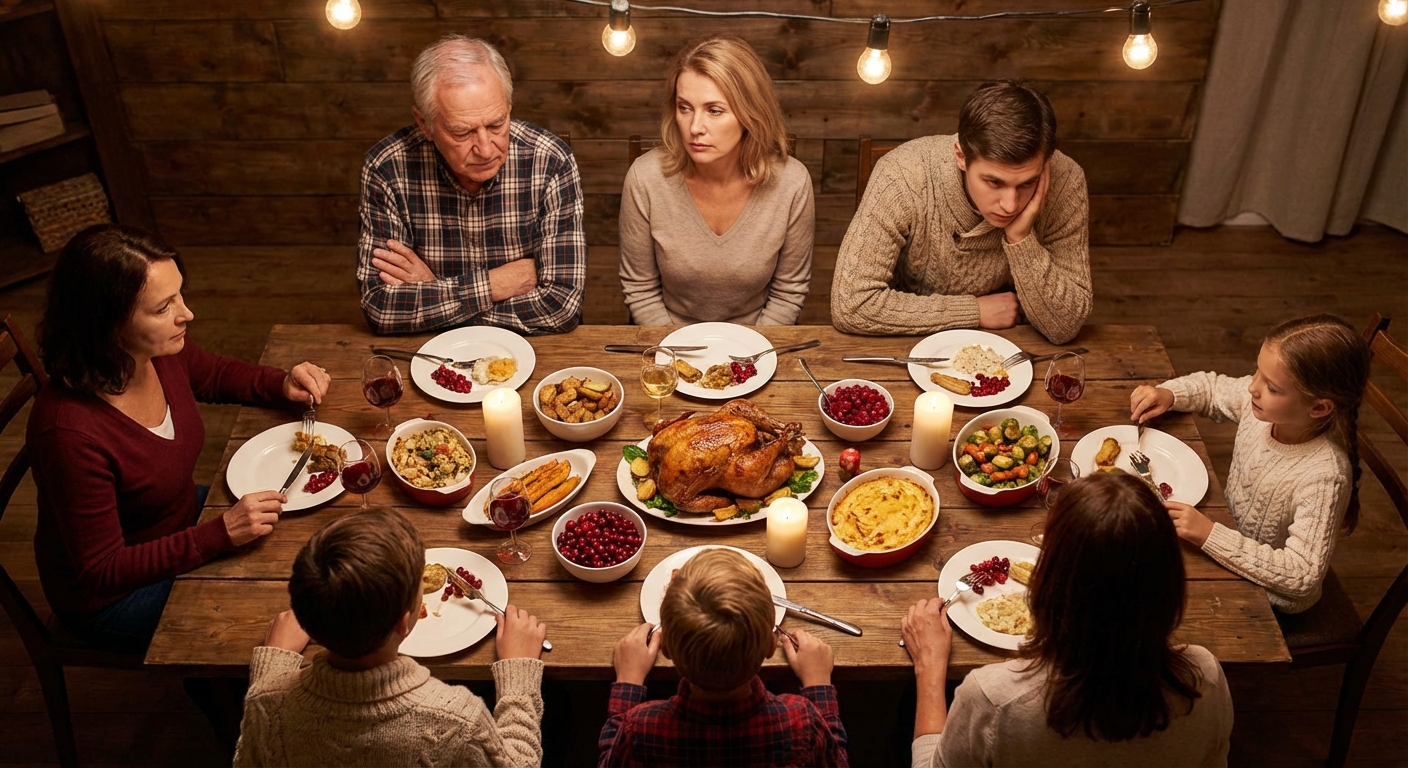
The family dinner table becomes a kind of time machine. Your sister makes a comment that sounds exactly like something she said when you were both teenagers, and suddenly you’re responding from that same place. Your parents ask a question that carries decades of subtext, and before you can access your adult perspective, you’ve already reacted from your old defensive patterns.

How Young Adults Are Especially Vulnerable
Research suggests that young adults are particularly susceptible to holiday regression. A study cited by the Newport Institute found that people in their twenties and early thirties are more likely than older adults to use defense mechanisms like acting out, passive-aggression, and regression when stressed. This makes sense developmentally: the process of individuation, of becoming a separate self from your family of origin, is often still in progress during these years.
The challenge is compounded by the fact that many young adults are navigating multiple transitions simultaneously. You might be establishing your career identity, your romantic relationships, your political views, your lifestyle choices. All of this self-definition work can feel threatened when you return to an environment that still sees you as the kid who needed to be told to clean their room.
This doesn’t mean something is wrong with you. It means you’re human, doing the difficult work of growing up while remaining connected to people who knew you before you became who you are now.
Staying Grounded in Who You’ve Become
The goal isn’t to remain unaffected by family visits. You’re not a robot, and these people shaped you in profound ways. The goal is to maintain access to your adult self even when old patterns feel compelling. Here’s what actually helps, according to mental health professionals:
Maintain your routines. If you normally start your day with a walk, a meditation, or a particular breakfast, try to keep those practices even while visiting. These routines aren’t just habits; they’re anchors to your present-day identity. As Wondermind notes, doing the things that make you feel most like yourself makes you more likely to act like yourself.
Name what you’re feeling. This sounds simple, but it’s remarkably powerful. The ability to say to yourself “I’m feeling defensive right now” or “I notice I want to shut down” creates a tiny bit of space between stimulus and response. That space is where your adult self lives. This connects to what psychologists call emotional granularity, the ability to make fine distinctions in your emotional experience.
Have a support system on standby. Text a friend who knows your family history. Even a brief exchange can remind you that the adult world you’ve built for yourself is real and waiting for you. You don’t have to process everything alone, and you don’t have to process it with your family in the moment.
Set boundaries before you need them. Decide in advance what topics you won’t engage with, how long you’ll stay, and what your exit strategy looks like if things become overwhelming. This isn’t about expecting the worst; it’s about protecting your peace so you can be genuinely present for the good parts.

When Regression Signals Something Deeper
For most people, holiday regression is uncomfortable but manageable. You notice yourself falling into old patterns, you feel frustrated or embarrassed, and eventually you return home and feel like yourself again. But for some people, particularly those with histories of significant trauma or ongoing mental health challenges, family visits can trigger more serious responses.
According to clinical research, regression that involves an inability to manage emotions, significant dissociation, or prolonged difficulty functioning may indicate underlying conditions like depression, anxiety disorders, or complex trauma. If your family visits consistently leave you dysregulated for weeks afterward, or if you find yourself using substances to cope, these are signals worth taking seriously.
The strategies that help with ordinary regression, like having difficult conversations and learning to hold space for complex emotions, may not be sufficient if you’re dealing with deeper wounds. Working with a therapist before and after family visits can provide the support needed to navigate these more challenging dynamics.
Your Invitation
Here’s the reframe that might help: regression isn’t a sign of failure. It’s evidence that your family shaped you powerfully, that your nervous system learned to adapt to your early environment, and that those adaptations are still accessible when you return to that context. This is normal human neurobiology, not a character flaw.
The work isn’t to become invulnerable to your family of origin. It’s to build enough self-awareness that you can notice regression happening, enough self-compassion that you don’t shame yourself for it, and enough practical strategies that you can reconnect with your adult self when you need to.
You’ve done the work of becoming who you are. That person doesn’t disappear just because you’re sleeping in your childhood bedroom. They’re still there, even when the old patterns feel loud. Your job is simply to keep checking in with them.
And when you catch yourself in a regression moment, try this: take a breath, feel your feet on the floor, and ask yourself what your adult self would want to do next. That pause, that question, that choice: that’s where your growth lives. It’s available to you even at your parents’ dinner table, even when you feel fourteen again. Especially then.
Sources: Newport Institute, The Conversation, NBC News, PrairieCare, Wondermind, Murray Bowen family systems theory, Dr. Molly Merson on family dynamics.