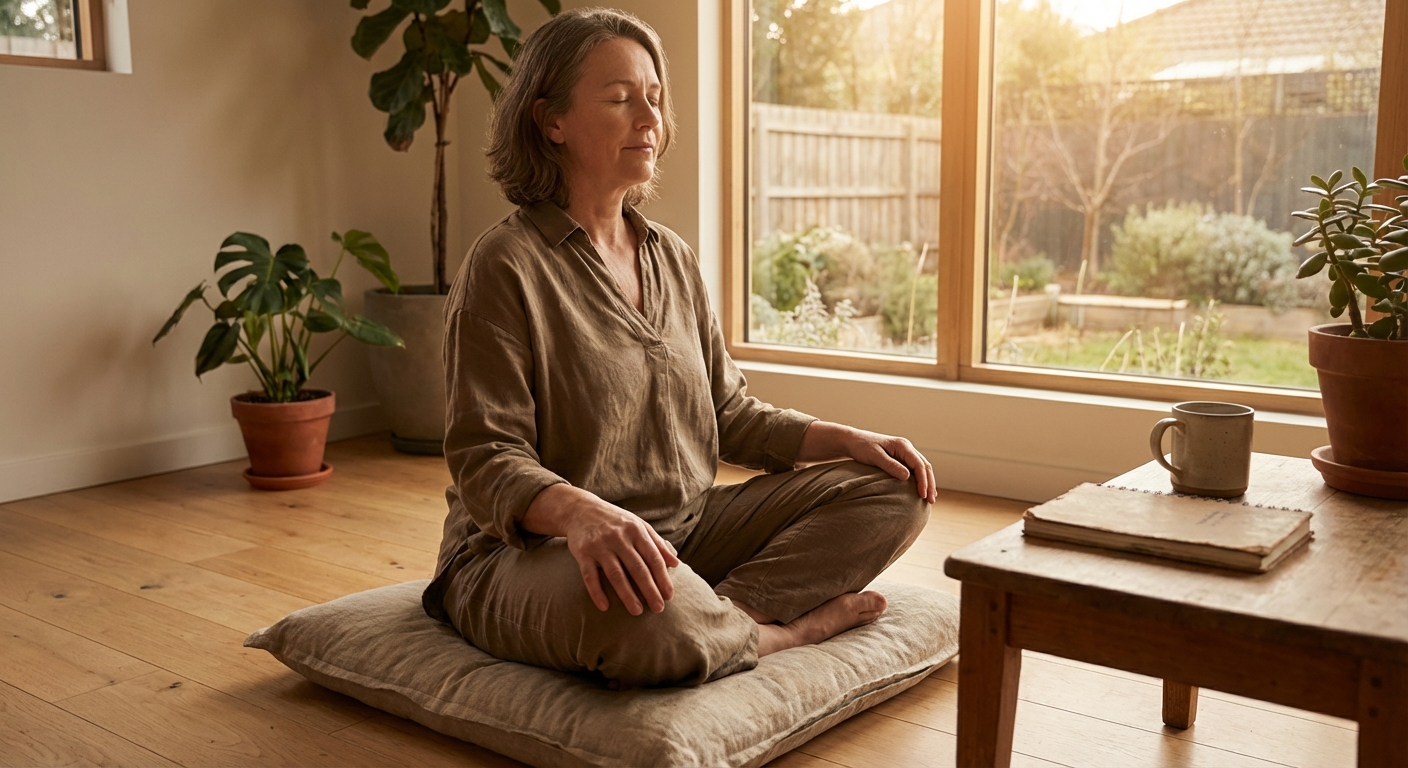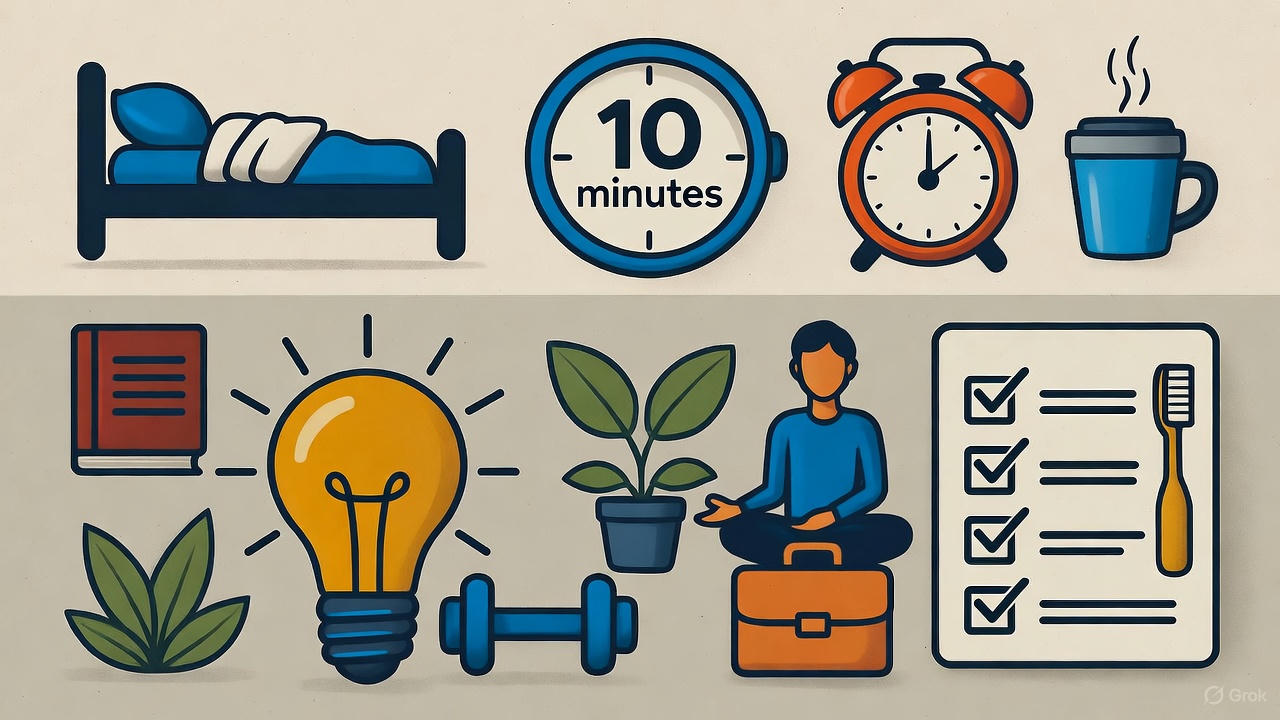
The internet wants you to believe that successful, mindful people wake up at 5 AM, meditate for an hour, journal three pages, do yoga, make a smoothie from seventeen superfoods, and read philosophy before most people hit snooze for the second time. That’s exhausting just to read. It’s also not how most people actually live, and the gap between the ideal morning routine and your actual morning can become another source of shame rather than empowerment.
Here’s what the research actually shows: mindfulness in the morning isn’t about duration, it’s about intention. Dr. Andrew Huberman, a neuroscientist at Stanford who studies circadian rhythms and daily protocols, notes that the first inputs your brain receives after waking have an outsized effect on your mental state for hours afterward. You don’t need an hour. You need presence. Ten minutes of intentional wakefulness can shift your entire day, not because those ten minutes contain magic, but because they interrupt the default pattern of reactive, scattered, stress-driven mornings that most of us have normalized.
Why Morning Sets the Tone
The first moments of your day establish your nervous system’s baseline for the hours that follow. When you wake up and immediately reach for your phone, scrolling through news that spikes anxiety or emails that demand response, you’re flooding your brain with external stimuli before you’ve established any internal equilibrium. Neuroscientist Lisa Feldman Barrett’s research on emotional granularity suggests that the brain uses recent experience to predict and construct the next moment’s emotional state. Start your day in a panic, and your brain predicts more panic. Start with presence, even brief presence, and you prime yourself for groundedness, clarity, and resilience.

Your morning doesn’t determine everything about your day, but it tilts the odds significantly in your favor. Jon Kabat-Zinn, who founded the Mindfulness-Based Stress Reduction program at UMass Medical School and has studied contemplative practice for decades, describes mindfulness as “paying attention, on purpose, in the present moment, non-judgmentally.” That paying attention is easiest when you haven’t yet been hijacked by the day’s demands. Before the meetings start, before the messages accumulate, before anyone needs anything from you, there’s a window where your attention still belongs to you. The ten-minute practice isn’t about achieving a particular state. It’s about claiming that window.
The Ten-Minute Practice
Begin with breath before you move. Before reaching for your phone, before getting out of bed, take three minutes to simply breathe. Place one hand on your chest and one on your belly. Breathe in for a count of four, hold for four, breathe out for six, and repeat for six to eight cycles. This simple practice, which Huberman calls “physiological sighing,” activates your parasympathetic nervous system, the rest-and-digest mode that counterbalances stress response. For more on how breathwork can calm your nervous system, the science behind this technique goes even deeper. You’re telling your body before it fully wakes: you’re safe, there’s no emergency, you have time. The breath work doesn’t require belief or special skill. It’s physiology. Long exhales trigger the vagus nerve and shift your baseline.
Then move your body for three minutes. Stand up and stretch. Roll your shoulders back and forth. Shake out your limbs. Do a few cat-cow stretches if you know them, or simply bend and reach and twist. Walk to the window and look outside for a moment. Movement wakes up your system gently, signaling transition from sleep to wakefulness without the shock of jumping straight into demands. You’re not exercising. You’re not trying to burn calories or build strength. You’re inviting your body to participate in the day, to join you in consciousness, to remember that you’re a physical being and not just a mind managing a to-do list.

Spend three minutes setting your intention. Before looking at your to-do list or your calendar, ask yourself: What matters most today? How do I want to feel? What’s one thing I’ll prioritize above the noise? You can journal this if you want, speak it aloud, or simply hold it in your mind. The practice is clarifying your own values before the world’s urgency takes over. Psychologist Angela Duckworth’s research on goals and self-control suggests that clarity of intention significantly improves follow-through. When you know what matters before the distractions arrive, you’re more likely to protect it.
Complete the practice with one minute of mindful hydration. Drink a full glass of water, not while scrolling, not while walking, just drinking. Taste it. Feel the coolness, the sensation of swallowing, your body receiving what it needs after hours without fluid. Notice how your body responds. This final minute grounds you in sensory experience and completes the transition from sleep to waking life. For more on how intentional morning practices connect to broader daily rituals, see our piece on morning ritual transformation.
The Phone-Free Window
The single most impactful shift most people can make has nothing to do with meditation or yoga or journaling. It’s simply this: don’t check your phone first thing. When you start your day consuming information, whether it’s news designed to provoke anxiety, emails demanding response, texts requiring emotional engagement, or social media curating comparison, you’re letting external forces set your emotional state before you’ve established any internal equilibrium.
Dr. Gloria Mark, whose research at UC Irvine focuses on attention and digital distraction, has documented how the first content we consume after waking primes our attentional state for hours. Start with fragmented, anxiety-provoking content, and you’ll spend the day more distractible and reactive. Start with presence and intention, and you’ll have more capacity for focus and resilience when the demands inevitably arrive.
Try a one-week experiment: don’t touch your phone until after your ten-minute morning practice. Just one week. The world’s urgency will still be there in ten minutes, but you’ll be better equipped to handle it. Most people who try this report feeling calmer, more focused, and more in control of their days. The phone itself isn’t the enemy, but the unconscious reaching for it, the reactive scrolling before you’re even fully awake, establishes a pattern of letting external stimuli dictate your internal state.
Adapting to Real Life
You might be thinking this sounds lovely for someone without real responsibilities. But I have kids, you say. Then adapt: wake up ten minutes before them if you can, or practice presence while they wake up beside you. The practice doesn’t require silence or solitude, just intention. I’m not a morning person, you say. That’s okay. The principles apply whenever your day begins. If your morning is 2 PM, make it a mindful 2 PM. The first waking hour matters regardless of what the clock says. I don’t have time, you say. You have time. You’re currently spending it scrolling or rushing. This isn’t about finding new time; it’s about redistributing ten minutes you already have.
The obstacles feel real, and they are real constraints. But the practice is designed to fit into constrained lives, not escape from them. Ten minutes is deliberately minimal. It’s not asking you to become a different person with a different schedule and different responsibilities. It’s asking you to claim a small window that already exists, the gap between sleeping and doing, and fill it with intention rather than reaction. If you’re new to mindfulness practices altogether, our guide on meditation for people who think they can’t meditate offers an even gentler starting point.
Your Invitation
Mindfulness isn’t about perfection or achieving some particular state. It’s about pausing. About choosing presence over autopilot. About remembering that you have agency over how you begin, even when you don’t have control over what the day will bring. Ten minutes of intention won’t fix everything. It won’t solve your problems or eliminate your stress or transform your life overnight. But it will change the lens through which you experience everything that follows.
Tomorrow morning, try it. Before reaching for your phone, breathe. Before checking your calendar, move. Before diving into demands, clarify what matters. The elaborate morning routines you see online aren’t the standard you need to meet. Presence is the standard. Ten minutes is enough. You don’t need to wake up at 5 AM to start your day with intention. You just need to claim the first ten minutes as your own.
Sources: Dr. Andrew Huberman’s neuroscience research, Lisa Feldman Barrett’s emotional granularity research, Jon Kabat-Zinn’s Mindfulness-Based Stress Reduction program, Dr. Gloria Mark’s attention research, Angela Duckworth’s research on goals and self-control.