
When was the last time something took your breath away? Not a sharp inhale of surprise or shock, but that particular sensation where the world seems to expand and you feel yourself shrinking, not in a diminishing way, but in a way that connects you to something larger. Maybe it was standing at the edge of a canyon, or holding a newborn, or watching a murmuration of starlings twist through the evening sky. Maybe it was a piece of music that pierced through your defenses, or a moment of unexpected kindness that restored something in you.
That feeling has a name: awe. And it turns out to be far more than a pleasant emotional experience. Over the past decade, research on awe has exploded, revealing something remarkable. This particular emotion, characterized by perceived vastness and a need to accommodate new information, doesn’t just feel good. It appears to reduce inflammation in your body, quiet the self-focused chatter in your brain, increase prosocial behavior, and fundamentally shift how you relate to problems, possibilities, and other people.
The science of awe suggests we may have been undervaluing one of the most accessible and powerful tools for psychological wellbeing available to us, and it doesn’t require a meditation retreat, a prescription, or a therapist’s office. It requires attention.
What Awe Actually Is
Awe is distinct from related emotions like surprise, admiration, or simple beauty appreciation, though it often accompanies them. Researchers Dacher Keltner and Jonathan Haidt proposed a definition that has guided most subsequent research: awe involves two key components. First, perceived vastness, the sense that you’re in the presence of something larger than yourself, whether that’s physical vastness like a mountain range, conceptual vastness like a mind-bending idea, or social vastness like collective human achievement. Second, a need for accommodation, meaning the experience challenges your existing mental frameworks and requires you to update how you understand the world.
That second component is crucial. Awe isn’t just about feeling small in front of something big. It’s about encountering something that doesn’t fit neatly into your current categories, something that makes you pause and reconsider. A 2025 study published in Nature found that awe is behaviorally characterized by ambivalent feelings, encompassing conflicting emotions that create cognitive engagement rather than simple pleasure (Awe is characterized as an ambivalent affect).

This explains why awe experiences can range so widely. You can feel awe watching an eclipse, reading about the scale of the universe, witnessing extreme athletic performance, experiencing great art, observing exceptional moral beauty in someone’s actions, or simply watching your child figure something out for the first time. The common thread isn’t the content but the structure: vastness meeting a mind willing to be stretched.
Keltner, who directs the Greater Good Science Center at UC Berkeley, has spent years studying awe’s taxonomy and effects. His research identifies several categories of awe elicitors: nature, music, art, spiritual or religious experiences, physical skill, conceptual ideas, and what he calls “moral beauty,” witnessing exceptional virtue, courage, or kindness in others. Each can produce the characteristic awe response, though individuals vary in which elicitors affect them most strongly.
The Physical Benefits Nobody Expected
Perhaps the most surprising finding from awe research involves the body, not just the mind. In a study that has been replicated and extended, researchers found that of many positive emotions measured, self-reports of awe most robustly predicted lower levels of inflammation, as indexed by the biomarker interleukin-6 (Awe as a Pathway to Mental and Physical Health).
Chronic inflammation is implicated in a wide range of health problems, from cardiovascular disease to depression to cognitive decline. It’s elevated by stress, poor sleep, and the kind of chronic low-grade threat perception that characterizes much of modern life. Finding that a particular emotional experience, one that’s free and widely accessible, correlates with reduced inflammatory markers opens intriguing possibilities for how we think about wellbeing interventions.

The mechanism isn’t fully understood, but researchers speculate it relates to awe’s unique effect on self-focus. Inflammatory responses are partly mediated by psychological stress, and stress often involves rumination, self-focused attention, and perceived threat to the self. Awe appears to quiet the neural networks associated with self-referential processing, which may reduce the chronic activation of stress pathways.
Research by Anderson, Monroy, and Keltner found that arousing people’s awe experience through outdoor activities predicted changes in an individual’s wellbeing and stress-related symptoms one week later, and improved people’s daily life satisfaction compared to general positive emotions. The benefits weren’t just immediate; they persisted.
A 2020 study from UCSF took this further, comparing “awe walks,” outdoor walks where participants were instructed to focus on noticing vastness and wonder, against regular walks focused on exercise. Both groups walked for the same duration and frequency. The awe walk group showed significantly greater improvements in emotional wellbeing, reporting more positive emotions and less distress over the eight-week study period (Awe Walks Boost Emotional Well-Being). The intervention required no equipment, no cost, and minimal time, just a shift in attention.
The Neuroscience of Self-Transcendence
When neuroscientists look at what happens in the brain during awe experiences, they find something fascinating. Awe is associated with reduced activation in the default mode network, the set of brain regions that becomes active when we’re not focused on the external world, when we’re thinking about ourselves, our problems, our past, our future, our social standing (The Science of Awe).
The default mode network isn’t inherently problematic. We need it for planning, memory consolidation, and social cognition. But overactivation of this network is associated with depression, anxiety, and rumination. When we’re stuck in loops of self-focused worry, the default mode network is often highly active. Practices that quiet this network, including meditation, flow states, and psychedelic experiences, tend to produce feelings of ego dissolution and connection to something larger than oneself.
Awe appears to do something similar. It shifts attention outward, toward the vast thing being perceived, and in doing so, temporarily releases the grip of self-referential thought. You can’t be fully absorbed in your own worries while you’re genuinely marveling at the Milky Way or watching a virtuoso performance. The self recedes, and something like relief follows. This outward shift is one reason why cultivating presence in our distracted world matters so much for accessing awe in daily life.
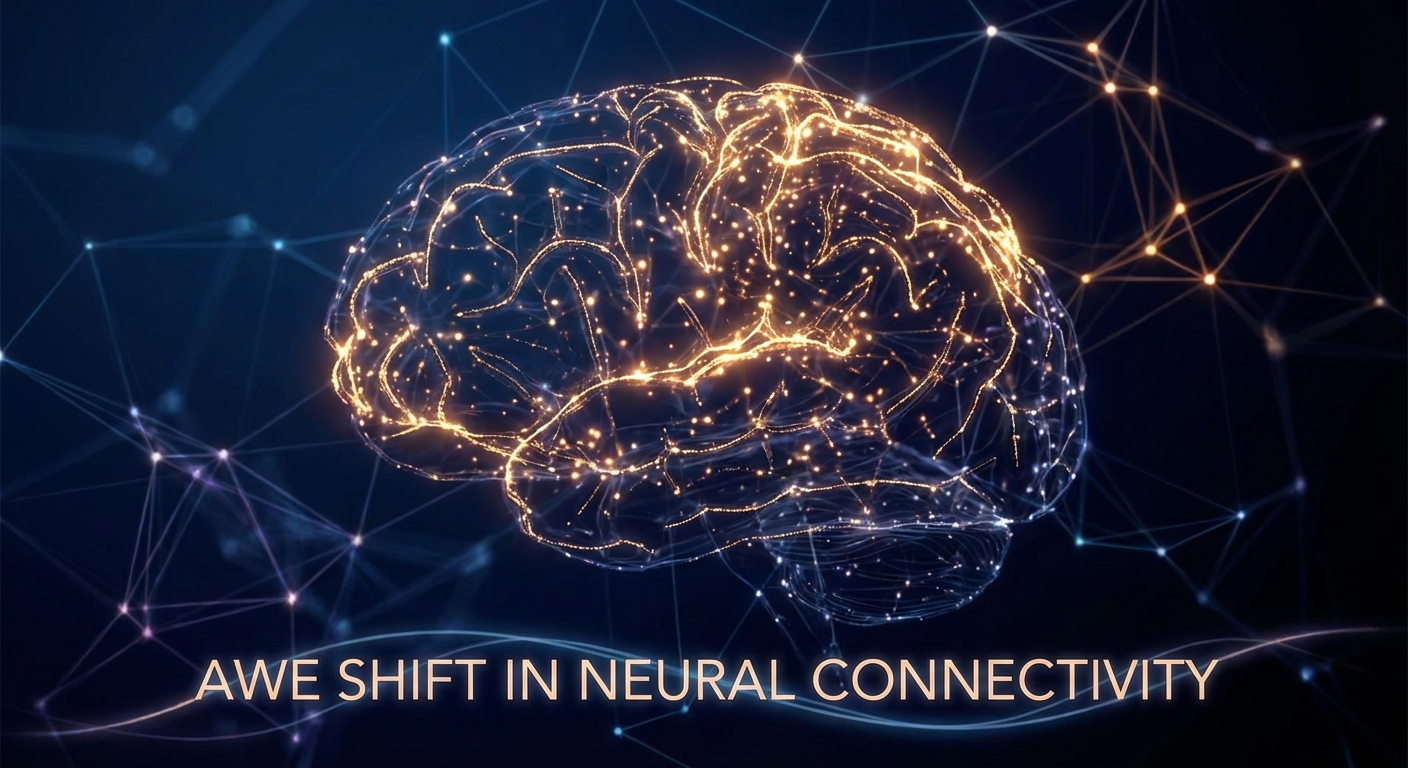
A 2025 study using virtual reality and EEG found that awe intensity could be accurately predicted by the duration and intensity of ambivalent feelings, the complex mix of emotions that awe generates. The research suggests that awe’s power comes partly from its complexity. It isn’t simple pleasure but a rich emotional state that engages multiple systems simultaneously (Awe in the human behavior and cortex).
This helps explain why awe has been found to foster what researchers call “systems thinking,” the ability to see patterns and connections rather than isolated elements. When your usual mental frameworks are temporarily suspended, you become more open to perceiving relationships you’d normally miss. A 2025 article in the Journal of Consumer Psychology presents a model of how awe shapes innovation and choice, finding that awe orients individuals toward rigorous, systems-based, meaning-making thought (Awe, innovation, and choice).
How Awe Makes Us Better to Each Other
One of the most consistent findings in awe research is its effect on prosocial behavior. People who experience awe become more cooperative, more generous, and more likely to help others, even at a cost to themselves.
Empirical studies have found that transient experiences of awe in lab settings and naturalistic contexts lead to increased cooperation, sacrifice, and sharing. People higher in dispositional awe, meaning those who frequently experience this emotion, tend to be more prosocial and more generous in economic games where they can choose how to divide resources (Awe as a Pathway to Mental and Physical Health).
The mechanism appears to involve what researchers call the “small self” effect. When awe makes us feel small relative to something vast, our usual concerns about status, competition, and self-interest temporarily diminish. This isn’t about feeling insignificant in a depressing way but about feeling connected to something larger that puts individual concerns in perspective.
A 2025 study across three experiments with over 2,000 participants explored whether awe could reduce prejudice toward marginalized groups. The researchers found that awe was negatively related to prejudice, suggesting that this emotion has implications extending beyond individual wellbeing to how we relate to entire categories of people (Building bridges with awe). When we feel part of something larger, the boundaries we draw around “us” and “them” become more permeable.
This has implications for relationships, communities, and society. If awe experiences can be cultivated rather than simply awaited, we have a tool for building the kind of social cohesion and mutual care that seems increasingly scarce.
Cultivating Awe in Daily Life
The research is clear that awe benefits us. The practical question is: how do we access it more reliably, especially when daily life feels more rushed than vast?
The first step is simply paying attention. Awe is available far more often than we notice it. The problem isn’t usually that awe-inducing experiences are rare but that we’re moving too fast, too absorbed in our own thoughts, too distracted by screens to perceive the vastness that surrounds us. A sunset happens every day. The night sky exists above us constantly. The intricacy of a leaf, the engineering of a bridge, the coordination of a city, the mystery of consciousness reading these words right now, all of it offers potential portals to awe if we pause long enough to let it in.
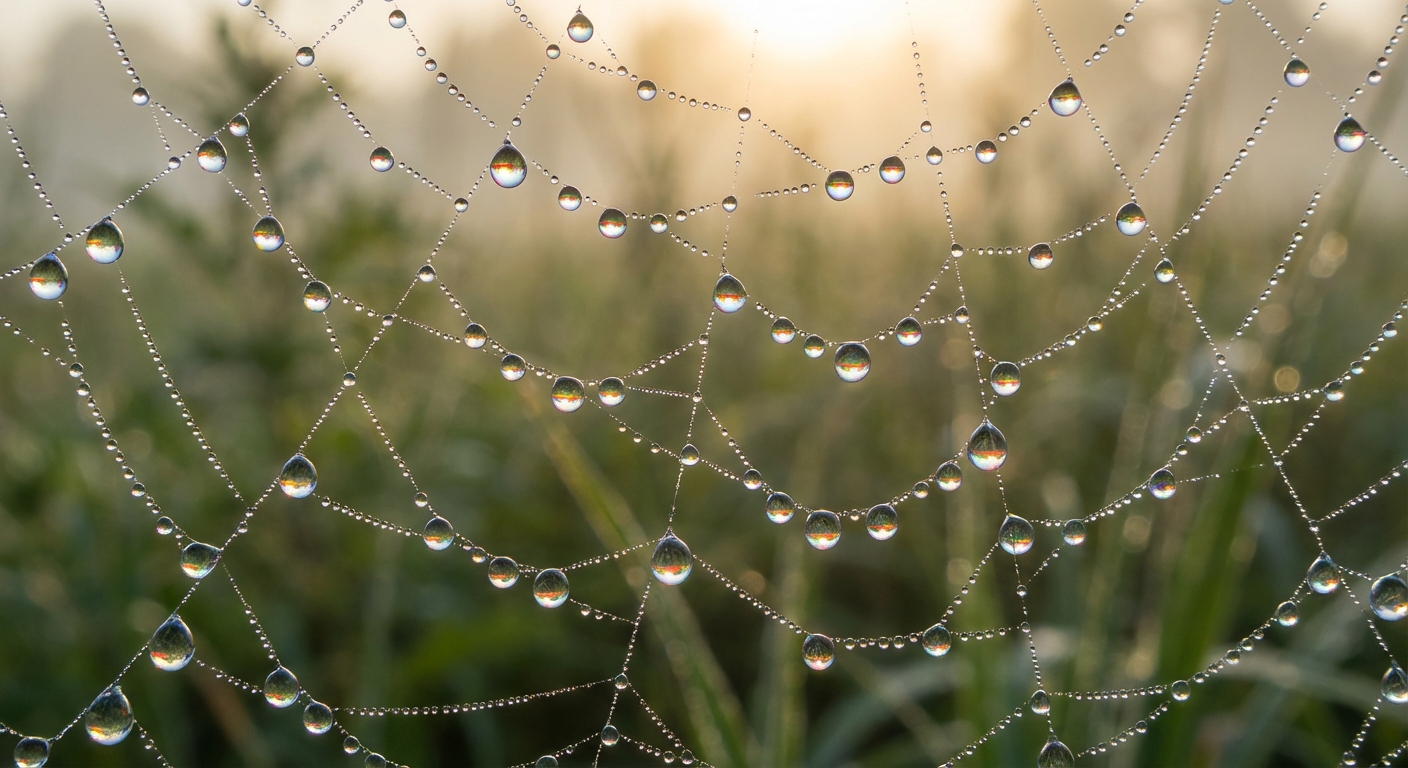
Nature is the most reliable awe elicitor for most people, and emerging research suggests that access to green and blue spaces has been associated with a 28% reduction in loneliness, likely through multiple pathways including awe (Beyond clinical risk: tackling loneliness). You don’t need a national park. A tree observed with genuine attention, clouds moving across the sky, the sound of rain, all can serve if you bring the right quality of attention. The slow living movement offers practices that create the spaciousness awe requires.
Seek out vastness deliberately. Watch documentaries about space, the ocean, or the natural world. Visit art museums and stand before large-scale works. Listen to music that moves you without multitasking. Read about scientific discoveries that stretch your sense of what’s possible. Spend time with people whose moral courage or creative vision exceeds your own.
Notice moral beauty. One of the most underutilized awe elicitors is witnessing exceptional goodness in others, acts of courage, kindness, or integrity that remind you of human potential. When you see someone do something genuinely admirable, let yourself feel the awe rather than quickly moving on. These moments are data about what’s possible.
Share awe with others. The research on awe walks found that participants assigned to reflect on awe reported more joy in connection than those in the control group. Awe seems to be amplified when witnessed together. Watch a sunset with someone you love. Take a child to see something wondrous and watch their face rather than the spectacle itself.
Your Invitation
We live in an era of unprecedented access to information, entertainment, and distraction. We can fill every moment with content calibrated to capture attention but not to expand consciousness. The default is busyness, screens, and the endless management of a life reduced to tasks.
Awe offers an alternative, not an escape from life but a return to it. It’s the experience of remembering that we exist within something vast, complex, and not fully comprehensible. That reminder changes us in measurable ways. It reduces inflammation in our bodies, quiets the anxious chatter in our minds, and opens our hearts toward others.
This week, try creating one deliberate opportunity for awe. It doesn’t need to be dramatic. Go somewhere you can see the horizon. Watch the light change at dawn or dusk. Sit with a piece of music that has moved you before and give it your full attention. Look at photographs from space. Visit something old and consider the hands that made it.
When you find yourself in the presence of something vast, resist the urge to capture it with your phone. Just let yourself be small for a moment. Let your usual frameworks stretch. Notice what happens in your body, in your thoughts, in how the world looks after. Developing greater emotional granularity can help you recognize and name the specific quality of awe you experience, deepening its impact.
We’ve been treating awe as an occasional luxury. The research suggests it might be closer to a necessity, one that’s available right now, for free, if we’re willing to pay attention.
Sources: Awe as a Pathway to Mental and Physical Health, The Science of Awe, Awe Walks Boost Emotional Well-Being, Awe is characterized as an ambivalent affect, Awe, innovation, and choice, Building bridges with awe, Beyond clinical risk: tackling loneliness.