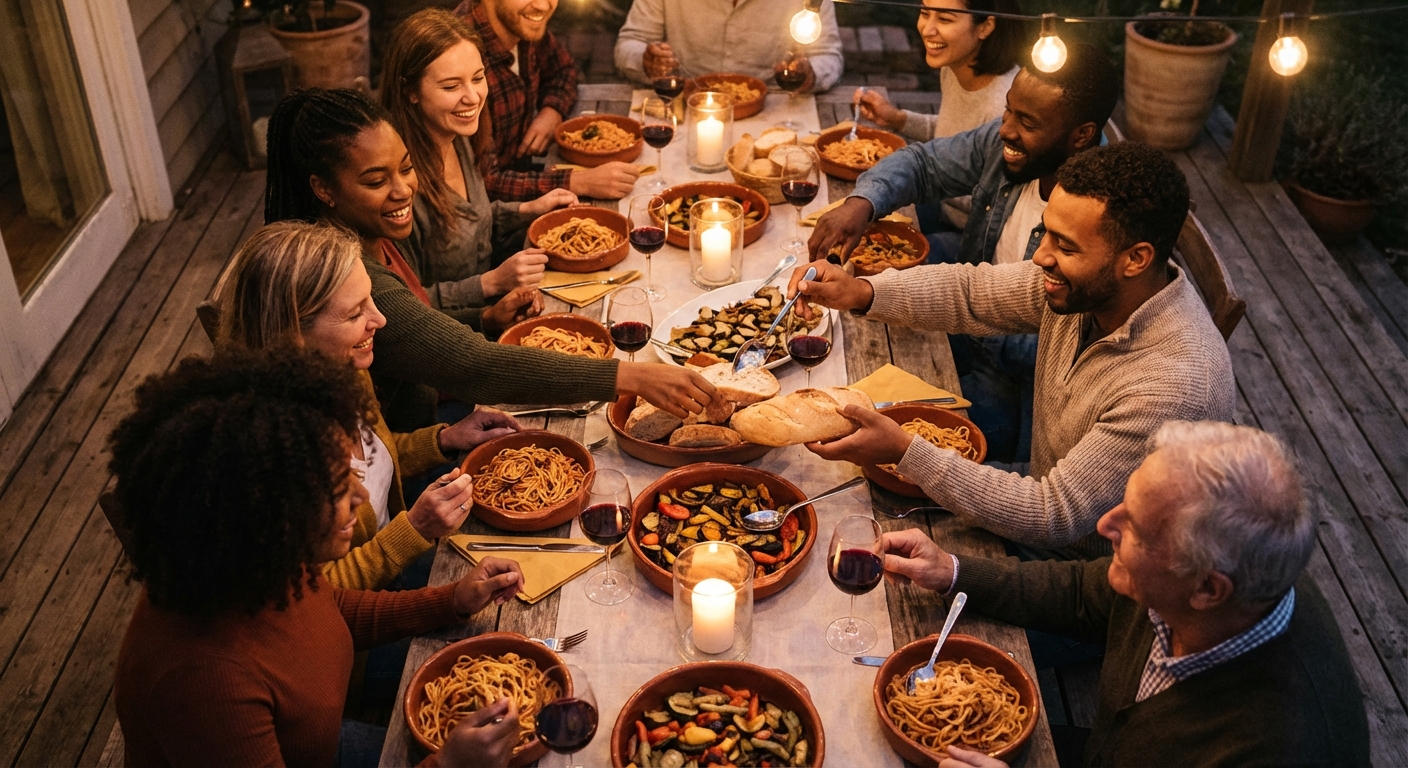
One in four Americans now eats every single meal alone. That statistic, buried in the 2025 World Happiness Report, stopped me cold. Not most meals. Every meal. And the trend is accelerating: solo dining has surged 53% since 2003.
We’ve optimized everything about eating. Meal prep saves time. Delivery apps eliminate cooking. Standing at the counter means no dishes. But somewhere in all that efficiency, we lost something that turns out to be as valuable as a raise or a promotion. The World Happiness Report 2025 found that people who regularly share meals with others report life satisfaction boosts comparable to the effects of income or employment. Comparable to income. Not exercise. Not meditation. Eating dinner with other people.
This isn’t about food quality or nutrition. It’s about what happens when we sit across from another human being, break bread together, and let conversation unfold without an agenda. It’s about a practice so ancient and so ordinary that we’ve forgotten it’s one of the most powerful happiness interventions available.
The Science Is Surprisingly Clear
Researchers have spent decades trying to understand what makes people happy. The usual suspects appear predictably: health, financial security, meaningful work, strong relationships. But the 2025 World Happiness Report identified something more specific. Shared meals emerged as a consistent predictor of wellbeing across cultures, income levels, and life circumstances. This wasn’t about expensive dinners or elaborate cooking. The effect held whether people were sharing takeout on a Tuesday or hosting a Sunday feast.
The report’s theme this year is “caring and sharing,” and its findings suggest these behaviors are what researchers call “twice-blessed.” They benefit both the giver and the receiver. When you cook for someone, you feel useful. When someone cooks for you, you feel cared for. When you sit together, something happens to both of you that neither could create alone.
Dr. John Helliwell, one of the report’s editors and a professor emeritus at the University of British Columbia, has studied wellbeing for decades. His work consistently shows that the quality of our social connections predicts happiness more reliably than income beyond basic needs. Shared meals, it turns out, are one of the most accessible ways to strengthen those connections. They create what sociologists call “structured interaction,” a time-bounded social experience with built-in activities (eating, passing dishes, commenting on food) that reduce the awkwardness of unstructured conversation.
Why We Stopped Eating Together
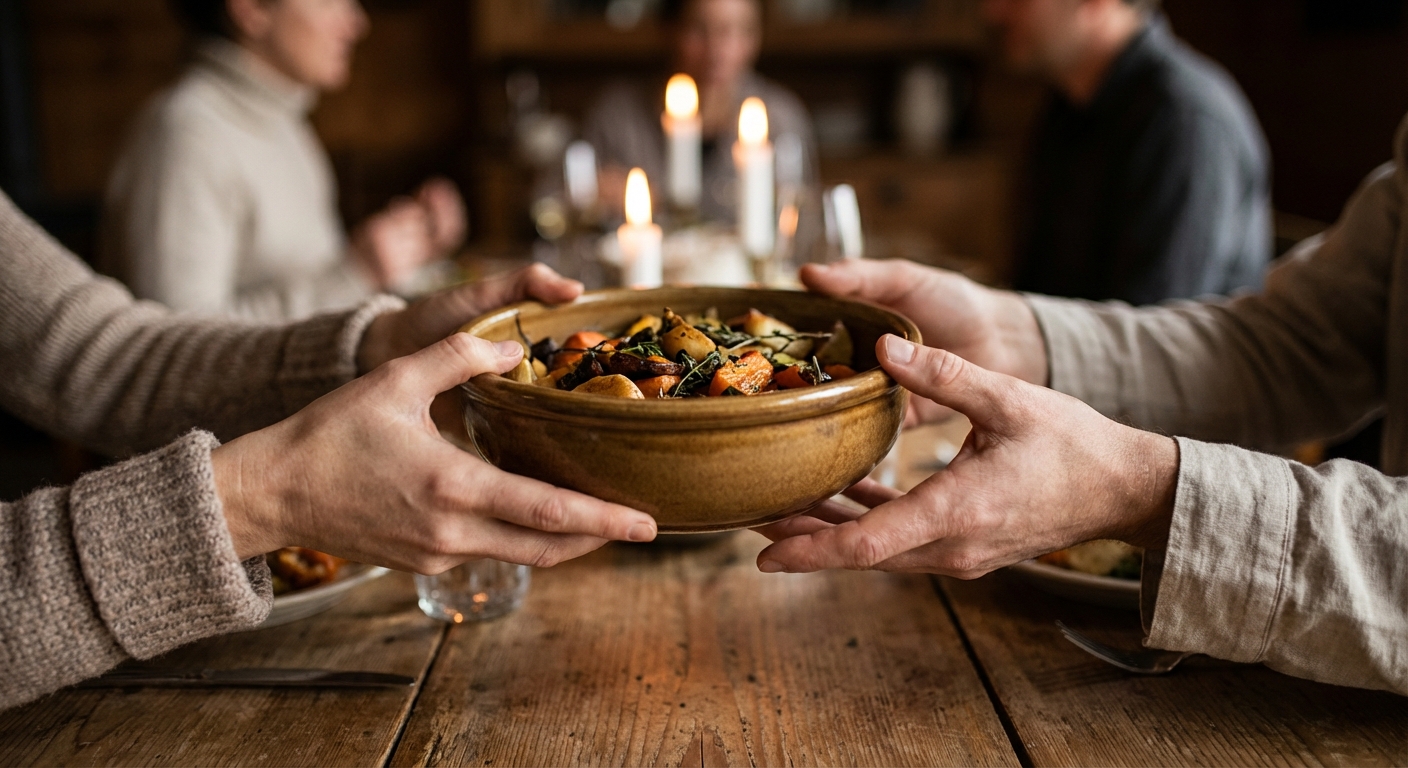
Understanding why shared meals declined helps us reclaim them. The shift didn’t happen because people decided connection wasn’t valuable. It happened because other things crowded it out, and because we didn’t realize what we were losing until it was gone.
Work patterns changed first. The NBER research on declining happiness among young adults notes that irregular schedules, gig economy work, and remote employment have fragmented the rhythms that once organized social eating. When your roommate works nights and you work from home, coordinating dinner requires effort that feels optional. The default becomes eating when you’re hungry, alone, while doing something else.
Technology made solo eating easier and more stimulating. A meal alone used to mean a meal with your thoughts. Now it means a meal with Netflix, podcasts, social media, or email. We’ve replaced the inefficiency of human conversation with the efficiency of content consumption. The trade feels neutral in the moment. You’re still eating. You’re still entertained. But something is different about your nervous system, your sense of belonging, your baseline mood across days and weeks.
Housing patterns shifted too. Smaller apartments, more single-person households, fewer front porches and communal spaces. The architecture of modern life assumes privacy as the default and togetherness as the exception. Making dinner for one is practical. Making dinner for four requires coordination that the built environment doesn’t support.
None of this was anyone’s deliberate choice. These were slow, structural shifts that accumulated over decades. And now we have a loneliness epidemic that the World Happiness Report links directly to declining trust, declining life satisfaction, and declining shared experiences. The solution isn’t as complicated as the problem. It’s embarrassingly simple. We need to eat together more.

What Happens at the Table
The happiness boost from shared meals isn’t random. Research points to specific mechanisms, and understanding them helps us maximize the benefits even when circumstances make regular dinners difficult.
First, there’s the nervous system effect. Eating activates the parasympathetic nervous system, the “rest and digest” mode that counters stress. Doing this in the presence of trusted others amplifies the calming effect. Your body registers safety. Cortisol levels drop. The meal becomes a recovery experience, not just a nutritional one. Dr. Robin Dunbar, an evolutionary psychologist at Oxford who has studied the social brain extensively, notes that shared eating is one of the oldest human bonding behaviors. It triggers the release of endorphins similar to other social bonding activities like laughing, singing, or dancing.
Second, meals create what researchers call “temporal landmarks.” They mark the day’s rhythm, create anticipation, and provide natural transition points between activities. Families who eat dinner together report better communication not just during meals but in general, likely because the meal creates a reliable window for checking in. The ritual aspect matters: same time, same place, same expectation of presence. This predictability is itself calming in an unpredictable world.
Third, shared meals involve micro-interactions that build relationship capital over time. Asking someone to pass the salt. Commenting on the food. Asking about their day. These tiny exchanges don’t feel significant individually, but they accumulate into something that surveys measure as “relationship satisfaction” and “sense of belonging.” The research from Frontiers in Psychology on social support and life satisfaction shows that it’s often these small, consistent interactions that matter most, not the grand gestures we imagine.
Starting Small When Everything Feels Hard
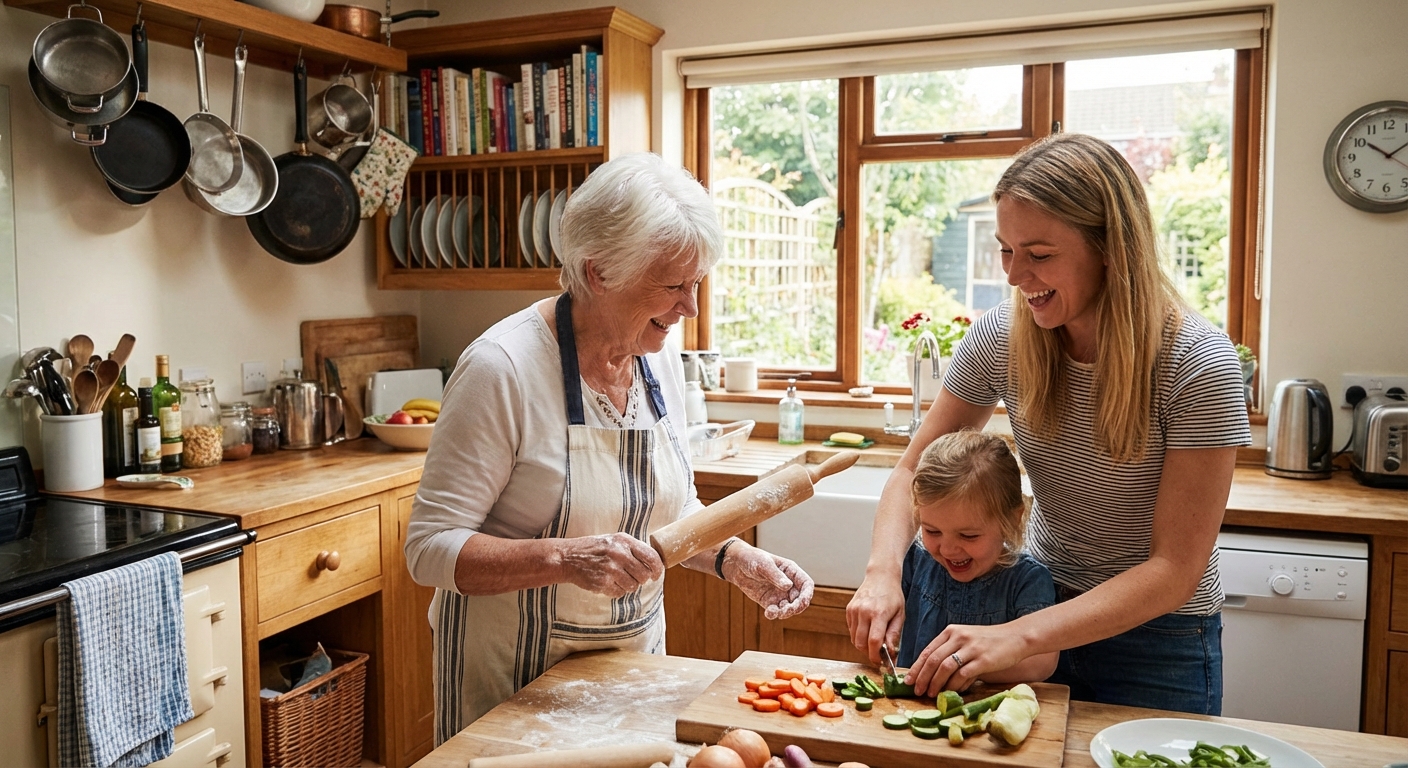
If you’re reading this while eating lunch at your desk, the gap between your current habits and regular shared meals might feel enormous. That’s okay. The research suggests consistency matters more than perfection, and small starts create momentum.
One meal per week is enough to begin. Not a dinner party. Not hosting. Just eating one meal in the presence of another person, with the TV off and phones down. This could be breakfast with a roommate before you both leave for work. It could be lunch with a colleague who usually eats at their desk too. It could be coffee and pastries with a neighbor on Saturday morning. The bar is lower than we make it.
Cooking is optional. The happiness boost comes from the social experience, not the culinary achievement. If you hate cooking, order pizza and eat it at a table together. If you love cooking, invite someone over and let them watch while you make something simple. The food is the excuse. The presence is the point.
For those who live alone, this requires more intention. But it doesn’t require more effort than we spend on other wellbeing practices that feel more legitimate. You already carve out time for the gym, for your skincare routine, for decompressing after work. Carving out time for regular shared meals is an investment in the same category. Reach out to friends, neighbors, family, or colleagues with standing invitations. “Tuesday dinner at mine, nothing fancy” is an offer most people want to accept.
If physical togetherness isn’t possible, video calls during meals capture some of the benefit. It’s not identical to in-person dining, but the structured interaction still occurs. You’re still eating together, still talking, still present for the same duration. Some families separated by distance have adopted “Zoom dinners” as regular practice, and they report connection benefits similar to what the research predicts.
Your Invitation
The World Happiness Report finds Finland at the top of global happiness rankings for the eighth consecutive year. When researchers look at what distinguishes the happiest nations, they find high trust, strong social support, and cultures that prioritize connection over achievement. These aren’t things we can import through policy alone. They’re built through millions of small choices, made daily, by people who decide that togetherness matters more than convenience.
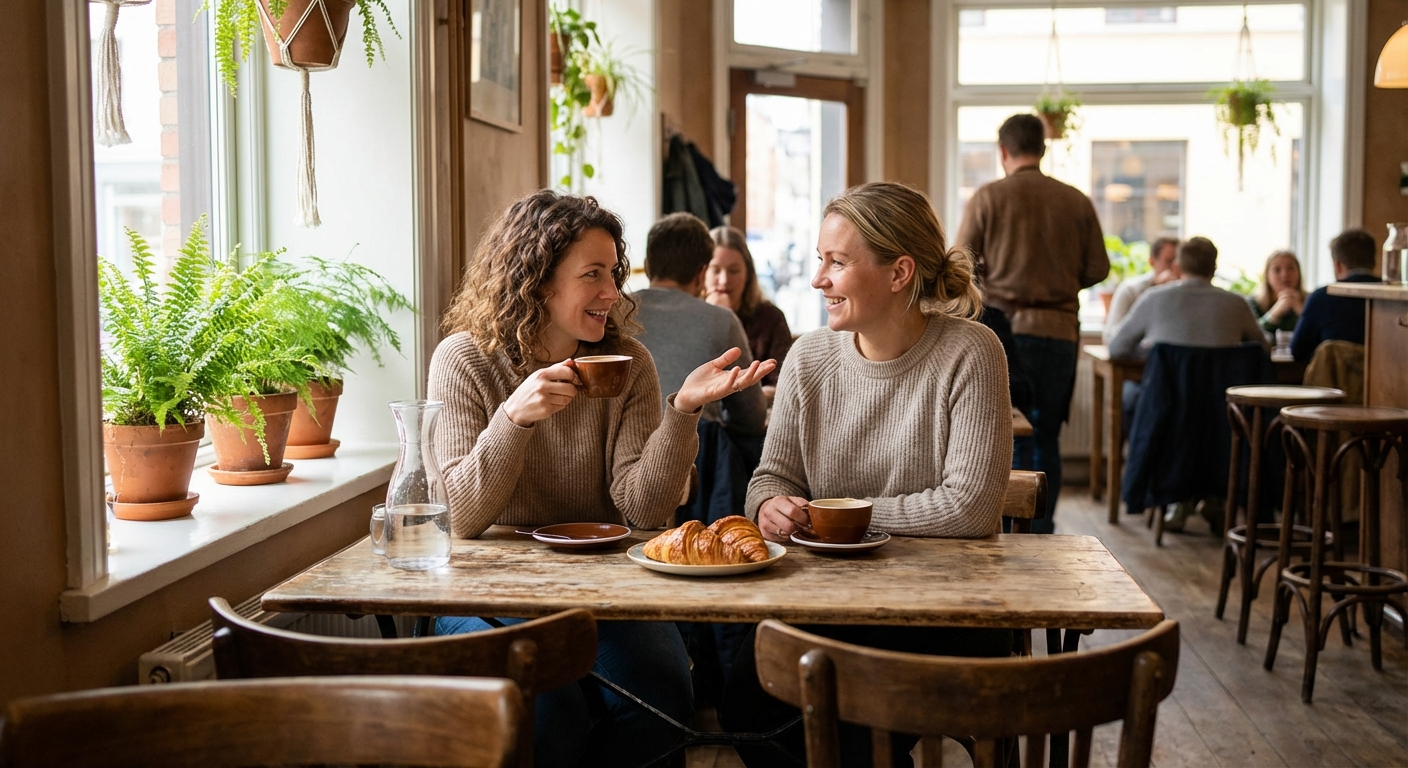
You don’t need to move to Finland. You don’t need to overhaul your life. But you might consider, this week, inviting someone to share a meal with you. It doesn’t have to be elaborate. It doesn’t have to be beautiful. It just has to involve sitting down, eating food, and being present for another person for the duration of a meal. The research suggests this simple act will make you happier. Not because of the food. Because of the company.
One in four Americans eats every meal alone. That doesn’t have to be you. And if you’re someone who has drifted into solo dining without noticing, the path back to connection is as simple as asking: “Want to grab dinner sometime this week?” The answer, more often than not, is yes.
For more on building meaningful social connections, explore our guide to micro-connections that matter. And if you’re ready to rethink your relationship with busyness, consider our piece on the slow living movement.
Sources: World Happiness Report 2025, NBER research on declining happiness, Frontiers in Psychology, Dr. John Helliwell (University of British Columbia), Dr. Robin Dunbar (Oxford University) on social bonding.