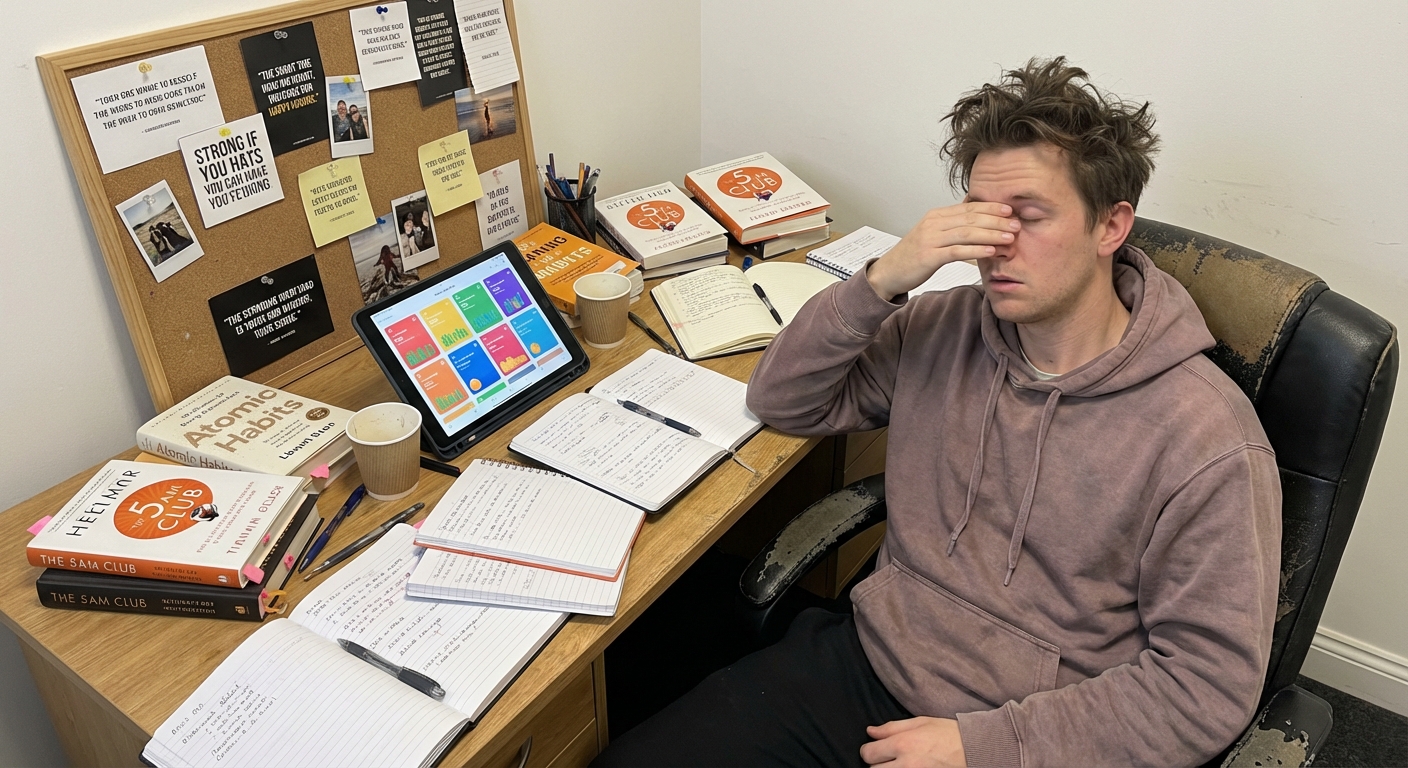
You’ve read the books. You’ve listened to the podcasts. You’ve journaled, meditated, tracked your habits, optimized your morning routine, biohacked your sleep, and 10x’d your productivity.
You’ve worked on your mindset, your limiting beliefs, your inner child, your shadow self. You’ve manifested, visualized, and affirmed.
And yet.
You’re exhausted. Because self-improvement, it turns out, is an endless treadmill. There’s always another level to reach, another version of yourself to become, another area that needs work. The goalposts keep moving. The finish line stays perpetually ahead. The more you improve, the more you discover needs improving.
What if the problem isn’t that you need more improvement? What if the problem is the belief that you’re not enough as you are?
The Trap Nobody Talks About
Self-improvement culture has a dirty secret: it profits from your sense of inadequacy.
Every course, every program, every framework starts with the same premise: that you, as you are right now, are insufficient. You need to be better. More productive. More mindful. More successful. More optimized. The implicit message is that your current self is a problem to be solved.
And once you’ve completed this program? There’s another one waiting. Because the goal posts keep moving. The finish line is always just ahead. You’re never quite optimized enough, never quite actualized enough, never quite there.
The promise sounds beautiful: if you just work on yourself enough, if you optimize enough, if you grow enough, you’ll finally feel fulfilled, successful, at peace. But the reality tells a different story. The more you chase optimization, the further fulfillment feels. Because you’ve internalized the message that who you are isn’t enough. You’ve built your identity around becoming rather than being.
Researcher Dr. Kristin Neff, who studies self-compassion at the University of Texas, points out that constant self-improvement can become a form of self-rejection. “We can’t become our best selves if we’re constantly criticizing our current selves,” she writes. “Self-compassion creates the emotional safety needed for genuine growth.”
Sarah spent her thirties as a devoted self-help consumer. Morning routine, evening routine, productivity system, meditation app, habit tracker. She was constantly working on herself. “And I felt worse than ever,” she told us. “Like I was perpetually failing at being a better version of me. When did just being me stop being okay?”
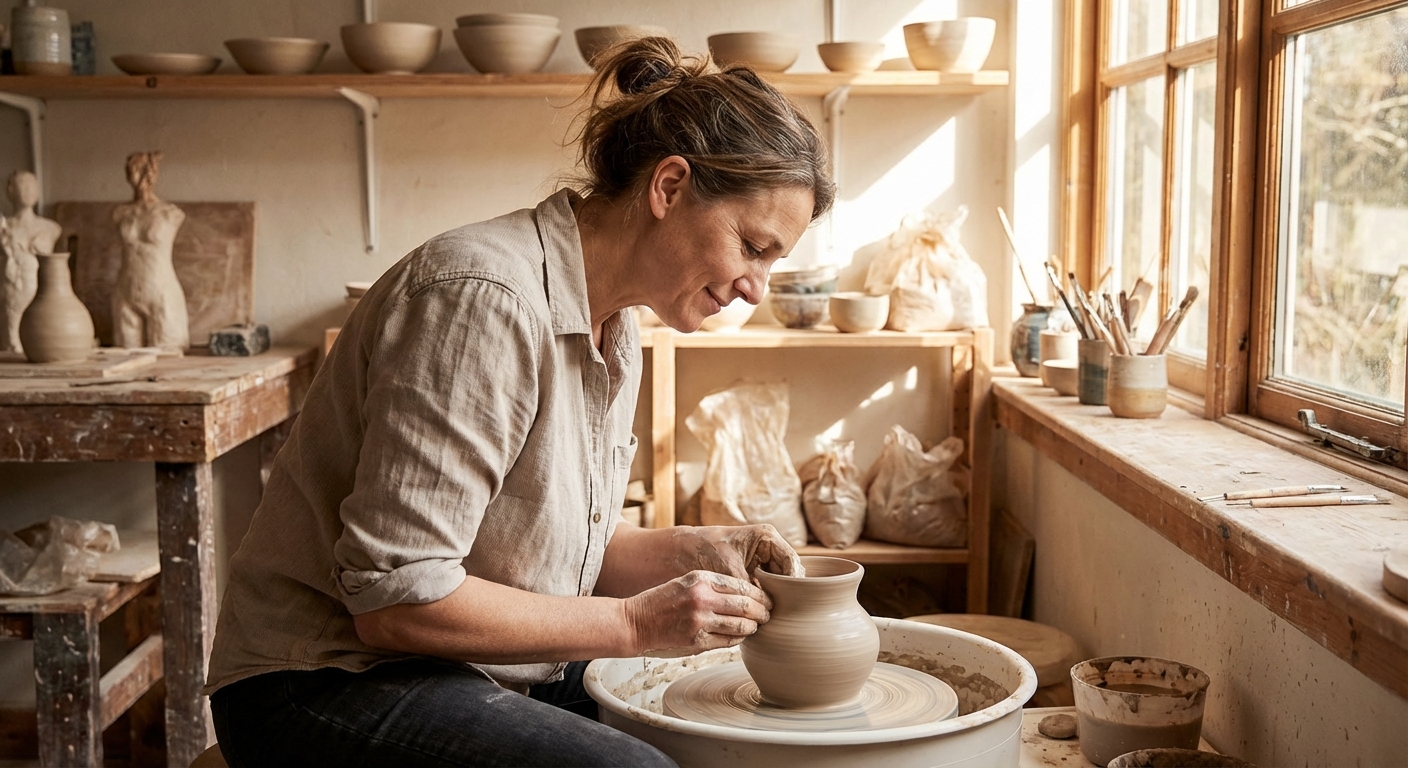
Being vs. Becoming
There’s nothing wrong with growth. Learning new things, developing skills, evolving as a person, these are natural human desires. The problem emerges when becoming is weaponized against being. When the pursuit of who you could be becomes an indictment of who you are.
When growth comes from a place of worthiness, it’s nourishing. “I’m whole and I’m curious about what else I can learn.” This foundation creates sustainable development. You’re adding to something complete, not trying to fix something broken.
When growth comes from a place of inadequacy, it’s depleting. “I’m broken and I need to fix myself.” This foundation creates exhaustion. You’re running from something you can never escape: your own perceived insufficiency.
The difference shows up in how you talk to yourself. Healthy growth sounds like curiosity: “I’m interested in meditation, I’ll try it.” It comes from desire and openness. Toxic optimization sounds like obligation: “I should meditate because successful people do.” It comes from fear of not being enough.
You can pursue the exact same activity, meditation, fitness, learning, career development, and have it be nourishing or depleting depending on which foundation you’re building from. The activity isn’t the problem. The relationship to yourself is.
Toxic Productivity in Personal Growth
The same hustle culture that broke our relationship with work has infiltrated our relationship with ourselves.
Your personal growth has KPIs now. How many pages did you read this month? How many minutes did you meditate? How many habits did you complete? How optimized are you? We’ve turned self-development into another performance metric, another arena for achievement and comparison.
Rest isn’t rest if it’s not “productive rest.” Hobbies aren’t hobbies if they’re not “building skills.” Fun isn’t fun if it’s not also “self-care.” Everything must serve growth, productivity, optimization. Nothing can just… be.
Marcus realized he’d turned his entire life into a self-improvement project. “I couldn’t watch TV without feeling guilty that I should be reading. I couldn’t go for a walk without a podcast. I couldn’t do anything that wasn’t ‘productive’ or ‘growth-oriented.’ I’d forgotten how to just exist.” The optimization mindset had colonized his leisure, his relationships, his entire experience of being alive.
Psychologist Dr. Tara Brach calls this “the trance of unworthiness,” a persistent feeling that we’re not okay as we are, that we need to constantly earn our right to exist through improvement and achievement. This trance keeps us busy but doesn’t bring us peace. If you’re caught in this cycle, understanding the art of doing nothing might offer a path back to yourself.

The Myth of the Best Self
“Be your best self!” the culture shouts. But what does that even mean? Best at what? According to whom? And how will you know when you’ve arrived?
You won’t. Because “best self” is a moving target designed to keep you chasing.
When you’re 25, your best self is getting promoted. When you’re 35, it’s having it all together. When you’re 45, it’s staying relevant. When you’re 55, it’s aging gracefully. The standard changes constantly, but it’s always out of reach. There’s always another gap between who you are and who you’re supposed to be.
Some questions can break the spell. Whose definition of “best” am I chasing? Is it actually mine, or is it what I’ve absorbed from culture, social media, or comparison with people I don’t even know? What am I trying to prove, and to whom? Will it ever be enough? What would I do if I believed I was already enough? How would my life look different if I didn’t feel compelled to constantly improve?
Sometimes the most revealing question is this: What am I avoiding by constantly working on myself? Sometimes self-improvement is escape from actually living. It’s easier to read about life than to live it. It’s safer to optimize than to risk.
Radical Permission
Here’s permission you might not have given yourself: you don’t have to be working on yourself all the time.
You don’t have to have a morning routine. You don’t have to meditate. You don’t have to optimize your sleep or track your habits or read 50 books a year. You’re allowed to be imperfect. You’re allowed to be inconsistent. You’re allowed to have flaws you’re not actively working on. You’re allowed to exist without constantly trying to improve that existence.
This doesn’t mean growth is bad or that you shouldn’t develop yourself. It means you get to choose when and how and why, from a place of worthiness rather than inadequacy. It means your value as a person doesn’t depend on your rate of improvement.
“Just being” looks like watching TV without guilt, because sometimes you just want to be entertained and that’s okay. It looks like taking a walk without a podcast, because not every moment needs to be a growth opportunity. It looks like having hobbies that don’t build marketable skills, doing things purely because they’re enjoyable. It looks like spending time with people without networking, and having days where you don’t accomplish anything, and being okay with that. If you’re struggling with giving yourself permission to rest, understanding slow living might help you see another way.
Elena stopped using her habit tracker. Stopped feeling guilty about her inconsistent meditation practice. Stopped trying to optimize everything. “And you know what? I’m happier. More relaxed. More myself. Turns out the constant self-improvement was making me worse, not better.”
Growth From Worthiness
This isn’t anti-growth. It’s about the foundation from which growth happens.
Growth from inadequacy says: I’m not enough, so I must improve to be valuable. This creates desperate, exhausting striving. You’re running from something, which means you’re never at peace.
Growth from worthiness says: I’m enough, and I’m curious about what else is possible. This creates sustainable, enjoyable development. You’re moving toward something because it interests you, not because you’re fleeing your own perceived brokenness.
The outcomes might look similar. You still learn, develop, evolve. But the internal experience is completely different. One feels like chasing and never arriving. The other feels like exploring from a secure base.
Before you embark on any self-improvement project, try the worthiness check. Am I doing this because I think I’m broken, or because I’m genuinely interested? Am I doing this to prove something, or because it calls to me? Am I doing this out of fear of not being enough, or out of genuine curiosity? Will I still accept myself if this doesn’t work?
The honest answers reveal whether you’re growing from worthiness or running from inadequacy. Both might produce the same behavior, but they produce very different lives.
Practicing Enoughness
Every day, practice believing you’re enough right now. Not in some future version where you’ve achieved more, fixed your flaws, optimized your life. Right now. This version. The messy, imperfect, still-figuring-it-out version.
Morning affirmation: “I am enough, exactly as I am, right now.” Say it even if you don’t believe it yet. Repetition creates familiarity, and familiarity eventually creates belief. Pause the “should” spiral when you notice it: “I should be further along. I should be better at this.” Pause. Ask: “Says who?”
Celebrate existing, not just achieving. You got through today. You showed up. You’re here. That’s enough. Release comparison, because their highlight reel isn’t your reality. You don’t know what they’re struggling with. Run your own race.
Find the joy, not just the growth. What do you enjoy purely for enjoyment’s sake, not because it improves you or makes you more valuable? Do more of that. If you’ve been struggling with the constant pressure to do more, the rest revolution might offer a helpful perspective.
When to Grow, When to Be
Sometimes growth is exactly right. Sometimes it’s avoidance. Learning to tell the difference is itself a practice.
Grow when you’re genuinely curious about something, when you’re pulled toward it rather than pushed by fear. Grow when it aligns with your values and desires, when you’ll accept yourself whether you succeed or not. Growth from this place is joyful, sustainable, and deeply satisfying.
Be when you’re exhausted from constant improvement. Be when you’re chasing “shoulds” instead of wants, when you’re trying to prove your worth, when you’ve lost touch with who you are beneath all the optimization. Being isn’t failure or stagnation. It’s returning to yourself.
Both are valid. Both are necessary. The key is knowing which serves you right now.
Your Invitation
What if, just for a week, you stopped trying to improve yourself?
No self-help books. No optimization. No tracking. No routine you “should” follow. Just be. As you are. Imperfect and enough.
See what happens when you stop trying to be better and start accepting that you’re already whole. You might discover that the person you’ve been trying to become is the person you already are. All that energy you’ve been spending on optimization? You get it back, to spend on actually living.
You’re not a project. You’re a person. And that person, right now, is enough.
This article draws on insights from Tara Brach (Radical Acceptance), Kristin Neff’s research on self-compassion, Carl Rogers’ work on unconditional positive regard, and the experiences of people who found peace in accepting rather than constantly fixing themselves.
Sources: Tara Brach’s “Radical Acceptance,” Dr. Kristin Neff’s self-compassion research, Carl Rogers’ humanistic psychology.