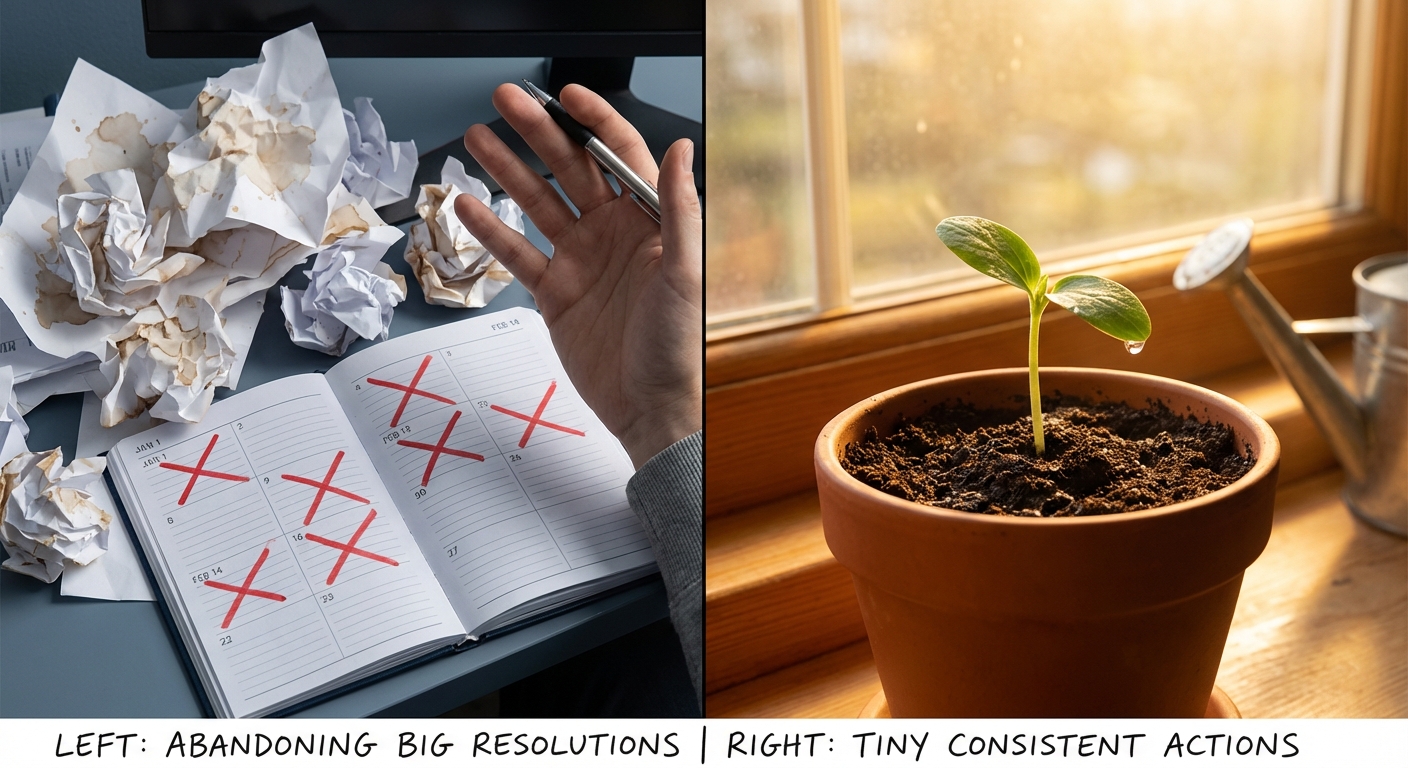
You’ve spent years trying to fix what’s wrong with you. The procrastination. The difficulty with small talk. The tendency to overthink. The disorganization. The sensitivity that sometimes feels like too much. You’ve bought the books, downloaded the apps, started the programs designed to sand down your rough edges and transform you into someone more polished, more functional, more… normal.
How’s that working out?
For most people, the honest answer is: not great. Self-improvement efforts focused on fixing weaknesses tend to produce modest gains at enormous effort, and those gains often fade when willpower wanes. Meanwhile, the things you’re naturally good at, the skills that come easily, the qualities that feel so obvious you barely notice them, sit underutilized. You’ve been so busy trying to become someone else that you’ve neglected to become more of yourself.
Recent research on strengths-based approaches is challenging the deficit-focused model that dominates self-improvement culture. Studies show that people who are aware of their personal strengths and actively use them report better overall wellbeing, higher quality of life, and fewer mental health challenges. This isn’t about ignoring weaknesses or avoiding growth. It’s about recognizing that building on what already works is often a faster, more sustainable path to becoming who you want to be.
The Problem with Fixing Weaknesses
The logic of weakness-fixing seems impeccable. Identify what’s holding you back, work on it systematically, and emerge improved. It’s the model behind most self-help advice, most performance reviews, most educational interventions. And it’s not entirely wrong. Some weaknesses genuinely limit us, and addressing them matters.
But the weakness-focused approach has a significant blind spot: it assumes that all growth areas offer equal return on investment. They don’t. When you’re working against your natural grain, you’re spending energy to reach mediocrity. When you’re building on existing strengths, you’re spending energy to reach excellence. The same effort produces radically different outcomes depending on whether you’re fighting your nature or extending it.
Consider how you feel when you’re working in a weakness area versus a strength area. In weakness mode, you’re effortful, self-conscious, and easily drained. In strength mode, you’re energized, confident, and often surprised by how much time has passed. Positive psychology research has documented this difference extensively. Using signature strengths is associated with greater engagement, better performance, and improved wellbeing. Using weaknesses, even successfully, tends to deplete.

What Research Actually Shows
The evidence for strengths-based approaches has been building for decades, rooted in the positive psychology movement launched by Martin Seligman at the University of Pennsylvania. But recent research has made the case even stronger, extending the findings to populations previously overlooked.
A study published in late 2025 examined strengths awareness and utilization in adults with ADHD, a group typically approached through a deficit lens. The results were striking: participants who were aware of their personal strengths and actively used them reported better overall wellbeing and fewer mental health challenges. The researchers noted that while strengths-based frameworks are increasingly used in autism services, they’ve received far less attention in ADHD, despite showing similar promise.
This finding aligns with broader research on strengths in general populations. People who use their signature strengths daily are more than three times as likely to report having an excellent quality of life. Using strengths is associated with greater vitality, higher self-esteem, and lower rates of depression and anxiety. The mechanism seems to involve authenticity: when you’re operating from strength, you’re being yourself, and that alignment between behavior and identity supports wellbeing.
Workforce research from meQ is also incorporating strengths-based thinking. Their 2026 State of the Workforce Report emphasizes “proactive resilience building,” which includes helping people identify and apply their strengths more effectively. Organizations are realizing that trying to fix every employee’s weaknesses is both exhausting and inefficient. Helping people leverage what they’re already good at produces better outcomes for everyone.
Identifying Your Actual Strengths
Here’s the challenge: many people have no idea what their strengths actually are. Not because they don’t have them, but because strengths often feel so natural that they become invisible. You assume everyone can do what you do easily. You don’t realize that your ability to see patterns, or connect with strangers, or explain complex ideas, or stay calm under pressure is actually remarkable.
Start by noticing energy. When do you feel most alive and engaged? What activities make time disappear? What work would you do even if you weren’t getting paid? Energy is a clue to strength. The things that energize you rather than drain you are likely connected to natural capabilities.
Ask others what they see. Sometimes the people around you have a clearer view of your strengths than you do. Ask trusted friends, colleagues, or family members: “What do you think I’m naturally good at?” Their answers may surprise you. The things they mention casually are often the things you take for granted.
Reflect on compliments you’ve dismissed. Think back to praise you’ve received that felt undeserved or obvious. “You’re so organized.” “You have such a way with people.” “You always know the right thing to say.” You probably brushed these off because the thing being praised came easily. That ease is precisely the point. What comes easily to you doesn’t come easily to everyone.
Consider formal assessment. Tools like the VIA Character Strengths survey (free at viacharacter.org), CliftonStrengths, or the Enneagram can provide structured frameworks for understanding your natural patterns. These aren’t destiny, but they can offer language and insight for patterns you’ve always sensed but never named.

Building on What Works
Once you’ve identified your strengths, the question becomes: how do you use them more deliberately? This isn’t about abandoning growth or avoiding challenges. It’s about applying your natural capabilities to the problems and goals that matter to you.
Map strengths to goals. Look at your current objectives, whether professional, personal, or relational. How might your signature strengths help you achieve them? If you’re naturally curious, can you approach a boring project as an investigation? If you’re naturally empathetic, can you use that capacity to navigate a difficult conversation? The goal you’re pursuing might not change, but the path you take can align with how you naturally operate.
Delegate or minimize weaknesses. This isn’t about making excuses. It’s about resource allocation. If you’re terrible at detail work but great at big-picture thinking, find ways to partner with detail-oriented people rather than grinding through tasks that deplete you. If you struggle with networking but excel at deep one-on-one connection, stop forcing yourself to work the room and focus on building the few relationships that actually matter.
Stretch strengths into new domains. Strengths don’t have to stay in their original context. The analytical ability you use at work might help you understand a relationship challenge. The creativity you express in hobbies might transform how you approach problem-solving. Strengths are transferable. The more you recognize them as capacities rather than context-specific skills, the more flexibly you can apply them.
Track what’s working. Keep a simple log of moments when you felt effective, engaged, and energized. Look for patterns. What were you doing? What strength were you using? This kind of self-study builds awareness and helps you recognize opportunities to operate from strength more often.

When Weaknesses Still Matter
None of this means you should ignore weaknesses entirely. Some limitations genuinely hold you back, particularly when they’re in domains that matter deeply to you or when they harm others. If you’re a leader whose weakness is listening, that’s not a quirk to work around. It’s a capability gap that hurts your team. If you’re in a relationship and your weakness is emotional expression, that’s affecting someone you love.
The question to ask is: does this weakness significantly impair something important? If yes, it deserves attention. If no, it might be a quirk you can accept, delegate, or design around. Not every rough edge needs sanding. Some of them are just part of who you are.
The emerging consensus in psychology is that growth happens best through a combination approach: build on strengths while addressing the few weaknesses that genuinely limit you. This is different from the traditional model, which treated all deficits as equally urgent. It’s a more humane and more effective way to think about becoming who you want to be.
Your Invitation
This week, try a simple experiment. Pay attention to moments when you feel energized, capable, and fully yourself. Don’t judge them or analyze them. Just notice them. Write them down if it helps. At the end of the week, look for patterns. What were you doing in those moments? What part of you was being expressed?
You may discover that your strengths have been hiding in plain sight, so familiar that you forgot they were remarkable. You may realize that you’ve been spending enormous energy trying to fix things that matter less than you thought, while neglecting the capabilities that could actually transform your life.
The self-improvement industry has made a fortune selling you solutions to your problems. But some of your biggest opportunities aren’t problems at all. They’re strengths waiting to be used more fully. Your job isn’t always to become different. Sometimes it’s to become more of who you already are.
Sources: ScienceDaily ADHD strengths research, University of Pennsylvania Positive Psychology Center, YourStory self-improvement trends, American Psychological Association 2026 trends, meQ State of the Workforce Report.