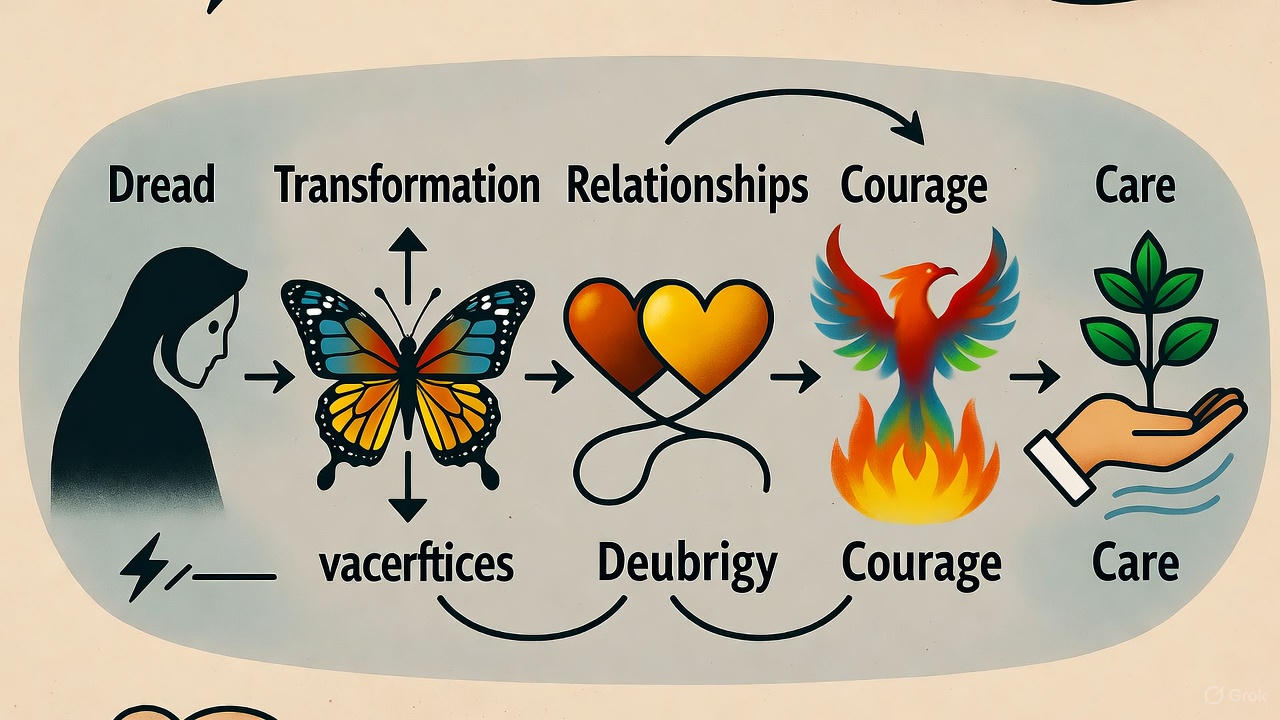
You wake up one day and realize the life you’ve built doesn’t fit anymore. The career path that once excited you feels hollow. The relationships that sustained you feel draining. The version of yourself you’ve been presenting to the world feels like a costume you’re tired of wearing. You’re not broken. You’re not having a crisis. You’re experiencing something profound and necessary: an identity shift.
And while it feels unsettling, maybe even terrifying, it’s actually one of the most natural things in the world. Because you’re not meant to be the same person at 35 that you were at 25. You’re not supposed to want the same things at 40 that you wanted at 20. You’re meant to evolve. The question isn’t whether you’ll change. It’s whether you’ll resist that change or embrace it.
The Myth of Finding Yourself
Most of us were raised with what psychologist Carol Dweck might call a fixed identity mindset. We’re told to “find yourself,” as if there’s one true, permanent self waiting to be discovered. Once you find it, you’re done. That’s who you are forever. But that’s not how humans actually work. Dr. Dan McAdams, a narrative psychologist at Northwestern University, has spent decades studying how people construct and reconstruct their identities throughout life. His research shows that identity is fundamentally a story we tell, and stories can be revised, expanded, and rewritten as we gather new experiences and understanding.

Who you are shifts throughout your life based on experiences, relationships, values, and circumstances. The person you are at work is different from who you are with your family, which is different from who you are alone. And that’s not inconsistency; it’s complexity. It’s being human. An evolving identity mindset recognizes this fluidity. It says: I am always becoming. I contain multitudes. I’m allowed to change my mind, shift my values, and grow in directions I never anticipated. The problem is that we’ve built entire lives, careers, relationships, and reputations around older versions of ourselves. And when we start to outgrow those versions, everything feels unstable.
Recognizing the Signs of Outgrowing
Identity shifts often start quietly, with small discomforts you try to ignore. But they build. You might feel like you’re performing, going through the motions of your life but without genuine engagement. You’re playing a role instead of living. Old goals that once excited you arrive and produce nothing, or worse, dread. The promotion you worked toward for years finally happens and you feel empty rather than fulfilled.
You might notice you’re drawn to different people than before. The friends who once understood you now feel mismatched. You’re craving deeper conversations, different energy, connections that reflect who you’re becoming rather than who you were. You question everything: your career, your relationships, your values, your purpose. The foundations you built on are being re-examined, not because they were wrong but because they were built by a different person with different needs. There’s a persistent restlessness, a sense that there’s more, that you’re meant for something different, even if you can’t name what that something is. And underneath it all, you might feel a strange kind of grief, not for something lost, but for the version of yourself you’re leaving behind.
If this sounds familiar, you’re not lost. You’re in transformation. And while it’s uncomfortable, it’s also exactly where growth happens. For those feeling this pull toward something new, our piece on the courage to start over explores what happens when you actually take the leap.
The Necessary Pain of Becoming
Here’s what no one tells you about identity shifts: they hurt. Carl Rogers, the founder of humanistic psychology, described growth as moving toward becoming a “fully functioning person,” but he acknowledged that the process involves confronting incongruence, the gap between who you’ve been and who you sense you could be. That confrontation is painful.
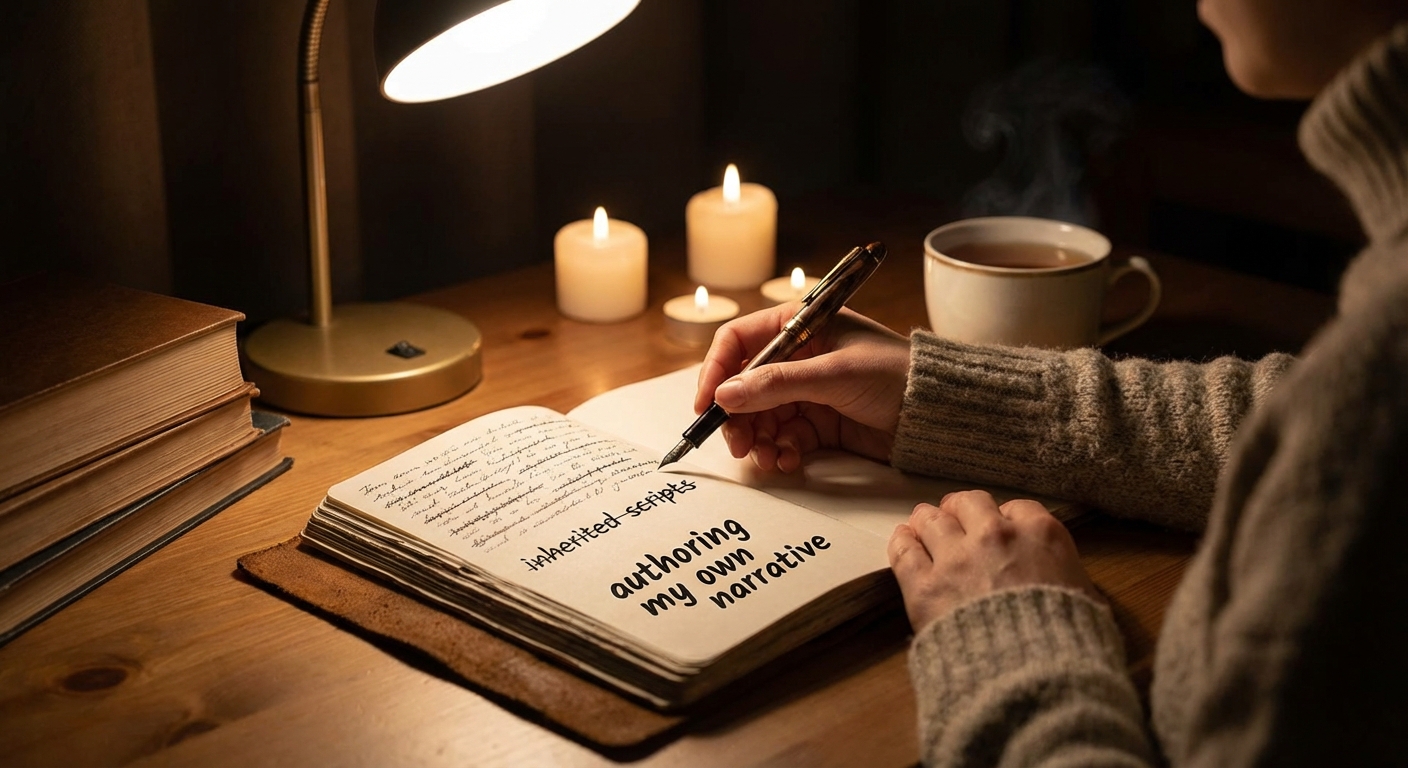
Shedding an old identity feels like grief because, in a way, it is. You’re mourning the person you thought you’d be, the life you thought you’d live, the dreams that no longer fit. And the people around you might not understand. They liked the old you. They’re comfortable with who you were. Your evolution asks them to adjust, and not everyone is willing or able to do that. Some relationships won’t survive your transformation. That’s one of the hardest truths of personal growth. But staying small to keep others comfortable is what therapists call self-abandonment. And you can’t become who you’re meant to be while clinging to who you were.
Releasing the Stories That Hold You Back
We all carry stories about ourselves, narratives we’ve been telling for years, maybe decades. “I’m not creative.” “I’m bad with money.” “I’m not a leader.” “I’m not the kind of person who…” These stories feel like truth. But they’re often just old programming, things you internalized from parents, teachers, early experiences, or past failures. James Clear, in his work on identity-based habits, argues that real change happens not at the level of goals or behaviors but at the level of identity. And identity is story.
Identity transformation requires examining these stories and asking: Is this still true? Was it ever true? Do I want it to be true? Maybe you’ve been telling yourself you’re not a leader because one time in third grade you froze during a presentation. But that was decades ago. Are you really going to let a childhood moment define who you’re allowed to become? Maybe you’ve been saying you’re bad at relationships because one ended badly. But relationships are skills. Skills can be learned. The person who struggled at 25 doesn’t have to be the person who struggles at 35. The stories you tell yourself shape the lives you live. Change the story, change the life. For more on rewriting internal narratives, see our piece on building unshakeable confidence. And if the voice in your head sounds particularly harsh, learning to transform your inner critic into an ally can accelerate this transformation.
Permission to Contradict Your Past
One of the most liberating realizations is that you’re allowed to contradict past versions of yourself. You can be someone who said they’d never move out of their hometown and then move across the country. You can be someone who said they’d never get married and then get married. You can be someone who built a career in finance and then become a teacher. You can change your mind. You can evolve. You can want different things.
This isn’t hypocrisy. It’s growth. Hypocrisy is claiming to hold values you don’t actually hold. Growth is holding different values than you used to hold because you’ve learned and evolved. People might call you inconsistent. Let them. Consistency to outdated versions of yourself is a prison. The goal isn’t to be the same person forever. The goal is to become more fully yourself over time, which requires allowing yourself to change.
Building Who You’re Becoming
New identities aren’t found; they’re built through deliberate action and attention. Start by clarifying your current values, not what mattered to past-you or what others think should matter, but what actually matters to you now. Write down your top five values. Then audit your life honestly: are you living according to these values, or according to old scripts and expectations? The gap between your stated values and your lived reality is where identity work happens.
Take identity-aligned action. James Clear’s core insight is that you become who you are through what you do. Want to be a writer? Write. Want to be generous? Give. Want to be brave? Do brave things. Action creates identity, not the other way around. You don’t wait until you feel like a runner to start running. You run, and eventually you become someone who runs. The identity follows the behavior, not the reverse.
Find people who reflect the identity you’re building. If you’re becoming more intentional, find intentional people. If you’re becoming more creative, find creative communities. Research on social networks consistently shows that you become like the people you spend the most time with. Your environment shapes your identity more than your willpower does. Choose your environment accordingly.
Embracing the Becoming
You are not a fixed entity. You’re a process. A continuous unfolding. A story still being written. The you of five years ago would barely recognize the you of today. And the you of five years from now will be someone you can’t fully imagine yet. That’s beautiful. That’s life.
Stop trying to find yourself as if you’re a lost object waiting to be discovered. You’re not lost. You’re here. You’re becoming. And who you’re becoming is up to you.
Your Invitation
Ask yourself: Who do I want to become? Not who do others expect you to be. Not who past-you thought you’d be. Who do you, right now, sense you could become if you gave yourself permission?
Then take one step in that direction. Then another. Then another. That’s how identities are built. Not through epiphanies or overhauls, but through daily choices aligned with who you’re becoming. You’re allowed to evolve. You’re allowed to become someone new. You’re allowed to contradict every story you’ve ever told about yourself.
The bridge period, that uncomfortable space between who you were and who you’re becoming, isn’t something to rush through or escape. It’s where transformation happens. Stay in the discomfort. Trust the process. Keep taking steps.
You’re not lost. You’re becoming. Start today.
Sources: Growth Mindset Research (Carol Dweck), Narrative Psychology (Dr. Dan McAdams, Northwestern), Humanistic Psychology (Carl Rogers), Atomic Habits (James Clear).