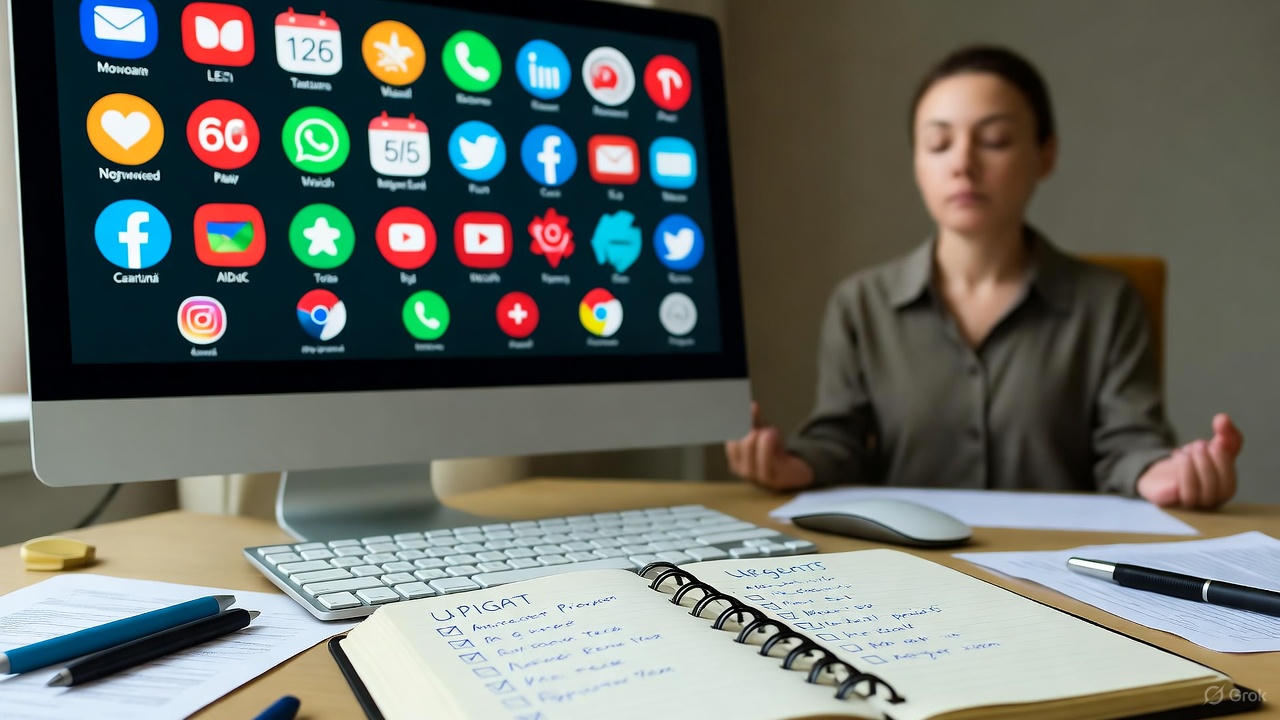
You probably have thirty-seven tabs open right now. Your to-do list has a to-do list. You answered emails during breakfast, scheduled meetings during lunch, and somewhere around 3 PM, you realized you hadn’t actually accomplished the one thing that mattered. Tomorrow, you’ll try again. Tomorrow, you’ll be more efficient, more disciplined, more optimized.
But what if the problem isn’t your efficiency? What if the problem is the premise itself, the idea that doing more, faster, across more simultaneous fronts is the path to meaningful work?
There’s a different approach gaining traction, one that feels almost heretical in a culture addicted to busyness. It’s called slow productivity, and it might be the most radical professional choice you can make in 2026.
The Burnout Era’s Quiet Ending
We’ve spent the past decade sprinting. The gig economy normalized hustle as identity. Social media turned every hobby into a potential revenue stream. “What’s your side project?” became a standard conversation opener. Rest was rebranded as “recovery” so it could serve productivity instead of opposing it.
The results are in, and they’re not good. Gallup’s 2025 Global Workplace Report found that employee burnout reached its highest levels in a decade, with 44% of workers reporting significant daily stress. The World Health Organization formally recognized burnout as an occupational phenomenon, characterized by exhaustion, cynicism, and reduced professional efficacy. We optimized ourselves into the ground.
But something is shifting. The conversation around work is changing, and not just in the predictable “wellness Wednesday” corporate initiatives. There’s a genuine reckoning happening with the fundamental assumption that more output equals more success. Cal Newport, the computer science professor and author who popularized the term “deep work,” published Slow Productivity in 2024, articulating what many were already feeling: the cult of busyness had failed us, and there had to be another way.
Newport’s thesis is simple but subversive. True productivity, the kind that produces work you’re actually proud of, requires doing fewer things, working at a natural pace, and obsessing over quality. Not doing more things faster. Doing fewer things better.
What Slow Productivity Actually Means
Slow productivity isn’t working less in the sense of caring less or accomplishing less. It’s a philosophy built on three principles that challenge our default assumptions about what good work looks like.
The first principle is doing fewer things. This sounds obvious until you actually try it. Most professionals are drowning in what Newport calls “pseudo-productivity,” the endless churn of emails, meetings, and small tasks that feel like work but don’t produce meaningful outcomes. We measure productivity by visible activity rather than actual results, which incentivizes looking busy over being effective.
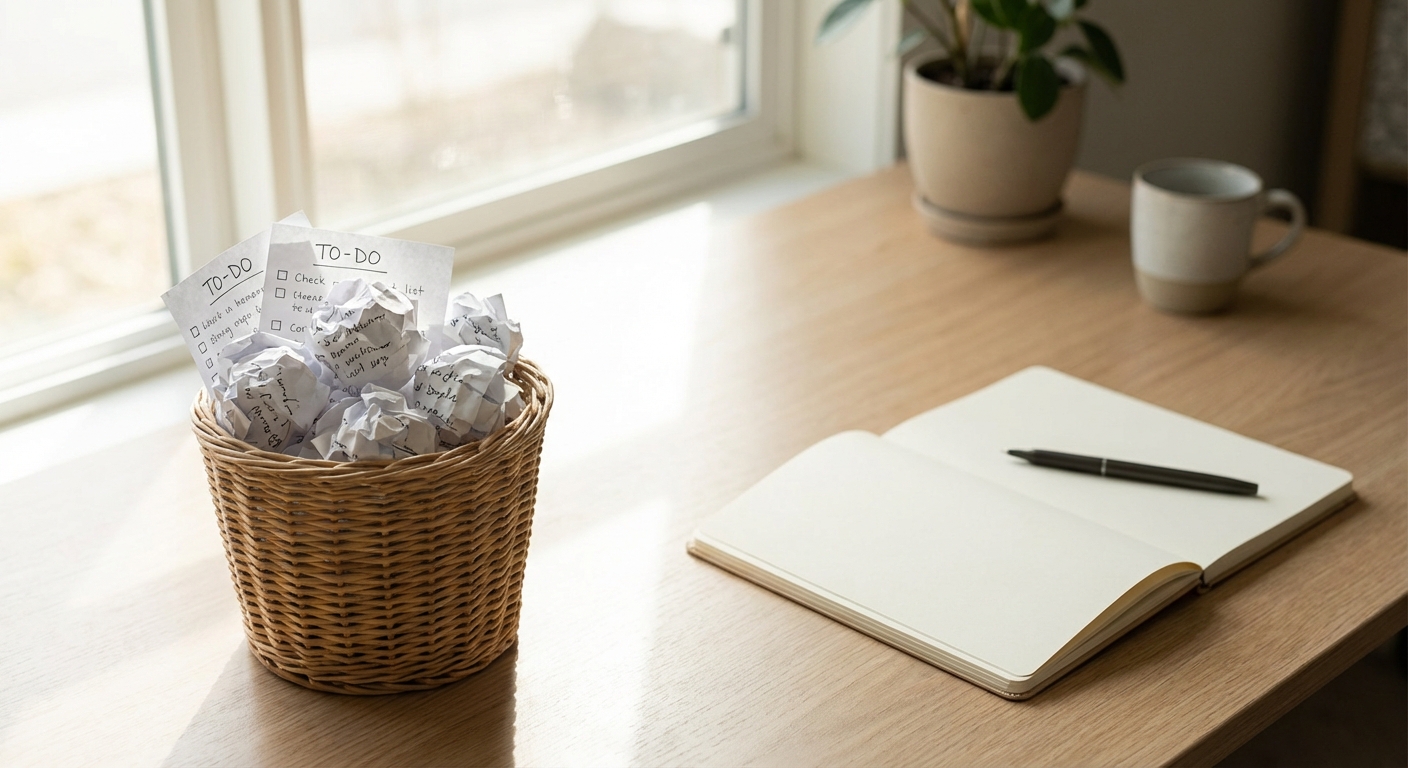
Doing fewer things means ruthlessly limiting your active projects and commitments. It means saying no to opportunities that are merely good so you can say yes to opportunities that are genuinely great. It means recognizing that having forty items on your to-do list isn’t a sign of importance; it’s a sign that you’ve lost control of your attention.
The second principle is working at a natural pace. Industrial-era thinking treats humans like machines: input effort, output results, optimize for speed. But knowledge work doesn’t function like assembly lines. Creative thinking, problem-solving, and deep understanding emerge on their own timelines. Pushing harder doesn’t make insights come faster; it often blocks them entirely.
Working at a natural pace means accepting that some work takes the time it takes. It means building slack into your schedule instead of cramming every available moment. It means recognizing that periods of intense focus need to be balanced with periods of genuine rest, not the pseudo-rest of scrolling social media, but actual cognitive recovery.
The third principle is obsessing over quality. When you’re doing fewer things at a natural pace, you create space to care about craft. You can revise the paragraph until it sings. You can think through the implications of a decision before making it. You can produce work that you’re genuinely proud of instead of work that merely meets the deadline.
This might sound like a luxury available only to the privileged few. But Newport argues it’s more universal than we think. Throughout history, the work we most admire, the books, discoveries, and creations that endure, was produced slowly. Jane Austen wrote six novels in twenty years. Darwin spent decades developing his theory of evolution. Isaac Newton’s Principia emerged after years of contemplation. The myth that great work requires frantic effort is mostly that: a myth.

The Counterintuitive Case for Doing Less
Here’s where slow productivity gets interesting: in many contexts, doing less actually produces better results. This isn’t just philosophical. It’s strategic.
Consider the economics of attention. Attention is a finite resource, and dividing it across many tasks incurs switching costs. Research by Gloria Mark at UC Irvine found that it takes an average of 23 minutes to refocus after an interruption. If you’re managing fifteen active projects, constantly switching between them, you’re spending a significant portion of your workday just reorienting. The person doing three things deeply may actually accomplish more than the person doing fifteen things shallowly.
There’s also the quality premium to consider. In most fields, exceptional work commands disproportionate rewards compared to mediocre work. A brilliant marketing campaign might generate ten times the impact of an adequate one. A well-crafted proposal might win the contract that a rushed one loses. When you’re spread across too many commitments to do any of them excellently, you’re trading the chance at exceptional outcomes for the guarantee of mediocre ones.
And then there’s sustainability. The person working at an unsustainable pace will eventually crash. The person working slowly and intentionally can maintain their output for decades. Longevity in a career isn’t just about showing up; it’s about showing up with energy and creativity intact. Slow productivity treats your future self as a stakeholder in today’s decisions.
How to Actually Work This Way
Understanding slow productivity intellectually is easy. Implementing it in a world that rewards busyness is hard. Here’s what it looks like in practice.
Start by auditing your commitments. List every project, responsibility, and ongoing task you’re currently managing. For most people, this list is shockingly long. Then ask yourself: if you could only keep three of these, which three would matter most? This isn’t about actually abandoning everything else immediately. It’s about clarifying your priorities so you can start making different choices.
Protect time for deep work. Newport’s earlier research on deep work established that focused, uninterrupted time is when the most valuable work happens. Block this time on your calendar like any other appointment. Treat it as non-negotiable. Even two hours per day of protected deep work can transform your output, but only if you actually protect it.
Embrace strategic incompetence. This is counterintuitive, but hear it out. One reason people get overloaded is that they’re good at too many things, so they get asked to do all of them. Being slightly less available, slightly less responsive, slightly less eager to take on new tasks creates boundaries that protect your capacity for the work that matters most. This isn’t about being unhelpful; it’s about being selectively helpful in ways that align with your priorities.
Redefine what productive feels like. The busy feeling, the adrenaline of juggling, the satisfaction of checking boxes: these sensations have been linked to productivity in your brain, but they’re often misleading. A day spent in deep focus on one important thing might feel less productive than a day of frantic multitasking, even though the first day accomplished far more. Learning to trust slow work means unlearning the equation between busyness and value.

The Cultural Resistance You’ll Face
Let’s be honest: working this way will feel uncomfortable, and not just internally. The culture of busyness is deeply embedded, and opting out comes with social costs.
You’ll feel guilty. The voice in your head that equates rest with laziness has been reinforced for years. It won’t quiet down overnight. You’ll compare yourself to peers who seem to be doing more, and you’ll wonder if you’re falling behind. This is normal, and it doesn’t mean you’re wrong.
Others might misunderstand. If your colleagues value face time and rapid response, your protected deep work blocks might read as unavailability or lack of team spirit. If your industry glamorizes overwork, your sustainable pace might be perceived as lack of ambition. You’ll need to decide how much you’re willing to explain, and how much you’re willing to let people draw their own conclusions.
But here’s the thing: the most successful people you admire probably aren’t doing what they seem to be doing. They’ve figured out how to appear responsive while protecting their time. They’ve learned to say no in ways that sound like yes. They’ve optimized for results, not for the performance of productivity. The path to their level of accomplishment runs through slow productivity, even if that’s not the story they tell.
Your Invitation
The new year is traditionally a time of ambitious goal-setting, of cramming more commitments into an already full life. But what if this year’s most important decision is what you decide not to do?
Consider this: for the next month, what would happen if you cut your active projects in half? What would happen if you stopped responding to emails immediately and batched them twice a day? What would happen if you blocked two hours every morning for your most important work and defended that time ferociously?
You might accomplish less in quantity and more in quality. You might feel less busy and more effective. You might discover that the frantic pace you’ve maintained isn’t serving you, it’s just familiar.
Slow productivity isn’t for everyone, and it’s not appropriate for every job or season of life. But if you’ve spent years optimizing for more and you’re still not satisfied, maybe the answer isn’t better optimization. Maybe the answer is a different question entirely.
What would it feel like to do less, and mean it?