
You wake up and reach for your phone before your eyes fully open. You scroll through emails that arrived overnight, AI-generated summaries of things you didn’t ask to be summarized, notifications from apps you forgot you downloaded, and algorithmic suggestions for content you don’t need but might click on. By the time you’ve been awake for five minutes, you’ve already given away something you can never get back: the first unfiltered moments of your day, the quiet space where your own thoughts might have emerged.
This isn’t a willpower problem. The average smartphone user now contends with over 80 notifications per day, and that number is climbing as AI assistants, chatbots, and automated systems multiply. Every app wants your attention. Every platform is optimized to capture and hold it. And the new generation of AI tools, however useful they might be, adds another layer of digital noise demanding response. The battle for your attention has never been more sophisticated, and it’s not a fair fight. But you can choose not to be a passive participant in your own distraction.
Understand What You’re Actually Fighting
The attention economy isn’t a metaphor. It’s a business model. Tristan Harris, former Google design ethicist and co-founder of the Center for Humane Technology, describes how tech products are engineered to exploit psychological vulnerabilities. Variable reward schedules, the same pattern that makes slot machines addictive, are built into social media feeds. Notification systems are designed to create anxiety that can only be relieved by engagement. AI systems are now being trained to personalize these triggers with unprecedented precision.
This isn’t conspiracy thinking. It’s simply how the incentives work. When a company’s revenue depends on time-on-app, every product decision optimizes for capturing attention, not for your wellbeing or productivity. Understanding this changes how you approach your devices. You’re not weak for being distracted. You’re human, and you’re facing systems designed by thousands of engineers whose explicit job is to make you pick up your phone.
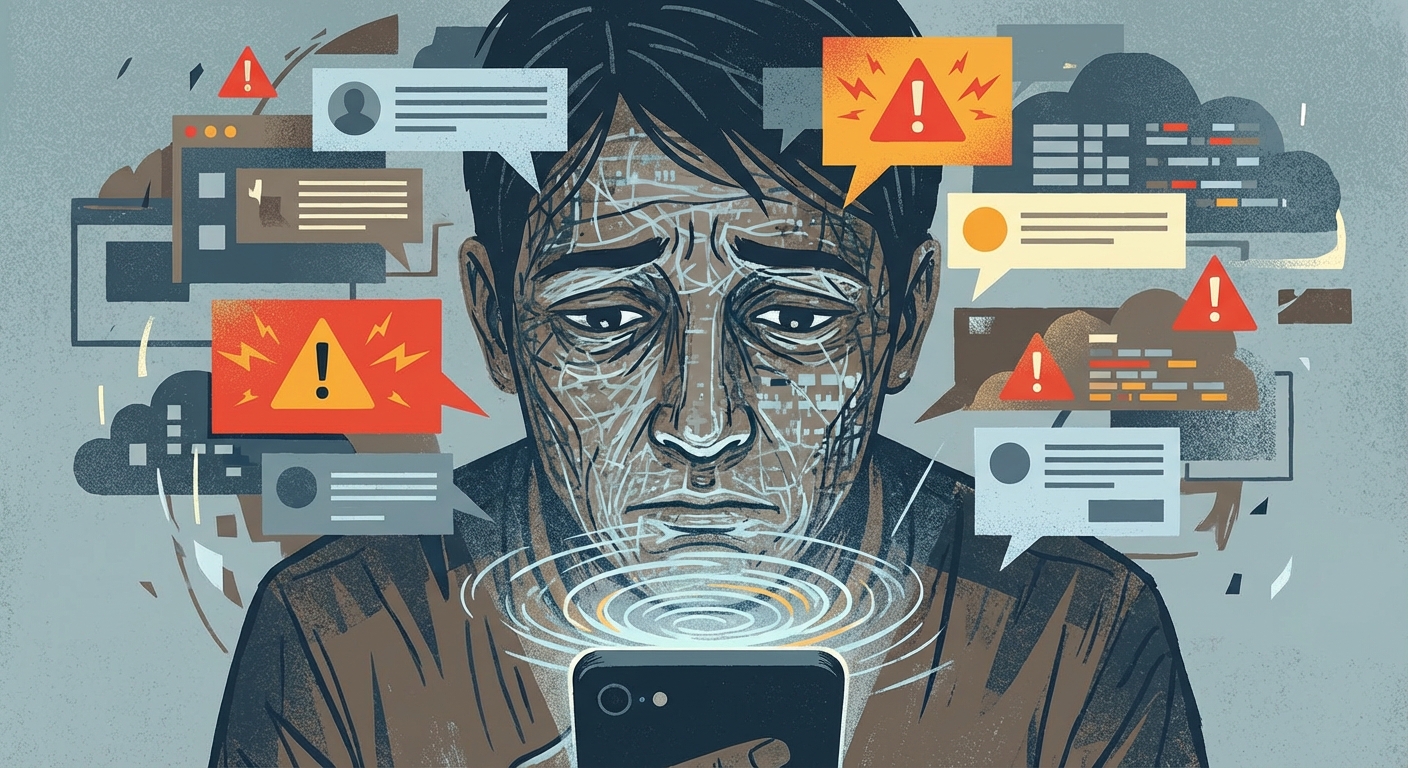
The AI layer adds new complexity. Generative AI tools can now draft your emails, summarize your meetings, suggest your responses, and create content on your behalf. Each new capability comes with a new prompt to engage, a new summary to review, a new suggestion to accept or reject. The mental overhead of managing AI assistants can paradoxically consume the attention they were supposed to save. Cal Newport, whose research on deep work has influenced how we think about focus, warns that simply adding AI tools without rethinking workflows often increases cognitive load rather than reducing it.
Create Friction Where You Need It
The default state of technology is frictionless access. Your phone unlocks with your face. Apps open instantly. Notifications appear immediately. This frictionlessness is by design, it keeps you engaged. To protect your attention, you need to intentionally add friction back into the system.
Start with notification ruthlessness. Go into your settings and turn off notifications for everything that isn’t genuinely time-sensitive. A time-sensitive notification is something that requires action within the next hour. Almost nothing on your phone meets this bar. Email is not time-sensitive. Social media is definitely not time-sensitive. Even most messaging can wait. You don’t need to know the instant someone wants something from you. You can find out when you choose to check.
Consider the power of physical barriers. Leave your phone in another room when you’re working. Use app timers that require a deliberate choice to override. Delete social media apps from your phone entirely and only access them from a computer, where they’re less convenient and less immersive. If your phone has a grayscale mode, use it. The color psychology of app icons is designed to attract your eye; removing the color reduces their pull.
For AI tools specifically, batch your interactions. Instead of having an AI assistant available for every small task throughout the day, designate specific times when you’ll use AI for research, drafting, or synthesis. This prevents the constant context-switching of popping in and out of AI conversations. It also helps you stay the author of your work rather than the editor of an AI’s work, a distinction that matters for both skill development and satisfaction.

Protect Your Transition Spaces
The moments between activities are where attention erosion does its worst damage. The walk from meeting to meeting. The five minutes before bed. The first moments after waking. The commute. These transition spaces used to be moments of mental rest, integration, and spontaneous thought. Now they’re filled with scrolling.
Reclaiming transition spaces requires intentional emptiness. This doesn’t mean you have to meditate in every gap, though you could. It means resisting the reflexive reach for your phone when you experience momentary boredom or uncertainty. Boredom isn’t a bug in human experience. It’s a feature that prompts creativity, reflection, and genuine rest. When you fill every moment with input, you rob yourself of the processing time your brain needs to make sense of experience.
Try implementing a morning buffer. For the first 30 to 60 minutes after waking, don’t look at your phone beyond turning off the alarm. Use this time for whatever feels nourishing, whether that’s journaling, stretching, making breakfast mindfully, or simply sitting with a cup of coffee. Your nervous system calibrates to the first stimuli of the day. If that stimulus is work emails and news alerts, you start from a state of reactivity rather than intentionality. Mindful morning practices don’t have to be elaborate; they just have to be yours.
Evening boundaries matter equally. The blue light argument is well-known, but beyond sleep disruption, evening scrolling fills your mind with other people’s content right before the period when your brain does its deepest processing. Give yourself a device curfew, even if it’s just 30 minutes before bed. Let your mind empty before sleep rather than filling it with one more thread of input.
Rethink Your Relationship With AI Tools
The question isn’t whether to use AI tools. They’re here, they’re useful, and they’re not going away. The question is how to use them without surrendering your agency to them. This requires thinking of AI as a powerful tool you deliberately employ rather than an assistant that’s always running in the background.
Be intentional about which AI tools you adopt. Not every new capability is worth the cognitive overhead of adding to your workflow. Before adopting a new AI tool, ask yourself: What problem does this actually solve for me? Will managing this tool consume more attention than it saves? Does using this tool help me develop skills I value, or does it replace skills I’d rather keep?
When you do use AI, maintain your role as the decision-maker. AI can draft, but you should review and revise with attention to whether the output actually reflects your thinking. AI can suggest, but you should evaluate whether the suggestion aligns with your goals. The risk with seamless AI integration is that you stop thinking critically because the machine has already produced something plausible. Staying engaged takes more effort than accepting suggestions, but it keeps you in the driver’s seat of your own life and work.

Build a Sustainable Digital Practice
Digital boundaries aren’t a one-time decision. They’re a practice, something you return to and refine as circumstances and technologies change. What works this month might need adjustment next month as new tools emerge or your life circumstances shift.
Start with an attention audit. For one week, track how you actually spend your digital time. Not how you think you spend it, how you actually spend it. Screen time reports can help, but so can honest self-observation. Notice when you reach for your phone, what triggers the reach, and how you feel after spending time on various platforms. This data isn’t for self-judgment. It’s for self-knowledge. You can’t change patterns you’re not aware of.
From that audit, identify one or two changes that would make the biggest difference. Maybe it’s keeping your phone out of the bedroom. Maybe it’s deleting one particularly time-draining app. Maybe it’s establishing a no-devices lunch break. Start small and build from there. Setting boundaries with technology is like setting boundaries in relationships: it takes practice, and perfection isn’t the goal.
Remember that reclaiming your attention isn’t about becoming a digital hermit. The goal isn’t to reject technology but to use it deliberately rather than compulsively. You can appreciate what AI tools offer while also recognizing that you need protected space for your own unassisted thinking. You can stay connected to people you care about while also having hours where you’re genuinely unreachable. The point is choice, making conscious decisions about where your attention goes rather than letting it be harvested by whoever designed the most addictive system.
The Bottom Line
Your attention is finite, and it’s precious. It’s the raw material from which you build your life, your relationships, your work, your sense of self. In an age when AI and algorithmic systems are competing for every fragment of it, protecting your attention isn’t optional. It’s essential.
The good news is that you have more control than the attention economy wants you to believe. Every notification you turn off, every morning buffer you protect, every transition space you leave empty is a small act of reclamation. You’re choosing to be the subject of your life rather than the object of someone else’s engagement metrics.
Start somewhere. Start small. But start. Your attention is too valuable to give away by default.
Sources: Tristan Harris and the Center for Humane Technology, Cal Newport’s research on deep work and focus.