
You have a story about your life. You probably don’t think of it consciously as a story, but it’s there: a narrative about where you came from, what happened to you, why you are the way you are. Maybe it’s a story about hardship, about what was taken from you or what you never had. Maybe it’s about advantages you didn’t earn, expectations you couldn’t meet, potential you feel you wasted. Whatever the specifics, this story shapes how you see yourself, what you believe is possible, and how you move through the world.
Here’s what psychologist Dan McAdams discovered after decades of studying how people construct their life narratives: the story you tell about your life matters more for your wellbeing than what actually happened. Two people can experience similar hardships. One constructs a redemption narrative and builds a meaningful life. The other constructs what McAdams calls a contamination narrative, where good things are always followed by bad, where progress is always ruined, and struggles. The difference between them isn’t the events they experienced. It’s the meaning they made from those events. The story isn’t fixed. You’re the one telling it. And you can tell it differently.
The Stories We Tell Ourselves
Think about a significant event from your past. A failure, a loss, a difficult period, a relationship that ended, a childhood that hurt. Now notice the story you tell about it. What role do you play in that story? What does the narrative mean? Where does it lead?
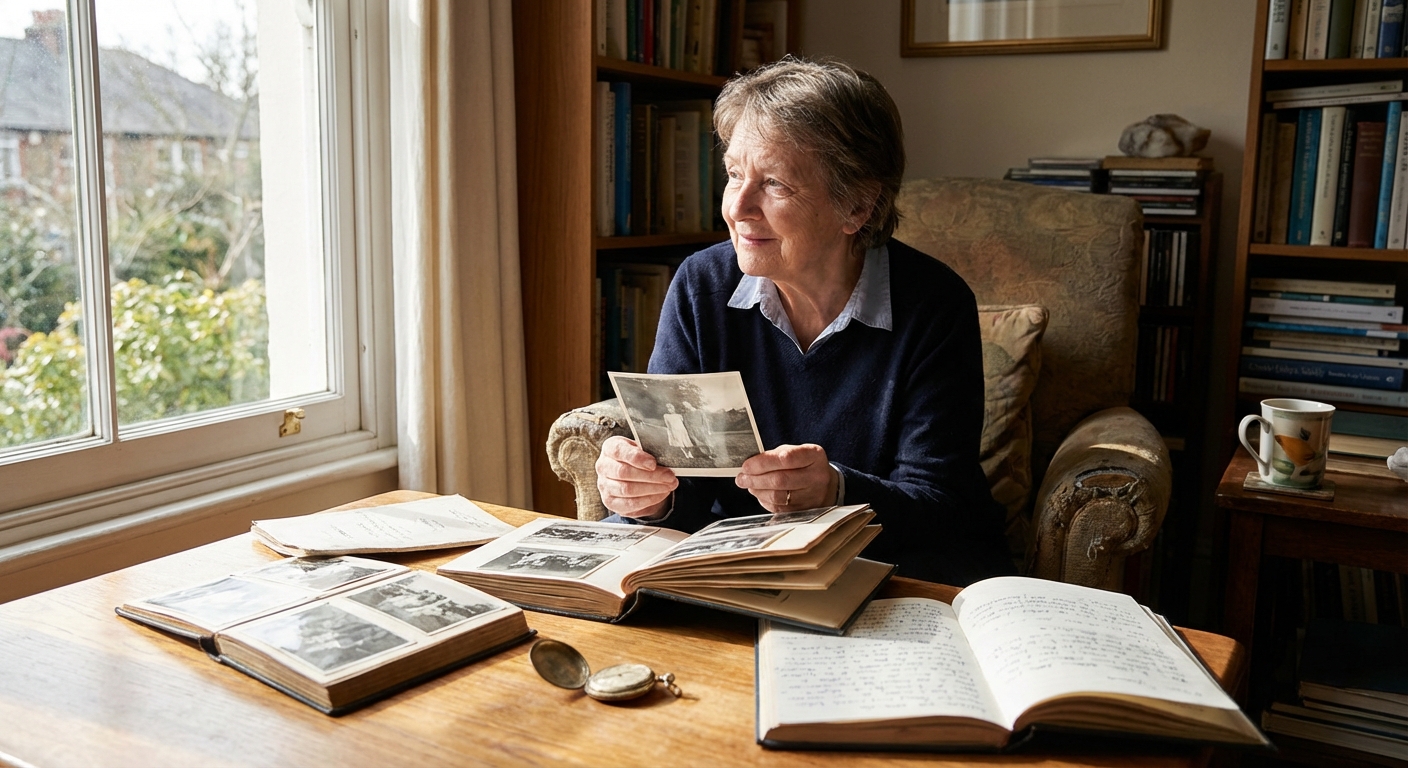
The victim narrative places you at the center of something that was done to you. This happened to me. It damaged me. I’m still suffering from it. My life would be different if this hadn’t happened. I can’t move forward because of this. The story locates agency outside yourself: you’re defined by what happened, not by how you’ve responded. The survivor narrative acknowledges the hardship but claims endurance. This happened to me. It was hard. I got through it. I’m still here. It shaped me. The survivor narrative doesn’t minimize the pain, but it recognizes your strength in getting through it. Moving from victim to survivor often requires finding the courage to start over, to write a new chapter rather than keep rereading the old one. The thriver narrative goes further. This happened, and I wouldn’t choose it, but I’ve grown from it. I’ve learned things I couldn’t have learned otherwise. I’m stronger, wiser, more compassionate because of what I’ve been through.
Same events. Completely different stories. And the research is clear: people who tell redemption narratives, stories where suffering leads to growth, wisdom, or positive change, have better mental health, greater resilience, more satisfying relationships, and a stronger sense of meaning than those who tell contamination narratives. This isn’t because their lives were easier. It’s because the narrative lens through which they view their lives transforms what that experience means.
This Isn’t Denying Pain
Let’s be clear about what rewriting your story doesn’t mean. It doesn’t mean pretending hard things didn’t happen or weren’t hard. It doesn’t mean spiritual bypassing, where you leap to “everything happens for a reason” without actually processing the grief. It doesn’t mean toxic positivity that denies legitimate suffering. The pain was real. The trauma was real. The loss was real. Acknowledging that fully is essential, not optional.
What rewriting your story does mean is finding agency within what happened. It means moving from “this was done to me and I’m helpless” to “this happened, and here’s what I did with it.” It means holding two truths simultaneously: this was painful, and I’m not only my pain. I’m also my resilience, my growth, my becoming. Both can be true at once. Narrative therapists Michael White and David Epston, who developed this approach, emphasized that we are not our problems. We are people who have experienced problems, responded to them, survived them, and continue to write our stories.
Sarah grew up with an alcoholic parent. For years, her story was straightforward: terrible childhood, neglect, that’s why she struggles with relationships, that’s why she has trust issues, that’s why she is the way she is. All of it was true. And all of it kept her stuck. In therapy, she didn’t deny any of those facts. But she added to them. She grew up with a parent who couldn’t be present, and that was painful, and it taught her resilience. She learned to take care of herself. She developed deep empathy for others who struggle. She became fiercely independent. She chose to break the cycle. She’s in therapy, doing the work. She’s not just what happened to her; she’s also what she’s done with it. The facts didn’t change. The story did. And the different story opened up a different future.
Finding the Turning Points
Every life contains turning points, moments when something shifted, when the trajectory changed, when something became possible that hadn’t been before. These moments exist in your story too, even if you haven’t noticed them. They’re the hinges your new narrative can swing on.
To find them, return to that difficult period in your memory and ask: Within that hard time, or after it, when did something shift? Maybe it was a decision you made that changed the trajectory. Maybe it was a person who showed up unexpectedly. Maybe it was a realization that cracked something open. Maybe it was a moment of unexpected strength you didn’t know you had, a small act of resistance, a choice to keep going. These turning points may have seemed insignificant at the time. They may have gone unnoticed. But they’re there, and they matter.
Then ask: What did surviving teach me? What skills did I develop because I had to? What strength did I discover? What compassion did I gain that I wouldn’t have without that experience? What do I understand now that I couldn’t have understood otherwise? How have I helped others because I know this pain? Not “silver lining” forced positivity, but genuine accounting of what emerged from the difficulty. The growth is real even if it wasn’t worth the cost.
Writing the Redemption Arc
With turning points identified and growth acknowledged, you can write a new version. The facts stay the same. The emphasis changes. The meaning transforms. This happened. It was painful. I wouldn’t choose it. And in surviving it, I discovered strength I didn’t know I had. I developed skills I now rely on. I gained understanding that helps me connect with others. I made choices that changed my direction. I’m not just what happened to me. I’m also how I’ve responded to it.
Marcus kept an “evidence journal” for months. Every evening, he wrote down evidence that contradicted his old story about himself. His old story: he wasn’t creative, just analytical, limited to one mode of being. The evidence he gathered: today he made something. Today he had an original idea. Today he took a creative risk. After months of accumulated evidence, the old story stopped feeling true. It couldn’t survive the weight of contrary data. The narrative researcher James Pennebaker has shown that expressive writing, particularly writing that creates coherent narrative from difficult experience, has measurable effects on physical and psychological health. The act of writing reorganizes how we understand what happened. It transforms fragmented experience into meaningful story.
You can do this with any story that’s keeping you stuck. The story about the relationship that ended. The story about the career that failed. The story about the family that couldn’t give you what you needed. Write the victim version first, honestly, acknowledging all the pain. Then write the redemption version, finding the turning points, the growth, the agency, the becoming. Notice how differently the same life looks depending on which narrative lens you use. For more on how identity and narrative shape each other, see our piece on identity transformation.
The Stories Others Gave You
Sometimes the story you’re telling isn’t even yours. It’s a narrative someone else wrote that you internalized so young, or heard so often, that it felt like fact rather than interpretation. You’re too sensitive. You’re not good at math. You’re the difficult one. You’ll never amount to anything. You had so much potential but wasted it. These became your stories about yourself, but they were never objective truth. They were someone else’s limited perspective, often their own fear or frustration projected onto you.
Identifying inherited narratives is the first step to releasing them. What stories were you told about yourself as a child? What labels were assigned? What predictions were made? Write them down. Look at them. Then ask: Is this actually true? Or is this what someone said that I believed? The evidence of your actual life, your actual choices, your actual growth, may contradict the inherited story completely. You get to choose which stories you carry forward and which ones you set down. The narrative that was given to you is not the narrative you have to keep. Often these inherited stories become the inner critic that speaks in someone else’s voice.
Your Invitation
Your past happened. You can’t change the events. But the story you tell about those events? That’s being written right now, by you, with every retelling and every interpretation. You are the author. The pen is in your hand.
Start with one difficult period or event. One story you’ve been telling that keeps you small, keeps you stuck, keeps you defined by what happened rather than who you’re becoming. Write the full version, pain and all. Honor what was hard. Then look for the turning points, the growth, the agency, the redemption. Write that version too. Notice the difference in how you feel when you read each one. The past is fixed. But the meaning you make from it, the story you tell about who you are, remains fluid for your entire life.
You’re not denying what happened. You’re reclaiming authorship of what it means. You’re the writer. What story are you ready to rewrite?
Sources: Dan McAdams’ life narrative research, Michael White and David Epston’s narrative therapy, James Pennebaker’s expressive writing research.