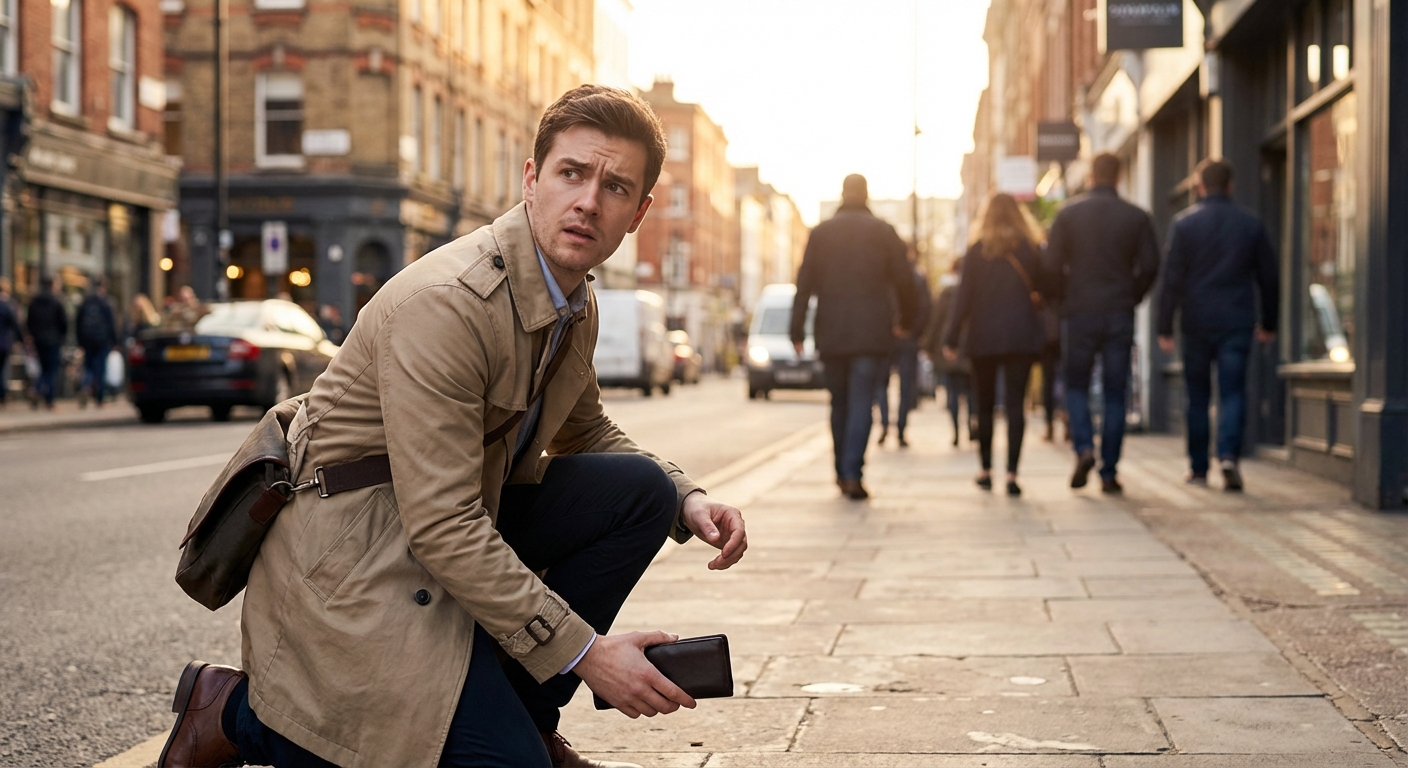
Picture this: You’ve just lost your wallet. It has your ID, your credit cards, some cash, and a few things that only matter to you. A stranger finds it on the ground. What do you think they’ll do?
If you’re like most people, your prediction is bleak. We tend to assume the worst, especially about strangers. They’ll take the cash. They’ll toss the rest. If we’re feeling charitable, we might grant them a shrug: finders keepers. But a massive research project involving 17,000 wallets dropped across 40 countries found something that should radically reshape how you see the world. People are far more honest than we expect. And in a finding that stunned even the researchers, the more money the wallet contained, the more likely people were to return it.
This matters beyond wallet retrieval. The 2025 World Happiness Report explicitly identifies trust in others as one of the strongest predictors of individual and national happiness. When we underestimate human kindness, we don’t just make a cognitive error. We erode our own wellbeing. We hold back from asking for help. We build walls where bridges would serve us better. We live in a world that feels colder than it actually is.
The good news is that recalibrating your expectations doesn’t require naivety. It requires looking at the evidence, and the evidence is surprisingly hopeful.
The Wallet Experiment That Changed Everything
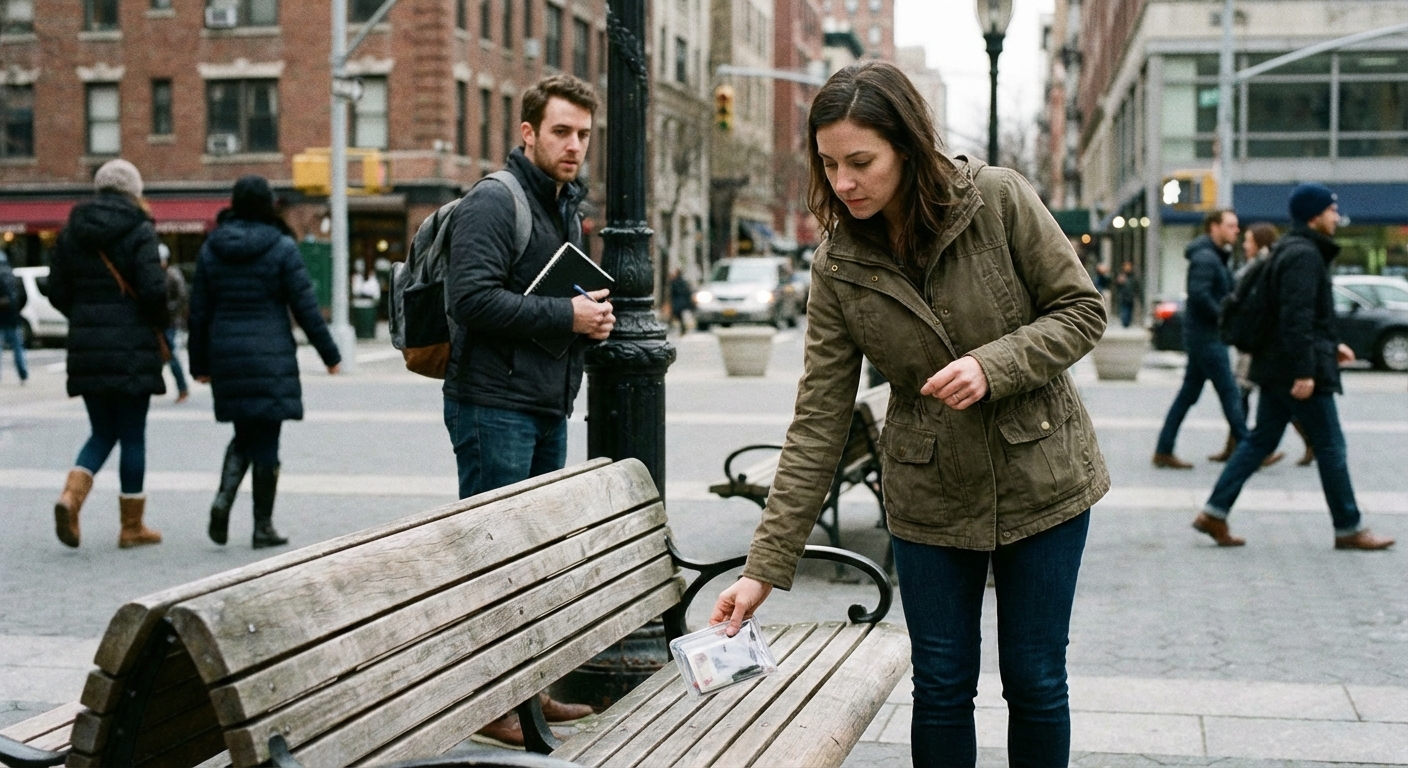
In 2019, behavioral economists Alain Cohn, David Tannenbaum, Christian Zünd, and Michel Maréchal published one of the largest studies on civic honesty ever conducted. Their method was elegant: research assistants walked into banks, hotels, police stations, and theaters in 355 cities across 40 countries. They handed a clear plastic wallet to an employee and said, “Someone must have lost this. I found it outside. I’m in a hurry. Can you take care of it?” Then they left.
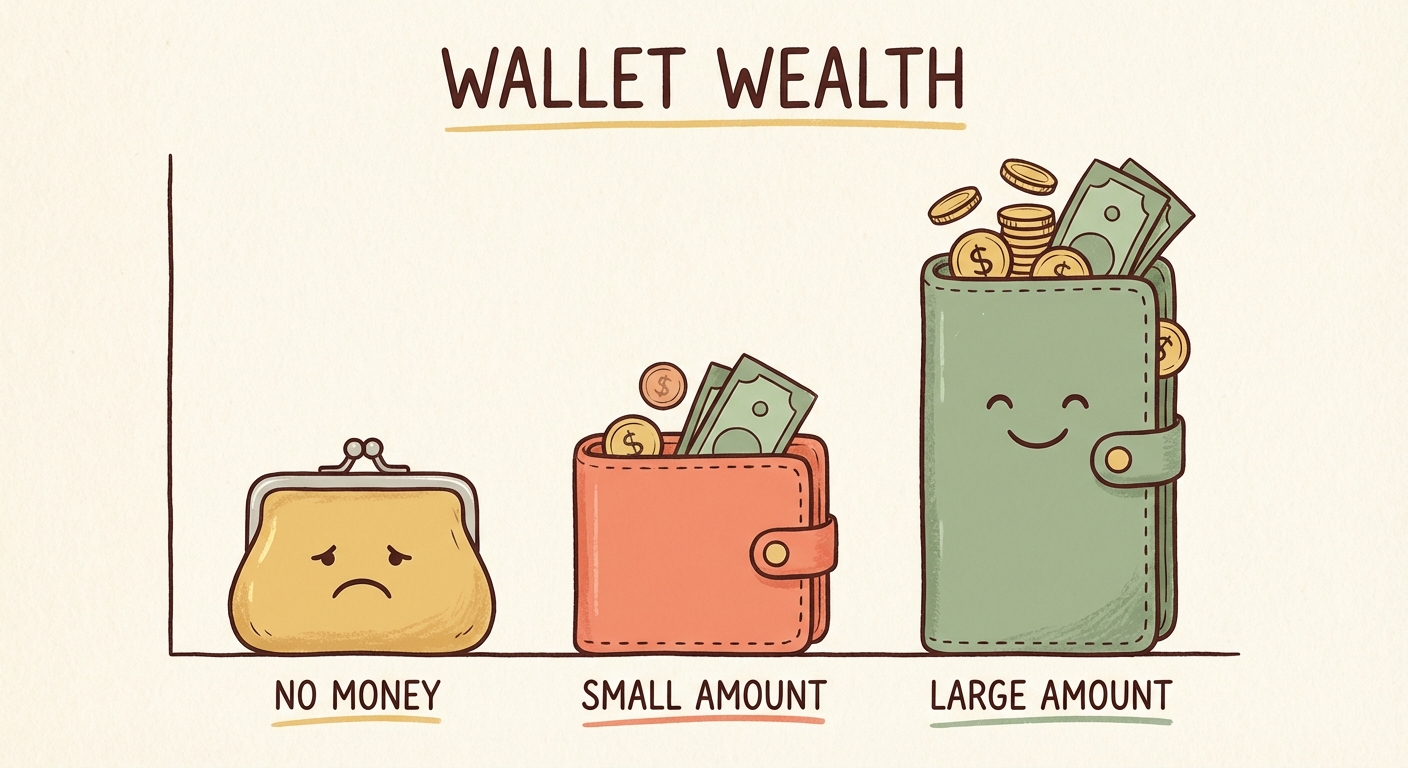
The wallets contained three business cards with an email address, a grocery list in the local language, and a key. Some wallets were empty. Some held the equivalent of about $13.50 USD. The researchers tracked which wallets were reported via email. What happened next upended decades of assumptions about human nature.
In 38 of 40 countries, people were more likely to return wallets that contained money than wallets that were empty. Not slightly more likely. Significantly more likely. Overall, 51% of people who received an empty wallet contacted the owner. But 72% of those who received a wallet with larger sums of cash made the effort to return it. The more money at stake, the more honest people became.
Why We Get It Wrong
Before conducting the experiment, the research team asked 2,500 people to predict the results. The predictions were consistently cynical. Most people expected return rates to be low, and nearly everyone expected return rates to drop when money was involved. We assume that opportunity creates temptation, and temptation wins. The data revealed the opposite.
Why do we systematically underestimate kindness? Part of it is cognitive. Negative experiences are more memorable than positive ones, a phenomenon psychologists call the negativity bias. The one rude stranger on your commute occupies more mental real estate than the twenty who stepped aside to let you pass. The news reports on crimes, not on the millions of wallets returned each year without incident. Our mental model of humanity is built on an unrepresentative sample.
Part of it is also protective. Expecting the worst is a hedge against disappointment. If you assume people will steal your wallet, you’re not surprised when they do, and you’re pleasantly surprised when they don’t. But this protective cynicism comes with hidden costs. When we expect dishonesty, we behave differently. We trust less. We share less. We withdraw from the kinds of vulnerable interactions that build connection and community.
The research published by the University of Zurich team found that wallet return rates correlate powerfully with generalized trust at the national level. Countries where more people believe strangers can be trusted are countries where more wallets get returned. And those countries also score higher on GDP, government effectiveness, and life satisfaction. Trust isn’t just a nice feeling. It’s economic and psychological infrastructure.
The Psychology of Honest Strangers
The wallet researchers dug deeper to understand why people behave better than we predict. Two mechanisms emerged: altruism and self-image.
The altruism component was tested by adding a key to some wallets. Keys have no value to anyone except the owner. They can’t be spent or used. But wallets with keys were about 10% more likely to be returned than keyless wallets. People imagined the owner’s frustration, being locked out, unable to get home, and that empathy moved them to act. We care about strangers’ wellbeing more than economic theory would predict.
The self-image component was even stronger. According to lead researcher Alain Cohn, when money is present, taking the wallet feels more like stealing. “The more money the wallet contains, the more people say it would feel like stealing if they don’t return it,” he explained. Most people, it turns out, don’t want to be thieves. They don’t want to see themselves that way. And this desire for moral self-consistency is powerful enough to override the financial incentive to cheat.
This finding echoes decades of research on identity-based motivation. Carol Dweck’s work on mindset, Dan Ariely’s research on dishonesty, and the broader literature on moral psychology all point to the same conclusion: humans are motivated to see themselves as good people, and they’ll often leave money on the table to maintain that self-image. We’re not angels. But we’re not the calculating opportunists that cynical models assume either.
Recalibrating Your Default Assumptions
Understanding that people are kinder than we expect isn’t about becoming naive. It’s about updating your priors with better data. And this update has practical implications for how you move through the world.
When you assume the worst about people, you protect yourself from a small number of bad actors while missing the goodwill of the majority. You don’t ask for help when you need it, because you assume the answer will be no. You don’t extend trust first, because you’re waiting for others to earn it. You don’t share your vulnerabilities, because you expect judgment rather than support. These protective instincts make sense evolutionarily. But in modern life, they often cost more than they save.
The World Happiness Report consistently finds that trust is one of the key differentiators between the happiest nations and the rest. Finland has topped the rankings for eight consecutive years, and Finnish society is characterized by exceptionally high social trust. People expect strangers to be honest and helpful. And because they expect it, they extend trust more readily, creating a self-reinforcing cycle of goodwill.
You don’t need to move to Finland to benefit from this insight. You just need to notice where your assumptions about others might be more protective than accurate. The next time you catch yourself assuming bad intent, ask: what does the evidence actually suggest? More often than not, people are doing their best. They’re not out to get you. They’re trying to maintain their own sense of being good people in a complicated world.
Your Invitation
The lost wallet study didn’t just measure honesty. It measured something about how we perceive each other, and how those perceptions shape our collective wellbeing. When researchers asked people to predict return rates, they expected cynicism to prevail. When they actually dropped the wallets, kindness prevailed instead. The gap between expectation and reality tells us something important: we have permission to update our beliefs about human nature.
This doesn’t mean being careless with your wallet. Lock your doors. Keep your guard up where it serves you. But consider loosening that guard in the countless low-stakes moments where trust might be warranted. Ask for directions and expect a kind response. Assume the person who bumped into you didn’t mean to. Give people the benefit of the doubt when their intentions are ambiguous. The evidence suggests you’ll be right more often than you think, and the psychological benefits of living in a kinder-seeming world are substantial.
When 72% of strangers who find a wallet with money in it take the time to return it, the world isn’t as hostile as our headlines suggest. When people consistently choose honesty over profit to maintain their self-image as decent human beings, there’s something fundamentally encouraging about human nature. We’re better than we assume. And knowing this, really believing it, might be one of the most practical insights for building a happier life.
For more on building meaningful connections with the people around you, explore our guide to the compound effect of small kindnesses. And if you’re working on how you talk to yourself, consider our piece on what your inner critic might be trying to tell you.
Sources: NPR, PBS NOVA, SSRN/University of Zurich, World Happiness Report 2025, Ethics Unwrapped (University of Texas), Alain Cohn, David Tannenbaum, Christian Zund, and Michel Marechal research on civic honesty.